Overview
The Iran response to U.S. strikes matters because it shows how quickly a bilateral military action can widen into a broader Gulf security problem. Named reporting and institutional analysis consistently described retaliation as a mix of missile attacks, maritime pressure, cyber risk, and wider deterrence signaling.
The clearest documented case in the public record remains the June 2025 missile attack on Al Udeid in Qatar, which multiple sources described as calibrated and telegraphed. By early 2026, public reporting suggested a broader and less constrained regional pattern. The strategic trend toward wider retaliation was clear, while the exact base-by-base details of later attacks were often less settled in public reporting.
What We Know
The following points are the strongest parts of the public record and should be kept separate from higher-risk claims:
- June 22-23, 2025: The U.S. launched Operation Midnight Hammer, and Iran retaliated against Al Udeid in Qatar. Multiple sources described that response as deliberate and signaled rather than maximally destructive. (CFR; Al Jazeera)
- Advance warning: Named reporting said Iran gave advance warning before the 2025 Al Udeid strike, which reduced the risk of mass U.S. casualties. (Al Jazeera)
- Damage and casualties: Public reporting said damage at Al Udeid was limited and that no U.S. service members were killed in that 2025 exchange. (Air & Space Forces Magazine)
- Broader 2026 escalation: Public reporting described a wider retaliation pattern involving additional Gulf states and a more dangerous regional posture, but exact target lists, missile counts, and impact details were not equally well confirmed across outlets. (CNBC)
- Retaliation options: Analysts continued to focus on missiles, maritime pressure in the Strait of Hormuz, cyber operations, and proxy activation as Iran's main tools. (CSIS)

The Al Udeid Attack: Calibrated Retaliation
The Iran response to US strikes in June 2025 was, by virtually all expert accounts, deliberately restrained. The Council on Foreign Relations described the missile attack on Al Udeid Air Base as “telegraphed and calibrated” — designed to preserve regime credibility domestically while leaving a clear diplomatic off-ramp for de-escalation. (CFR)
This calibration was evident in several ways. First, Iran provided advance warning to Qatar and the United States, allowing time for aircraft evacuation and personnel sheltering. Satellite imagery from Planet Labs confirmed the base was largely empty of high-value assets when the missiles arrived. (Al Jazeera)
Second, the attack targeted America’s regional military headquarters rather than civilian infrastructure, oil facilities, or allied military bases—a choice that signaled seriousness without crossing the threshold into the kind of strike that would demand massive US retaliation.
The IRGC’s own framing was revealing. The Revolutionary Guard described it as a “powerful and devastating missile attack” under Operation Annunciation of Victory, while simultaneously emphasizing that the strike “does not pose any threat” to Qatar and affirming Tehran’s commitment to “warm and historic relations” with the Gulf state. (Al Jazeera)
This dual messaging—fierce rhetoric for domestic audiences, measured action for the international community—followed a well-established Iranian pattern. In January 2020, after the US assassination of IRGC commander Qasem Soleimani, Iran fired 10 ballistic missiles at Al Asad Air Base in Iraq, also providing advance warning through Iraqi intermediaries. No US troops were killed in that strike either. (CSIS)
However, the lesson Iran drew from June 2025 was not that restraint works—it was that restraint alone is insufficient. According to the Middle East Institute, Iranian leaders concluded that “deterrence, not restraint—or President Trump’s intervention—forced Israel to halt.” (MEI) This shift in Tehran’s strategic calculus is what makes the current moment so dangerous.
Iran's Military Capabilities
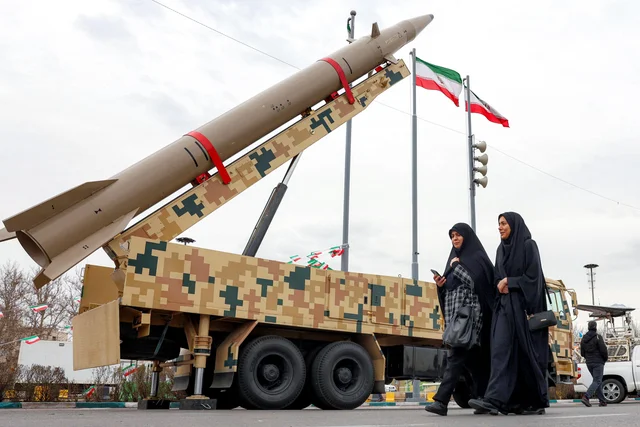
Any analysis of the Iran response to US strikes must account for what Tehran actually has in its arsenal. According to a March 2025 Defense Intelligence Agency report cited by Stars and Stripes, Iran possesses the Middle East’s largest stockpile of missiles and drone systems. (Stars and Stripes)
Ballistic Missiles
Iran’s ballistic missile inventory includes short-range, medium-range, and intermediate-range systems with ranges up to 1,864 miles (3,000 kilometers), sufficient to reach any US base in the Middle East and portions of southeastern Europe. These missiles can carry conventional, chemical, or potentially nuclear warheads. (Stars and Stripes)
During the June 2025 conflict with Israel, Iran fired more than 550 ballistic missiles and over 1,000 drones over a 12-day period, though Israeli and US interception rates were estimated at 85–90%. (CSIS)

Naval Systems
Iran’s naval capabilities include cruise missiles, anti-ship missiles, submarines, torpedoes, and fast attack boats specifically designed to target US warships in the confined waters of the Persian Gulf. The country has also demonstrated the ability to lay naval mines—a tactic with direct precedent from the “Tanker War” of 1987–1988. (CSIS)
Drone Fleet
Iran has invested heavily in unmanned aerial vehicles (UAVs), including one-way attack drones that have been battle-tested through proxy forces in Yemen, Iraq, and Syria. The IRGC demonstrated its air defense capability in 2019 by shooting down a US RQ-4A Global Hawk surveillance drone, with the IRGC commander stating it sent “a clear message” about Iran’s readiness for conflict. (CSIS)
Constraints on Capability
Despite this formidable arsenal, Iran faces real limitations. Israeli strikes in 2025 degraded command and control structures, killed IRGC commanders and Quds Force leadership, and severely weakened air defense networks. Ballistic missile inventories were rapidly depleting during the June 2025 exchanges. CENTCOM Deputy Commander Vice Admiral Brad Cooper noted that Iran retains “considerable tactical capability” despite being weakened. (CFR)
The Strait of Hormuz Card
Perhaps the most economically devastating option in the Iran response to US strikes toolkit is the threat to close or disrupt shipping through the Strait of Hormuz, the narrow waterway through which approximately one-fifth of the world’s daily oil supply passes. (CFR)

Iran has already demonstrated its willingness to use maritime coercion. In the months following the June 2025 strikes, IRGC naval forces harassed a US-flagged merchant vessel in the Strait, and Iranian drones approached a US carrier strike group in the Arabian Sea. (Iran International)
However, full closure of the Strait carries enormous risks for Iran itself. The Washington Institute analysis notes that Iran’s own oil exports flow through the same waterway, and China—Iran’s primary oil customer—would be severely impacted by any disruption. The United States, now largely energy-independent, would suffer less direct economic pain from a Strait closure, though global price shocks would ripple through its economy. (Washington Institute)
Historical precedent is instructive. In 1988, after Iran mined the Strait and damaged the USS Samuel B. Roberts, the US launched Operation Praying Mantis—the largest American naval engagement since World War II—sinking or damaging half of Iran’s operational navy in a single day. Iranian military planners have not forgotten the lesson. (CFR)
The more likely approach, according to CSIS, is what analysts call “smart control”—selective tanker diversions, limited strikes against onshore oil installations, and targeted harassment that imposes economic costs on adversaries while protecting Iran’s own oil infrastructure. (Washington Institute)
Cyber Operations and Unconventional Warfare
One of the most significant but underreported dimensions of the Iran response to US strikes is the dramatic escalation in cyber operations. According to CSIS, Iran demonstrated a 700% increase in cyberattacks against Israel following the 2025 strikes, ranging from website defacement to attacks on critical infrastructure. (CSIS)
Iran has significant cyber capabilities with a proven track record. Operation Ababil (2012–2014) targeted major US financial institutions with distributed denial-of-service attacks, temporarily disrupting banking services for millions of Americans. Iranian hackers have also been linked to attacks on Saudi Aramco, US dam control systems, and various critical infrastructure targets. (CSIS)
The CSIS analysis identifies a spectrum of cyber responses Iran could deploy:
- Low-end: Website defacement, data theft, and disinformation campaigns
- Mid-range: Attacks on industrial control systems (ICS/SCADA) targeting power grids, water treatment facilities, and transportation networks
- High-end: Destructive attacks on critical infrastructure designed to cause physical damage or loss of life
Cyber operations are particularly attractive to Tehran because they offer plausible deniability, can be conducted at relatively low cost, and do not cross the kinetic threshold that would invite immediate military retaliation. They also enable Iran to project power asymmetrically against a far more powerful adversary. (CSIS)
Proxy Networks and Global Reach
Iran’s network of proxy forces and affiliated groups has historically been one of Tehran’s most effective tools for projecting power and retaliating against adversaries without direct attribution. However, the 2025 conflict significantly degraded this capability.
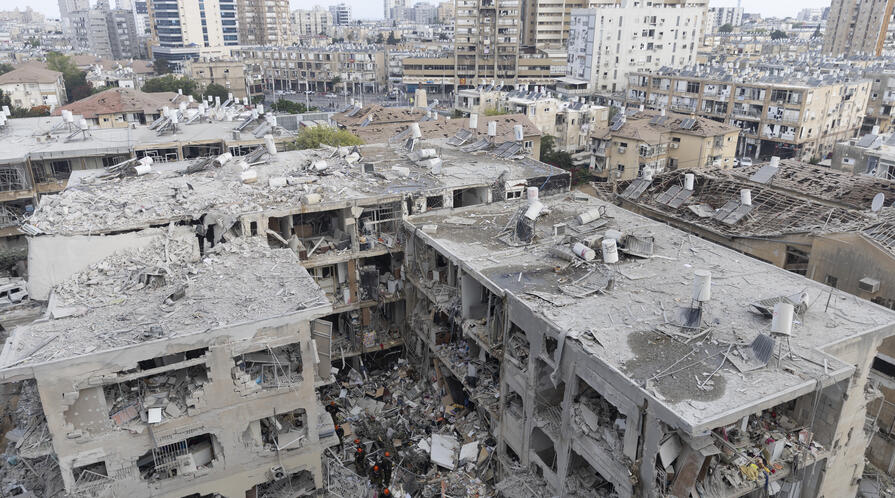
The CFR assessment notes that Hamas and Hezbollah—Iran’s most capable proxies—have been “substantially weakened” by Israeli operations. Quds Force leadership was killed in targeted strikes, and command and control structures were disrupted. Israeli intelligence had “thoroughly penetrated Iranian decision-making,” making coordinated proxy operations more difficult. (CFR)
Despite these losses, CSIS warns that Iran retains unconventional options:
- Proxy forces in Iraq and Syria: Iranian-backed militias continue to operate near US military positions
- Global terror networks: Iran has been linked to bombing attacks (1983 Beirut barracks, 1996 Khobar Towers) and assassination plots worldwide
- Murder-for-hire operations: Iranian intelligence has historically attempted to hire criminal networks for targeted killings
- Drone provision to allied groups: Iran continues to supply advanced drone technology to Houthi forces in Yemen and other regional allies
The Washington Institute emphasizes that even with degraded proxy networks, Iran has the ability to respond “over extended timeframes.” The analysis draws a chilling historical parallel: Libya took two years to retaliate for the 1986 US bombing of Tripoli, eventually downing Pan Am Flight 103 over Lockerbie, Scotland in 1988. (CFR)
The Nuclear Escalation Path
Perhaps the most consequential long-term dimension of the Iran response to US strikes is the potential acceleration of Iran’s nuclear weapons program. While Operation Midnight Hammer destroyed enrichment infrastructure at Natanz, Fordow, and Isfahan, its lasting impact remains debatable.
The CFR analysis presents a sobering picture: while Trump claimed the nuclear program was “completely and totally obliterated,” a preliminary Defense Intelligence Agency report estimated the program was delayed by no more than six months. Iran’s 900-pound stockpile of 60% enriched uranium “remains unaccounted for” but would be useless without functioning enrichment capabilities. (CFR)
The Washington Institute raises the possibility that strikes could paradoxically accelerate Iran’s drive for nuclear weapons by convincing the regime that only a nuclear deterrent can prevent future attacks. The analysis points to North Korea’s example: despite decades of sanctions, diplomatic pressure, and threats of military action, Pyongyang successfully developed both nuclear weapons and intercontinental ballistic missiles. Iranian strategists are acutely aware of this model. (Washington Institute)
Iran has reportedly taken several steps that suggest a pivot toward weaponization:
- Withdrawal of cooperation with IAEA inspectors following the strikes
- Statements casting the IAEA as complicit in providing targeting intelligence (“IAEA perfidy” narrative, per CFR)
- Potential dispersal of nuclear expertise and materials to hardened, underground sites
The Iranian foreign minister’s warning is direct: Iran would fire “back with everything we have if we come under renewed attack.” (Washington Institute) Whether “everything” eventually includes nuclear weapons remains the most consequential open question of this conflict.
Expert Assessments
Expert assessments broadly converged on one point: Iran's response pattern was changing. Analysts differed on how far Tehran would go, but they agreed that the mix of missiles, Gulf risk, cyber pressure, and proxy options gave Iran multiple ways to retaliate without immediately committing to a single all-or-nothing path.
The strongest expert contribution to this page is not a prediction that a wider war is inevitable. It is the more limited conclusion that each cycle of retaliation has tended to raise the stakes, compress decision time, and make regional partners more exposed.

What Can Be Verified So Far
This page is strongest when it separates direct reporting from inference.
- Directly supported: Iran retaliated after U.S. strikes, Al Udeid was the clearest documented target in 2025, and later reporting described a wider regional threat environment. (CFR; CNBC)
- Supported but still fluid: exact missile inventories, exact impacts at every Gulf installation, and exact interception rates across the region.
- More interpretive than proven: claims that the escalation path is fixed, that every future step is already determined, or that every named option will necessarily be used.
What's Next
The Iran response to US strikes is far from over. Multiple developments in the coming weeks will shape the trajectory of this crisis:
Diplomatic Track
Before the February 28 escalation, Turkey, Oman, and other regional states had offered to host US-Iran negotiations. However, Iran had reportedly been “walking back” recent agreements, seeking to relocate talks from Istanbul to Oman and limit discussions strictly to nuclear issues while excluding missiles and regional proxy groups. The Wall Street Journal reported Iranian officials had threatened to withdraw from talks entirely. (Iran International)
White House Press Secretary Karoline Leavitt stated: “For diplomacy to work, of course, it takes two to tango.” Israeli Prime Minister Netanyahu warned that Iran “has repeatedly proven it cannot be trusted to keep its promises.” (Iran International)
Regime Survival Calculus
The Washington Institute analysis identifies a crucial vulnerability: an estimated 80% of Iran’s population opposes the Islamic Republic, and the regime faces mounting domestic protests. However, military defections remain unlikely given IRGC leaders’ ideological commitment and their personal exposure to prosecution if the regime falls. An IRGC-led succession could prove “more rigid than current leadership and less amenable to negotiations.” (Washington Institute)
China and Russia Factor
Both China and Russia condemned the US strikes and hosted Iranian officials, yet took no concrete supportive actions. The CFR analysis suggests the “Axis of Autocracies” may be “more brittle and shallow than imagined,” though both countries could still provide military and economic assistance to Tehran. (CFR)
Arab State Positioning
Arab states have publicly called for diplomacy while privately appreciating the degradation of Iran’s capabilities. CFR Senior Fellow Steven Cook notes their primary concern is “blowback”—potential damage to their own territories from Iranian retaliation. The key question is whether Saudi Arabia and the UAE remain committed to US partnerships if the Iranian threat diminishes, or begin pursuing greater strategic independence. (CFR)
Why It Matters
The Iran response to US strikes matters far beyond the immediate military exchange. It is establishing precedents and dynamics that will shape Middle Eastern security for decades:
- Nuclear proliferation: How Iran responds to the destruction of its nuclear infrastructure will influence whether other countries pursue clandestine weapons programs as insurance against military strikes.
- Deterrence credibility: The pattern of calibrated retaliation is testing whether measured responses strengthen or weaken deterrence—a question with implications for every nuclear threshold state.
- Energy security: Even the threat of Strait of Hormuz disruption has triggered oil price volatility, exposing the fragility of global energy supply chains despite American energy independence.
- Alliance politics: The responses of China, Russia, and Gulf Arab states are revealing the true depth of their commitments to various partners—and the limits of their risk tolerance.
- Escalation dynamics: The progression from single-base targeting in June 2025 to four-base targeting in February 2026 illustrates how each cycle of conflict raises the stakes and narrows the off-ramps for both sides.
As the CFR analysis concludes: “What comes next could be equally important in determining the security and geopolitics of the Middle East going forward.” (CFR)
Related Coverage
- US Strikes Iran: Full Timeline, Targets, and Global Impact
- Iran Missile Range Map: What the Ranges Mean
- Regional Missile Defense Systems in the Middle East
- Regional Proxy Escalation Routes After Iran Strikes
- Oil Price Shock After Iran Strikes: The Mechanics Behind It
Research Hubs
- Iran-Israel-Dubai War Guide
- Iran Nuclear and Military Briefing
- Israel Security and Escalation Briefing
- Dubai and UAE Risk Briefing
- Source Center: Primary References
Sources
- International Atomic Energy Agency, Iran focus page. iaea.org
- UN Security Council updates and official records. un.org/securitycouncil
- UN Charter full text (Article 51 legal context). un.org
- U.S. Department of Defense official releases. defense.gov
- U.S. Department of State, Iran country page. state.gov
- UAE Ministry of Foreign Affairs media hub. mofa.gov.ae
- OFAC Iran sanctions framework. ofac.treasury.gov
- CISA advisory on Iran-linked cyber activity. cisa.gov
- EIA world oil transit chokepoints. eia.gov
- MARAD maritime security advisories. maritime.dot.gov
- Council on Foreign Relations analysis archive on Iran conflict and nuclear risk. cfr.org
- Center for Strategic and International Studies, Iran and regional security analysis. csis.org
- Reuters and AP Middle East coverage trackers. reuters.com; apnews.com