Overview
The sanctions regime imposed on Iran is the most comprehensive economic pressure campaign ever directed at a nation-state. It spans four decades, involves unilateral US measures, multilateral EU restrictions, and UN Security Council resolutions, and targets virtually every sector of Iran's economy — from oil exports and banking to shipping, insurance, automotive, metals, and petrochemicals. The stated objectives have shifted over time: initially aimed at constraining Iran's nuclear program, the sanctions broadened under the Trump administration's "maximum pressure" campaign to target the Iranian regime's broader behavior, including missile development, support for proxy forces, and human rights abuses.
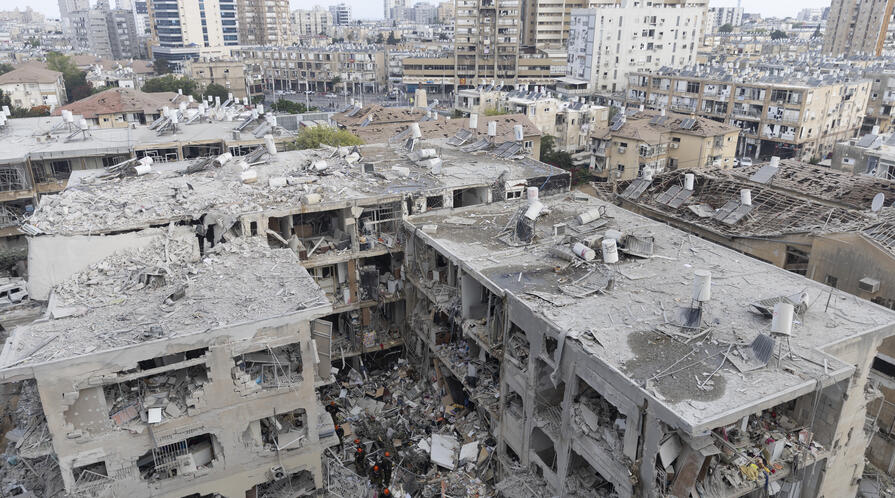
As the US and Israel launch strikes on Iran on February 28, 2026, the sanctions backdrop is essential context for understanding why the conflict reached this point. The sanctions achieved much of what they were designed to do economically: they collapsed Iran's currency, slashed oil revenues, isolated its banking system, and produced widespread civilian hardship. But they failed at their strategic objective: Iran did not abandon its nuclear program, did not curtail its missile development, and did not moderate its regional behavior. Instead, the economic pressure hardened the regime's posture, accelerated nuclear enrichment, and contributed to the domestic instability that Iran's hardliners used to consolidate power and suppress dissent.
This explainer provides a detailed breakdown of how the sanctions architecture works, what economic damage it has inflicted, and how the consequences of that damage connect to the military conflict now underway. Understanding sanctions is not merely an economic exercise — it is essential to understanding the strategic logic (and strategic failure) that preceded the strikes.
Sanctions Architecture
Iran's sanctions regime operates on three overlapping levels, each with distinct legal authorities, enforcement mechanisms, and scope. Together they create a layered system that is far more comprehensive than any single component would suggest.
The first layer consists of US unilateral sanctions, administered primarily by the Office of Foreign Assets Control (OFAC) within the Treasury Department. These are the most extensive and impactful sanctions because they leverage the dominance of the US dollar in global finance and the centrality of the US financial system to international trade. Any entity that conducts a dollar-denominated transaction involving Iran — or facilitates such a transaction through a US-connected bank — faces potential secondary sanctions that effectively cut it off from the American financial system. Since virtually every major international bank maintains dollar-clearing operations through New York, this gives US sanctions extraterritorial reach far beyond American borders.
The second layer is the European Union sanctions regime, which includes an oil import embargo, asset freezes on designated Iranian entities, a ban on insurance and reinsurance for Iranian shipping, and restrictions on technology transfers. The EU sanctions are significant because European companies — particularly in the energy, shipping, and financial sectors — were major Iranian trade partners before sanctions, and their withdrawal from the Iranian market compounded the impact of US restrictions.
The third layer is UN Security Council sanctions, enacted through a series of resolutions beginning in 2006 (Resolutions 1696, 1737, 1747, 1803, 1835, and 1929). These resolutions imposed arms embargoes, travel bans, asset freezes, and restrictions on nuclear and missile-related procurement. While the JCPOA suspended many UNSC sanctions in 2016, the US triggered the snapback mechanism in 2020, reimposing all prior UNSC sanctions. The snapback was controversial — many nations argued the US had lost standing to invoke it after withdrawing from the JCPOA — but it was procedurally valid and remains in effect.
OFAC and US Sanctions
The Office of Foreign Assets Control (OFAC) is the primary enforcement arm of US Iran sanctions. OFAC maintains the Specially Designated Nationals (SDN) list, which as of February 2026 includes over 1,200 Iranian individuals, entities, vessels, and aircraft. Any person or entity on the SDN list is effectively cut off from the global financial system: their assets in US jurisdiction are frozen, and any non-US person who transacts with them faces secondary sanctions exposure.
OFAC's sanctions authorities derive from multiple executive orders and statutes, including the Iran Sanctions Act (ISA), the Comprehensive Iran Sanctions, Accountability, and Divestment Act (CISADA), the Iran Threat Reduction and Syria Human Rights Act, and the Iran Freedom and Counter-Proliferation Act. Each statute targets different sectors and activities, creating an overlapping web of restrictions that makes compliance extraordinarily difficult for any entity with potential Iranian exposure.
The most impactful US sanctions target Iran's oil sector, Central Bank, and financial system. Executive Order 13846 (reimposed in 2018) authorizes sanctions on any entity that purchases Iranian petroleum or conducts financial transactions with the Central Bank of Iran. This effectively made it illegal for any bank or company with US financial exposure to participate in Iranian oil trade — which, given the dollar's dominance, meant virtually every major international oil company, bank, and insurer withdrew from the Iranian market.
OFAC has also targeted Iran's Islamic Revolutionary Guard Corps (IRGC) and its extensive network of commercial enterprises. The IRGC controls an estimated 20-40% of Iran's formal economy through construction firms, telecommunications companies, import-export businesses, and financial institutions. OFAC's designation of the IRGC as a Foreign Terrorist Organization (FTO) in 2019 created criminal exposure — not merely civil penalties — for any entity providing material support to IRGC-linked businesses. According to OFAC enforcement data, the agency has imposed over $4.2 billion in penalties for Iran-related sanctions violations between 2018 and 2026.
EU Sanctions Framework
The European Union's Iran sanctions represent the second most significant sanctions regime after the United States. The EU imposed a full oil import embargo in January 2012, cutting off a market that had previously absorbed approximately 600,000 barrels per day of Iranian crude — roughly 25% of Iran's total oil exports at the time. The embargo was accompanied by a ban on providing insurance and reinsurance for Iranian oil shipments, which was particularly devastating because the London-based International Group of P&I Clubs provided coverage for approximately 95% of the world's ocean-going tanker fleet.
Beyond oil, EU sanctions restrict the transfer of dual-use technologies, ban the import of Iranian petrochemical products, freeze the assets of designated Iranian entities, and prohibit European financial institutions from maintaining correspondent banking relationships with Iranian banks. The EU also imposed restrictions on Iranian metals trade (steel, aluminum, copper, and iron) and banned the import of Iranian precious metals and banknotes.
The JCPOA, which the EU was instrumental in negotiating, provided temporary sanctions relief between 2016 and 2018. During this window, European companies — particularly French energy giant Total, German automaker Daimler, and Danish shipping conglomerate Maersk — re-entered the Iranian market. When the US withdrew from the JCPOA in 2018 and reimposed secondary sanctions, these companies faced an impossible choice: maintain Iranian business relationships and lose access to the US market, or withdraw from Iran to preserve US market access. Without exception, every major European company chose the latter. The EU's Blocking Statute, which theoretically prohibits European companies from complying with extraterritorial US sanctions, proved entirely ineffective in practice because no European company was willing to risk US financial exposure to test it.
This dynamic — where US secondary sanctions effectively compel European compliance regardless of European legal frameworks — remains a source of significant transatlantic tension and has contributed to European frustration with the American approach to Iran policy.
UN Security Council Sanctions
The United Nations Security Council imposed six major resolutions on Iran between 2006 and 2010, progressively tightening restrictions as Iran's nuclear program advanced. Resolution 1929 (2010) was the most comprehensive, establishing a near-total arms embargo, banning Iranian ballistic missile activity, and authorizing inspection of suspected Iranian cargo shipments. These resolutions provided the international legal foundation for national and regional sanctions regimes, including the US and EU measures described above.
The JCPOA's adoption in 2015 was codified in UN Security Council Resolution 2231, which replaced the prior sanctions resolutions with a new framework that suspended most restrictions in exchange for Iranian nuclear compliance. Resolution 2231 included the snapback mechanism: a provision allowing any original JCPOA participant to reimpose all prior UNSC sanctions if Iran was found in significant non-performance. In August 2020, the United States invoked the snapback, arguing that Iran had violated JCPOA enrichment limits. This was legally controversial because the US had already withdrawn from the JCPOA, and most Security Council members argued that a non-participant could not invoke a participant-level provision. Nevertheless, the US maintained that its status as an original Security Council endorser of Resolution 2231 preserved its snapback authority, and the procedural mechanism technically activated.
The reimposed UNSC sanctions include a conventional arms embargo (which was set to expire in October 2020 under the JCPOA timeline but was preserved by the snapback), restrictions on ballistic missile-related transfers, and asset freezes on designated nuclear-related entities. Unlike US and EU sanctions, UN sanctions carry the force of international law and theoretically bind all 193 UN member states — though enforcement varies dramatically by country, with CRINK members providing systematic circumvention.
Economic Impact Data
The aggregate economic impact of the sanctions regime on Iran is staggering, as the following data illustrate.
| Indicator | 2017 (Pre-Maximum Pressure) | January 2026 | Change |
|---|---|---|---|
| GDP (nominal, USD) | $445 billion | $191 billion | -57% |
| Oil exports (bpd, official) | 2.5 million | ~500,000 | -80% |
| Oil revenue (annual) | $55 billion | $12 billion (official) | -78% |
| General inflation rate | 9.6% | 68% | +608% |
| Food inflation rate | 11% | 105% | +854% |
| Exchange rate (rial/USD, parallel) | 42,000 | 620,000 | -93% |
| Foreign exchange reserves | $112 billion | $12-15 billion (est.) | -87% |
| Unemployment rate (official) | 12.1% | 18.5% | +53% |
| Youth unemployment | 28% | 42% | +50% |
| Poverty rate (below national line) | 18% | 38% | +111% |
These figures tell the story of an economy that has been systematically dismantled. Iran's GDP has been cut by more than half in dollar terms. Foreign exchange reserves that once exceeded $100 billion have been depleted to levels insufficient to cover three months of essential imports. The poverty rate has doubled. Youth unemployment — in a country where 60% of the population is under 30 — has reached levels that historically correlate with social instability and political upheaval.
The IMF Article IV consultation for Iran (the most recent published in 2024) described the economic situation as "a structural crisis compounded by external restrictions" and warned that "continued sanctions pressure without diplomatic resolution risks a humanitarian emergency." The World Bank's Iran Economic Monitor was more blunt, noting that "the current trajectory is unsustainable and the economy is approaching a debt-deflation spiral in key sectors."
Inflation and Currency Crisis
The inflation crisis is the most immediately felt consequence of sanctions for ordinary Iranians. General inflation reached 68% in January 2026, but this figure understates the reality for lower-income households because it includes items like electronics and automobiles (whose prices have risen less) alongside food and housing (which have risen far more). Food inflation of 105% means that the price of basic staples — bread, rice, cooking oil, chicken, dairy — has more than doubled in the past year alone.
The inflation mechanism works through multiple channels. First, the currency collapse directly inflates the price of anything Iran imports, which includes approximately 30% of its food supply, most pharmaceutical ingredients, and virtually all advanced manufactured goods. Second, the Central Bank of Iran's monetary expansion — printing money to cover budget deficits caused by lost oil revenue — increases the domestic money supply without corresponding economic output. Third, supply chain disruptions caused by sanctions on shipping, insurance, and trade finance increase the cost of moving goods into and within the country.
The rial's collapse is the most visible symbol of the sanctions' impact. In 2017, before maximum pressure reimposition, the rial traded at approximately 42,000 per US dollar on the parallel market. By February 2026, the parallel rate exceeded 620,000 rials per dollar — a decline of over 93%. The Iranian government maintains an official rate of approximately 42,000 rials for essential imports (medicine, food staples), but this rate is available only for authorized government transactions and bears no relation to the rate ordinary Iranians encounter when attempting to purchase foreign currency.
The dual exchange rate system itself creates corruption and inefficiency. Importers with government connections obtain dollars at the official rate, import goods, and sell them at prices reflecting the parallel market rate — pocketing the difference. This arbitrage enriches connected insiders while doing nothing to alleviate the price pressures facing ordinary consumers. The Atlantic Council's Iran Economic Assessment estimated that exchange rate arbitrage transfers approximately $8-12 billion annually from the Iranian public to politically connected import cartels.
Oil Revenue Decline
Oil has historically accounted for 60-70% of Iran's government revenue and 80% of its export earnings. The sanctions regime's primary mechanism of economic pressure is reducing Iran's ability to sell oil on international markets. Before the reimposition of maximum pressure sanctions in 2018, Iran exported approximately 2.5 million barrels per day (bpd) of crude oil, generating annual revenue of approximately $55 billion. By 2020, official exports had fallen to roughly 200,000 bpd — a 92% decline.
Iran has partially recovered through the shadow fleet — a network of aging tankers that transport Iranian crude to China using falsified documentation, disabled transponders, and ship-to-ship transfers to obscure the oil's origin. Through this mechanism, an estimated 1-1.5 million bpd of additional Iranian crude reaches Chinese refineries, generating revenue that does not appear in official export statistics. Including shadow fleet volumes, Iran's total oil exports are estimated at 1.5-2 million bpd — still 20-40% below pre-sanctions levels, but substantially more than the near-zero that US sanctions architects intended.
The revenue Iran earns from shadow fleet sales is heavily discounted. Iranian crude sold through illicit channels typically commands prices $5-10 per barrel below benchmark, and a significant portion of the revenue is trapped in Chinese yuan that cannot be easily converted to other currencies. Estimates suggest that Iran receives effective revenue of approximately $30-35 billion from combined official and shadow oil sales — roughly 60% of pre-sanctions levels in nominal terms but substantially less in real terms after adjusting for the rial's depreciation and domestic inflation.
The oil revenue decline has forced the Iranian government to make painful fiscal choices. Military spending (including IRGC operations and proxy support) has been largely protected, but civilian infrastructure spending, education, healthcare, and social welfare have been cut dramatically. The government introduced fuel rationing in late 2019, triggering nationwide protests that killed hundreds. Public sector wages have not kept pace with inflation, driving a brain drain estimated at 150,000 skilled professionals per year leaving the country.
SWIFT Disconnection
In November 2018, the Society for Worldwide Interbank Financial Telecommunication (SWIFT) — the Belgium-based messaging network that facilitates virtually all international bank transfers — disconnected Iranian banks from its system. This was the financial equivalent of cutting Iran's phone lines: without access to SWIFT, Iranian banks could not send or receive payment instructions from international counterparts, making legitimate international trade nearly impossible.
The SWIFT disconnection was technically a decision by SWIFT's board of directors, but it was made under intense US pressure. SWIFT is regulated under Belgian and EU law, and the EU had initially resisted US demands to disconnect Iran, arguing that it would undermine European efforts to maintain trade channels with Tehran under the JCPOA. However, the threat of US secondary sanctions against SWIFT itself — which would have cut SWIFT off from the US financial system — left the organization with no viable alternative.
The disconnection affected approximately 50 Iranian financial institutions, including the Central Bank of Iran, Bank Mellat, Bank Saderat, Bank Melli, and Parsian Bank. The impact was immediate and severe: Iranian importers could not pay foreign suppliers, Iranian exporters could not receive payment for shipments, and the government could not access the estimated $100-120 billion in foreign-held assets that were already frozen under sanctions. International companies that had maintained limited trade with Iran under JCPOA humanitarian exemptions found it physically impossible to process payments, even for permitted goods like food and medicine.
Iran has attempted to build alternative financial channels, including bilateral messaging systems with Russia (SPFS), China (CIPS), and a small number of friendly states. These alternatives process a fraction of the volume that SWIFT handles and are limited to transactions within their respective ecosystems. The OFAC analysis of alternative payment systems estimated that non-SWIFT channels process approximately $15-20 billion annually in Iran-related transactions — significant in absolute terms but a fraction of the $200+ billion in annual trade Iran conducted through SWIFT before disconnection.
Dollar Shortage
A leaked US Treasury internal assessment, reported by the Atlantic Council in September 2025, revealed that the dollar shortage within Iran's financial system was not an incidental consequence of sanctions but a deliberately engineered outcome. The assessment described a strategy of "systemic dollar deprivation" designed to collapse Iran's ability to maintain foreign exchange reserves, settle international obligations, and provide importers with the foreign currency needed to purchase essential goods.
The mechanism operates on several levels. First, sanctions prevent Iran from selling oil in dollars, eliminating the primary source of dollar inflows. Second, sanctions on Iranian banks prevent them from accessing dollar-clearing services through New York correspondent banks. Third, secondary sanctions deter any non-US bank from processing dollar transactions involving Iranian counterparts, even for trade that is nominally exempt from sanctions (such as food and medicine). Fourth, the freezing of approximately $100-120 billion in Iranian assets held in foreign banks — including South Korean, Japanese, and Iraqi accounts — removes a buffer that Iran could otherwise use to finance imports.
The consequences of the dollar shortage cascade through the economy. Without dollars, importers cannot purchase raw materials for manufacturing, leading to factory closures and unemployment. Without dollars, pharmaceutical companies cannot buy the active ingredients needed to produce medicines domestically, leading to drug shortages. Without dollars, the government cannot service its limited foreign debt obligations, damaging Iran's creditworthiness and further isolating it from international finance.
The Treasury assessment reportedly acknowledged that the humanitarian consequences of dollar deprivation were severe and foreseeable, but concluded that "the strategic objective of constraining Iran's capacity to finance destabilizing regional activities justifies the economic pressure, provided humanitarian exemptions function as designed." Critics, including the International Crisis Group and the Atlantic Council's Iran Task Force, have documented extensively that humanitarian exemptions do not function as designed — that banks refuse to process even clearly permitted transactions due to the compliance risk and that the exemptions exist primarily as a legal and political shield rather than an operational reality.
Impact on Daily Life
The macroeconomic data translate into a lived reality for Iran's 88 million people that is increasingly characterized by scarcity, anxiety, and declining quality of life. Understanding this dimension is important not only on humanitarian grounds but because the social conditions created by sanctions directly influenced the political dynamics that preceded the current military conflict.
Food security has deteriorated sharply. The Iranian Parliament's Research Center reported in December 2025 that 33% of Iranian households experience "moderate to severe food insecurity" — meaning they regularly reduce meal size, skip meals, or go entire days without eating. The price of red meat has increased 300% since 2018, effectively removing it from the diet of lower-income families. Chicken, previously the most affordable protein, has seen 200% price increases. Cooking oil, bread, and rice — staples of the Iranian diet — have all at least doubled in price.
Healthcare access has been severely degraded by the dollar shortage and supply chain disruptions. Iran's pharmaceutical industry depends on imported active pharmaceutical ingredients (APIs) for approximately 60% of domestically produced medicines. With importers unable to access foreign currency, shortages have emerged in critical categories including insulin, chemotherapy drugs, blood-clotting agents for hemophilia patients, and immunosuppressants for transplant recipients. The Iranian Red Crescent reported that cancer treatment drug availability fell to 40% of pre-sanctions levels by late 2025, forcing oncologists to ration chemotherapy courses and prioritize patients based on survival probability.
Housing and rent have become unaffordable for a growing segment of the population. Landlords, seeking to hedge against currency depreciation, have pegged rents to dollar-equivalent values, meaning that rental costs rise with every rial decline. In Tehran, average monthly rent for a modest two-bedroom apartment exceeds 200 million rials — roughly equivalent to the entire monthly salary of a government employee. Homelessness, previously rare in Iranian society, has become visible in major cities.
Brain drain compounds the humanitarian impact. An estimated 150,000 educated Iranians leave the country annually — doctors, engineers, scientists, and entrepreneurs who see no economic future. Iran's medical association reported that 4,000 physicians emigrated in 2025 alone, exacerbating healthcare delivery gaps in rural areas. The loss of human capital represents a generational wound that will impair Iran's recovery capacity long after sanctions are eventually modified or lifted.
US Treasury Admission
The leaked Treasury assessment described in the dollar shortage section above represents the most significant public acknowledgment of the deliberate nature of sanctions' humanitarian impact. While US officials have consistently maintained that sanctions include "robust humanitarian exemptions," the internal assessment's language about "systemic dollar deprivation" and its acknowledgment that humanitarian consequences were "foreseeable" contradicts the public narrative.
The assessment, portions of which were published by the Atlantic Council's Iran Source blog, also acknowledged that over-compliance by international banks — where financial institutions refuse even clearly permitted transactions due to the risk of enforcement action — was a known and accepted feature of the sanctions architecture, not an unintended side effect. Treasury officials reportedly referred to over-compliance as a "force multiplier" that extended the sanctions' effective reach beyond their legal scope.
This admission has significant legal and political implications. Sanctions that deliberately target a civilian population's access to essential goods potentially violate the Geneva Conventions' prohibition on collective punishment and the International Covenant on Economic, Social and Cultural Rights, to which the United States is a signatory. Several international law scholars have argued that the dollar deprivation strategy, as described in the leaked assessment, constitutes an economic siege that meets the legal definition of collective punishment under international humanitarian law.
The admission also complicates the US domestic political narrative. Congressional supporters of maximum pressure have argued that sanctions represent a humane alternative to military action — that economic pressure can achieve strategic objectives without the human cost of war. The Treasury assessment suggests that the economic pressure itself carries a substantial human cost, and the fact that sanctions ultimately failed to prevent military action (as the February 28 strikes demonstrate) raises the question of whether the Iranian people bore enormous suffering for a policy that achieved neither diplomatic resolution nor behavioral change.
Sanctions vs. Diplomatic Track
The relationship between sanctions pressure and diplomatic engagement has been the central strategic debate of US Iran policy for two decades. Two fundamentally different theories compete.
The pressure theory holds that sanctions must be severe enough to alter Iran's cost-benefit calculation: when the economic pain exceeds the perceived benefit of nuclear development and regional influence, Iran will negotiate. Proponents point to the JCPOA negotiations themselves as evidence: Iran agreed to nuclear constraints in 2015 in large part because the sanctions imposed between 2010 and 2013 (including the oil embargo and SWIFT disconnection) created acute economic pressure. Under this theory, the Trump and subsequent administrations' maximum pressure campaign should have produced an even more favorable deal — and the failure to achieve one reflects insufficient pressure rather than a flawed strategy.
The engagement theory holds that excessive sanctions pressure is counterproductive because it empowers hardliners, eliminates the economic space needed for moderates to deliver tangible benefits to the public, and creates a siege mentality that makes the regime less willing to make concessions perceived as capitulation. Proponents argue that the JCPOA was possible precisely because the Obama administration combined targeted sanctions with genuine diplomatic engagement and sanctions relief, creating a positive feedback loop. Under this theory, maximum pressure destroyed the conditions that made diplomacy possible and pushed Iran toward the exact behaviors sanctions were supposed to prevent.
The evidence as of February 2026 is decidedly mixed, but tilts against the pressure theory's most ambitious claims. Maximum pressure produced the most severe economic crisis in Iran's modern history but did not produce diplomatic concessions. Instead, Iran responded by accelerating uranium enrichment to 60% (near weapons-grade), expanding its ballistic missile arsenal, deepening relationships with CRINK partners, and adopting an increasingly confrontational posture that contributed directly to the current military conflict. The sequence from maximum pressure to military strikes represents a failure of the sanctions' strategic logic — economic devastation that was supposed to make war unnecessary instead became part of the causal chain that made war more likely.
Path Forward
The sanctions question remains central to any eventual resolution of the Iran conflict. Several scenarios are possible.
- Sanctions escalation: The US could impose additional sanctions in response to Iranian retaliation, targeting remaining gaps in the enforcement architecture. Potential measures include secondary sanctions on Chinese entities purchasing Iranian oil (which the US has historically avoided due to the broader US-China economic relationship), sanctions on the International North-South Transport Corridor, and designation of additional IRGC-linked commercial entities. However, the marginal impact of additional sanctions on an already-devastated economy is limited.
- Sanctions as leverage for ceasefire: Targeted sanctions relief — releasing frozen assets, allowing limited oil sales, reconnecting specific banks to SWIFT — could be offered as inducement for Iranian participation in ceasefire negotiations. This approach was used successfully in the JCPOA talks and in the 2023 prisoner exchange that released $6 billion in frozen Iranian funds. However, offering sanctions relief while simultaneously bombing Iran would be diplomatically incoherent absent a clear separation of military and diplomatic tracks.
- Sanctions fatigue and multilateral erosion: If the conflict prolongs, the already-weakening international consensus on Iran sanctions may erode further. Countries that have grudgingly complied with US secondary sanctions may reassess their calculus if they conclude that the sanctions-to-war pipeline represents a policy failure. The EU, already frustrated by US sanctions' extraterritorial reach, may be less willing to enforce restrictions on a country it perceives as a victim of US-initiated military action.
- Post-conflict reconstruction conditionality: In a scenario where strikes achieve their military objectives and a ceasefire is negotiated, sanctions modification will be a central element of any agreement. The question will be whether the US demands that Iran accept nuclear constraints similar to or more restrictive than the original JCPOA in exchange for sanctions relief, or whether the post-strike environment allows for a different framework entirely.
What is clear is that the sanctions regime cannot be separated from the military conflict — it is both a contributing cause and a potential tool for resolution. The humanitarian cost already imposed on Iran's civilian population, and the strategic failure of sanctions to achieve their stated objectives without military escalation, represent an important cautionary lesson for future sanctions policy. Economic pressure of this magnitude produces consequences that policymakers cannot fully control and that often undermine the very objectives the pressure was designed to serve.
Related Coverage
- Iran Protests 2026: The Uprising That Preceded the War
- FinCEN Red Flags: How Iran Smuggles Oil Through the Global Financial System
- Iran's Shadow Fleet: How Sanctions Enforcement Actually Works
- UN Resolution 2231 and Snapback Sanctions Explained
- CRINK Alliance Explained: How China, Russia, Iran, and North Korea Coordinate Against the West
Research Hubs
- Iran-Israel-Dubai War Guide
- Iran Nuclear and Military Briefing
- Israel Security and Escalation Briefing
- Dubai and UAE Risk Briefing
- Source Center: Primary References
Sources
- US Department of the Treasury, Office of Foreign Assets Control (OFAC), Iran Sanctions Program. ofac.treasury.gov/sanctions-programs-and-country-information/iran-sanctions
- US Department of the Treasury, "Strategy for Disrupting Iranian Financial Networks," leaked internal assessment (September 2025). home.treasury.gov
- International Monetary Fund, "Islamic Republic of Iran: Article IV Consultation," 2024. www.imf.org/en/Countries/IRN
- World Bank, "Iran Economic Monitor: Weathering Economic Headwinds," October 2025. www.worldbank.org/en/country/iran
- Atlantic Council, "Iran's Dollar Deprivation: How Sanctions Engineering Reshaped an Economy," November 2025. www.atlanticcouncil.org/programs/middle-east-programs/iran/