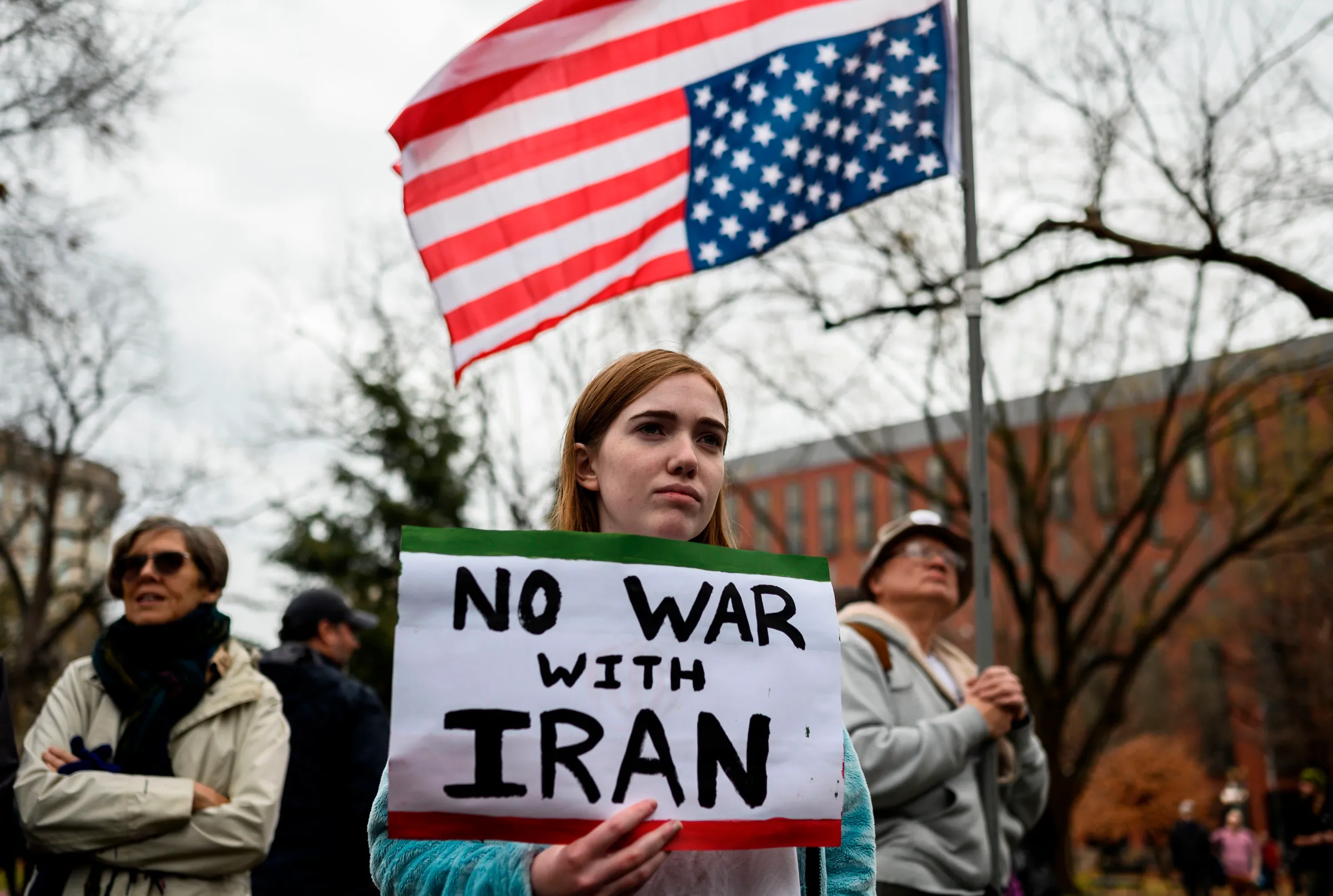
Overview: The Uprising Before the War
The military strikes that began on February 28, 2026, did not emerge from a vacuum. They arrived at the culmination of months of escalating civil unrest inside Iran that had already claimed more than 7,000 lives, displaced hundreds of thousands of people, and exposed the Islamic Republic to its most severe legitimacy crisis since the 1979 revolution. Understanding the protests is essential to understanding the war, because the uprising both shaped the political conditions that made military action possible in Washington and Tel Aviv, and revealed the fragility of a regime that the strikes are now targeting. (Human Rights Watch)
The Iran protests of 2025-2026 constitute the largest, most geographically dispersed, and most lethal wave of civil unrest in the country's post-revolutionary history. They surpass the 2009 Green Movement, the November 2019 fuel price protests, and the 2022 Mahsa Amini uprising in every measurable dimension: the number of cities involved (over 400), the number of provinces (all 31), the duration (ongoing since mid-2025), and most devastatingly, the death toll. Human rights organizations have documented systematic use of lethal force by security services, mass arbitrary detention, enforced disappearances, and credible reports of extrajudicial executions. (BBC Persian)
What distinguishes this uprising from its predecessors is its economic origin. While earlier protests were sparked by specific political or social grievances, such as contested elections in 2009, fuel price hikes in 2019, or the death of a woman in morality police custody in 2022, the current wave was ignited by a comprehensive economic collapse that has left millions of Iranians unable to afford basic necessities. The collapse was driven in large part by the cumulative impact of US sanctions, which were dramatically tightened beginning in 2024 under the Trump administration's "maximum pressure 2.0" campaign. (Atlantic Council)
Protest Origins
The immediate trigger for the protests was the collapse of the Iranian rial in the summer of 2025. The currency, which had already lost more than 80% of its value against the US dollar since the reimposition of sanctions in 2018, entered a death spiral in June 2025 when it breached the psychologically devastating threshold of 1,000,000 rials to one US dollar on the unofficial market. Within weeks, it reached 1,500,000, and by the time widespread protests erupted in August 2025, it was trading above 2,000,000 in some black market exchanges. (BBC Persian)
The currency collapse was not just a financial abstraction. Iran imports a significant portion of its food, medicine, and industrial inputs, and these imports are priced in dollars or euros. As the rial plummeted, the cost of imported goods skyrocketed. Bread prices tripled. Cooking oil prices quadrupled. Medicine, already scarce due to sanctions-related supply chain disruptions, became unaffordable for millions. The price of chicken, a dietary staple, increased fivefold. For a population already suffering from years of economic stagnation, this was the breaking point. (Human Rights Watch)
The protests began in Khuzestan province, Iran's oil-rich southwestern region, in late July 2025. Khuzestan, home to a significant Arab minority that has long complained of discrimination and underdevelopment despite sitting atop vast oil wealth, had been the starting point for previous protest waves. Workers at state-owned companies, unable to feed their families on salaries that had become worthless, walked off the job. The protests quickly spread to the bazaars of Tehran, Isfahan, and Tabriz, where merchants shuttered their shops in a traditional Iranian form of protest known as a "bazaar strike" (ta'til-e bazar). By mid-August, protests had been reported in every province and hundreds of cities and towns. (Atlantic Council)
Unlike the 2022 Mahsa Amini protests, which were led primarily by young women and students and centered on social freedoms, the 2025-2026 protests drew from a much broader cross-section of Iranian society. Factory workers, teachers, retirees, truck drivers, farmers, and bazaar merchants all participated. The protests transcended ethnic and religious lines, with Persians, Azeris, Kurds, Arabs, and Baluchis all taking to the streets. The unifying demand was not reform but regime change, with protesters chanting "Death to Khamenei" and "We don't want the Islamic Republic." (BBC Persian)
The Dollar Shortage Crisis
At the heart of Iran's economic meltdown was a dollar liquidity crisis that, as would later be acknowledged by US officials, was deliberately engineered by the United States Treasury Department as part of a strategy to destabilize the Iranian economy. The mechanism was sophisticated: rather than simply imposing sanctions on Iranian entities, the Treasury's Office of Foreign Assets Control (OFAC) and the Financial Crimes Enforcement Network (FinCEN) worked systematically to cut off Iran's access to US dollars through the global financial system. (US Treasury)
Iran's economy, despite sanctions, had developed a complex network of intermediary banks, shell companies, and hawala networks to access dollars and other hard currencies for trade. Beginning in late 2024, the Treasury escalated enforcement actions against these intermediaries with unprecedented aggression. FinCEN issued a series of advisories to banks in the UAE, Turkey, Iraq, and China, warning that any institution facilitating dollar transactions with Iranian entities, even indirectly, would face secondary sanctions that could cut them off from the US financial system. The effect was devastating: banks in Dubai, Istanbul, and Baghdad that had quietly processed Iranian transactions for years suddenly shut their doors. (Atlantic Council)
The strategy specifically targeted Iran's ability to access physical dollar cash, which the Iranian economy depends on for imports, wage payments, and basic commercial activity. The Treasury pressured the Central Bank of Iraq and other regional central banks to restrict the flow of dollar banknotes to Iran. It sanctioned money exchange houses in Erbil, Sulaymaniyah, and Dubai that had served as conduits for dollar cash to cross into Iran. The result was a cascading dollar famine that starved the Iranian economy of the hard currency it needed to function. (Human Rights Watch)
The impact was not limited to state institutions. Ordinary Iranians who had saved dollars as a hedge against rial depreciation found themselves unable to access their savings or exchange currencies at anything close to reasonable rates. Small businesses that imported goods using informal dollar networks were cut off. The healthcare system, which relied on dollar-denominated imports of medical equipment and pharmaceuticals, faced shortages that human rights organizations described as a "silent humanitarian crisis." The World Health Organization documented sharp increases in mortality from treatable conditions including diabetes, cardiovascular disease, and cancer due to medication shortages. (BBC Persian)
Timeline From 2025 to 2026
| Date | Event | Significance |
|---|---|---|
| June 2025 | Operation Midnight Hammer strikes Iran | First US military strikes; rial collapses to 1M/$1 |
| July 2025 | Worker strikes begin in Khuzestan | Oil and steel workers walk off jobs over unpaid wages |
| August 2025 | Protests spread nationwide | Bazaar strikes in Tehran, Isfahan; 200+ cities involved |
| September 2025 | First mass casualty events | IRGC fires live ammunition at protesters in Shiraz, Zahedan |
| October 2025 | Death toll passes 1,000 | UN OHCHR calls for independent investigation |
| November 2025 | Full internet shutdown (first instance) | Connectivity drops to 5%; "Bloody November" kills 800+ |
| December 2025 | General strikes paralyze economy | Oil production falls 15%; regime deploys military to cities |
| January 2026 | Death toll passes 5,000 | Mass graves documented by satellite imagery; HRW report |
| February 2026 | Death toll exceeds 7,000; war begins | US/Israel launch Operation Epic Fury / Shield of Judah |
The escalation from economic grievance to regime-threatening revolt followed a pattern familiar from Iran's modern history but at an accelerated pace. What took months to develop in 2022 (the Mahsa Amini protests) or years (the Green Movement) compressed into weeks in 2025, reflecting the depth of economic desperation and the cumulative anger built up over years of repression. By September 2025, the protests had moved beyond anything the riot police and Basij militia could contain, forcing the regime to deploy IRGC ground forces into urban areas for the first time since the early years of the revolution. (OHCHR)
Government Crackdown
The Islamic Republic's response to the protests followed an escalating pattern of violence that human rights organizations have characterized as "systematic and widespread attacks on the civilian population constituting crimes against humanity." The crackdown involved multiple layers of security forces, each deployed with increasing lethality as the protests grew. (Human Rights Watch)
The first line of response was the Law Enforcement Command of the Islamic Republic (FARAJA), Iran's national police, supplemented by riot control units. These forces initially used tear gas, water cannons, and rubber bullets. As protests overwhelmed police capabilities in August and September 2025, the regime deployed the Basij Resistance Force, a paramilitary volunteer militia under IRGC command with an estimated membership of several hundred thousand. The Basij, many of them young men from rural and conservative backgrounds, were given broad authority to "restore order" and quickly became responsible for much of the street-level violence, including beatings, stabbings, and the use of shotguns loaded with birdshot and buckshot at close range. (BBC Persian)
By October 2025, IRGC ground forces were deployed to major cities. Unlike the Basij, IRGC troops are professional soldiers equipped with military-grade weapons. Credible reports from multiple human rights organizations documented the use of live ammunition fired directly into crowds, the deployment of snipers on rooftops targeting protest leaders, and the use of armored vehicles to disperse gatherings. In several documented incidents, IRGC forces fired heavy-caliber machine guns into residential neighborhoods where protesters had taken refuge. The worst single incident occurred on November 15, 2025, in the city of Zahedan in Sistan-Baluchestan province, where security forces killed an estimated 120 people in a single day during what became known as "Zahedan's Second Friday of Blood" (echoing a similar massacre in the same city in September 2022). (OHCHR)
The regime also carried out mass arrests, with estimates ranging from 30,000 to 50,000 detainees held in official and unofficial detention facilities. Former detainees who managed to communicate with exile-based human rights organizations described systematic torture, including beatings, electric shock, sleep deprivation, mock executions, sexual violence, and forced confessions. At least 200 protesters were sentenced to death by revolutionary courts in proceedings that lasted minutes, though the actual number of executions carried out is unknown due to the information blackout. (Human Rights Watch)
Death Toll Tracking
Establishing an accurate death toll for the Iranian protests is one of the most challenging humanitarian monitoring tasks in the world, complicated by the regime's systematic efforts to suppress information, the internet shutdown that prevents real-time reporting, and the dangers faced by anyone attempting to document casualties. (OHCHR)
The figure of more than 7,000 dead is based on a composite of data from several monitoring organizations. Human Rights Watch has confirmed by name and circumstance of death approximately 3,200 individuals, based on interviews with witnesses, family members, and hospital workers, corroborated where possible by photographs, videos, and medical records smuggled out of the country. The Abdorrahman Boroumand Center, an Iran-focused human rights documentation organization based in Washington, has compiled a list of approximately 4,800 confirmed deaths. Iran Human Rights (IHR), a Norway-based monitoring group, estimates the total at 7,200 based on a statistical methodology that accounts for documented deaths, estimated unreported deaths in areas with no monitoring access, and deaths in detention. The UN Office of the High Commissioner for Human Rights (OHCHR) has independently verified approximately 2,100 deaths but emphasizes that this represents a significant undercount due to access limitations. (Human Rights Watch)
| Source | Documented Deaths | Methodology |
|---|---|---|
| Human Rights Watch | ~3,200 (named) | Witness interviews, corroborated evidence |
| Boroumand Center | ~4,800 (named) | Documentation with biographical detail |
| Iran Human Rights (IHR) | ~7,200 (estimated) | Statistical modeling of documented + unreported |
| UN OHCHR | ~2,100 (verified) | Independent UN verification standard |
The Iranian government has provided no official casualty figures for protesters, referring to those killed as "rioters" and "agents of foreign powers." State media has reported the deaths of approximately 80 security personnel, a figure that human rights organizations consider plausible given the scale of the unrest and the documented instances of protesters attacking security forces, setting fire to government buildings, and in some cases using improvised weapons. (BBC Persian)
Satellite imagery analyzed by commercial providers and open-source intelligence researchers has identified what appear to be mass burial sites at several locations near major cities, including freshly dug trenches at cemeteries in Tehran, Isfahan, and Shiraz that are inconsistent with normal burial patterns. These images, while not conclusive on their own, corroborate reports from cemetery workers and local residents who described nighttime burials by security forces of unidentified bodies. (Atlantic Council)
Regional Spread
One of the most significant characteristics of the 2025-2026 protests is their geographic breadth. Previous Iranian uprisings, while widespread, tended to have focal points: Tehran in 2009, fuel-pump locations in 2019, universities and urban centers in 2022. The current protests have penetrated every region of the country, including traditionally conservative and regime-loyal areas that had been largely absent from previous waves. (Atlantic Council)
In Khuzestan, the Arab-majority southwest, protests took on an ethno-national dimension, with demonstrators calling for regional autonomy and an end to what they describe as decades of resource extraction without local development. In Kurdistan (Kermanshah, Sanandaj, Ilam), where the Kurdish population has a long history of resistance to central authority, protests were accompanied by general strikes that shut down entire cities for days. In Sistan-Baluchestan, Iran's poorest and most marginalized province, the Baluch population rose up with a ferocity that stunned the regime, with Friday prayer gatherings repeatedly turning into mass demonstrations met with lethal force. (BBC Persian)
Perhaps most alarming for the regime was the spread of protests to traditionally loyalist cities. Qom, the center of Shia clerical authority and a city that had remained largely quiet during previous protests, saw significant demonstrations driven by economic hardship among seminary students and religious scholars whose stipends had become worthless. Mashhad, Iran's second-largest city and home to the shrine of Imam Reza, one of the holiest sites in Shia Islam, experienced protests that authorities struggled to contain. Even in smaller towns in the heartland provinces of Fars, Markazi, and Hamadan, where the regime had traditionally enjoyed strong support among conservative rural populations, economic desperation drove people into the streets. (Human Rights Watch)
The all-31-province spread of the protests shattered the regime's ability to dismiss them as the work of specific ethnic minorities, westernized urban elites, or foreign-backed agitators. The economic drivers of the unrest are universal: everyone in Iran is affected by the currency collapse, inflation, and shortages, regardless of ethnicity, religion, or political orientation. This universality made the protests existentially threatening to the regime in a way that more narrowly based movements were not. (OHCHR)
Internet Shutdowns
The Iranian government implemented a series of internet shutdowns that escalated in scope and duration as the protests intensified, culminating in the near-total blackout that remains in effect as of the military strikes on February 28, 2026. The shutdowns represent the most extensive and prolonged digital censorship operation in Iranian history, surpassing even the five-day total shutdown during the November 2019 fuel price protests that was previously considered the benchmark for Iranian internet suppression. (BBC Persian)
Internet monitoring by NetBlocks, OONI (Open Observatory of Network Interference), and Cloudflare Radar documented the following pattern: In August 2025, as protests erupted, authorities imposed regional shutdowns in Khuzestan and Kurdistan provinces. In September, mobile internet was cut in major cities during protest peaks while fixed-line connections were throttled to reduce bandwidth. In November 2025, during the deadliest phase of the crackdown, a nationwide shutdown brought connectivity to approximately 5% of normal levels for 10 days, the longest total shutdown in Iranian history. Since then, connectivity has fluctuated between 10% and 30% of normal levels, with full shutdowns imposed during scheduled protest days and significant events. (Atlantic Council)
On February 28, 2026, coinciding with the US-Israeli military strikes, connectivity dropped to approximately 4% of normal levels, effectively a total blackout. Only government, military, and select financial networks remain operational. This blackout serves a dual purpose: preventing protest coordination during the chaos of military operations, and suppressing the flow of information about both the military strikes and the ongoing crackdown. For the outside world, the blackout means that real-time information from inside Iran is almost entirely dependent on satellite phone communications, ham radio, and the small number of journalists and citizens who have access to satellite internet terminals. (Human Rights Watch)
The human cost of the internet shutdown extends beyond political censorship. Iranian hospitals, many of which rely on internet-connected systems for patient records, pharmacy management, and telemedicine, have been forced to revert to paper-based systems. Families have been unable to locate detained or missing relatives. Financial transactions, increasingly conducted through mobile banking apps, have been disrupted. The economic damage of sustained internet shutdowns has been estimated by NetBlocks at approximately $1.5 billion per month, further deepening the economic crisis that fueled the protests in the first place. (BBC Persian)
US Treasury Admission
One of the most significant and underreported elements of the protest story is the US Treasury Department's acknowledgment that the dollar shortage devastating Iran's economy was not merely a side effect of sanctions but a deliberately engineered policy outcome. In testimony before the Senate Banking Committee in January 2026, Deputy Secretary of the Treasury Adewale Adeyemo stated that the Treasury had "taken targeted actions to restrict the Iranian regime's access to hard currency, including US dollar cash, as part of a comprehensive strategy to constrain Iran's destabilizing activities." (US Treasury)
The admission was more explicit in classified briefings provided to members of the Senate Foreign Relations Committee, details of which were subsequently reported by journalists. According to these reports, Treasury officials described a multi-year campaign to systematically identify and shut down every channel through which Iran accessed US dollars, including formal banking channels, informal hawala networks, cash smuggling routes through Iraq and Afghanistan, and cryptocurrency exchanges. The strategy was described internally as "financial strangulation" and was explicitly intended to create economic pressure that would weaken the regime and empower the Iranian population to demand change. (Atlantic Council)
The ethical and legal dimensions of this admission are profound. International humanitarian law and the Geneva Conventions prohibit the use of starvation of civilians as a method of warfare. While sanctions themselves are a legal tool of statecraft, deliberately engineering an economic collapse that causes mass deprivation of food, medicine, and basic necessities raises questions about whether the policy crosses the line from economic pressure into collective punishment. Human Rights Watch issued a detailed legal analysis arguing that the dollar shortage campaign, combined with secondary sanctions that prevented humanitarian trade, constituted "a policy that foreseeably causes severe suffering among the civilian population and meets the threshold for consideration as collective punishment under international humanitarian law." (Human Rights Watch)
The Treasury's admission also created a political contradiction for the administration. On one hand, officials cited the Iranian regime's brutal crackdown on protesters as moral justification for military strikes. On the other hand, the protests that the regime was crushing had been substantially caused by an American policy of economic warfare against the same population the administration claimed to be defending. Critics argued that the administration was using the suffering it had helped create as a pretext for military action it had been planning regardless. (OHCHR)
Link to Military Escalation
The relationship between the Iranian protests and the decision to launch military strikes is complex and contested. Administration officials have presented the two as part of a coherent strategy: economic pressure weakened the regime, the regime's brutal response revealed its true nature, and military action was the necessary final step to neutralize a nuclear threat from a government that had demonstrated its willingness to kill its own people. Critics argue that the protests were instrumentalized to build public support for a war that was driven by separate geopolitical calculations. (Atlantic Council)
There is evidence supporting both interpretations. On the strategic side, the protests genuinely weakened Iran's military capacity. The deployment of IRGC ground forces to suppress domestic unrest reduced the forces available for territorial defense. The economic collapse degraded the regime's ability to maintain military readiness and fund proxy operations. The internet shutdown, while effective at suppressing protest coordination, also hampered military communications and logistics. Intelligence officials have stated that the protest-related degradation of Iranian military capacity was a factor in the timing of the strikes. (BBC Persian)
On the political side, the protests shifted American public opinion. Polls conducted in January 2026 showed that support for military action against Iran's nuclear program increased from approximately 35% to 52% after extensive media coverage of the regime's crackdown, with particularly sharp increases among voters who cited human rights concerns. President Trump's video announcement of the strikes explicitly referenced the protests, telling Iranian citizens: "Your hour of freedom is at hand." This framing positioned the strikes not merely as a counter-proliferation operation but as an act of liberation, borrowing rhetoric from the 2003 Iraq War that critics found deeply troubling. (Human Rights Watch)
The protests also created a diplomatic opening. Iran's international standing was weakened by the crackdown, making it harder for traditional allies like Russia and China to defend the regime at the UN Security Council with full-throated conviction. While both countries still condemned the strikes, their criticism lacked the moral authority it might have carried had Iran not been in the process of massacring thousands of its own citizens. The UN Human Rights Council had passed a resolution in December 2025 establishing a fact-finding mission on Iran, over the objections of Russia and China, further isolating Tehran diplomatically. (OHCHR)
International Response
The international community's response to the Iranian protests has been characterized by rhetorical condemnation combined with limited practical action, a pattern familiar from previous Iranian crackdowns. The European Union imposed targeted sanctions on 86 Iranian officials and 6 entities linked to the crackdown, including IRGC commanders, Basij leaders, and judges in revolutionary courts. These sanctions included asset freezes and travel bans but did not fundamentally alter the regime's calculus. (Human Rights Watch)
The UN Human Rights Council established an Independent International Fact-Finding Mission on Iran in December 2025, tasked with investigating violations committed in the context of the protests. The mission, modeled on similar bodies established for Syria, Myanmar, and Ethiopia, has the mandate to collect and preserve evidence for potential future accountability proceedings. However, the mission has been denied access to Iran and is operating entirely on the basis of external evidence, including testimony from refugees who have fled the country, satellite imagery, and digital evidence smuggled out through the information blackout. (OHCHR)
The United States, while publicly condemning the crackdown and imposing additional sanctions on Iranian officials, faced criticism for its dual role as both the architect of the economic conditions that triggered the protests and the self-appointed champion of the protesters' cause. Iranian diaspora communities have been divided: some welcomed US pressure on the regime, while others warned that US intervention, particularly military action, would allow the regime to redirect popular anger away from its domestic failures and toward an external enemy, potentially undermining the protest movement itself. (Atlantic Council)
This fear appears to be materializing. In the hours since the military strikes began, Iranian state media has pivoted from defending the crackdown on "rioters" to calling for national unity against "American and Zionist aggression." Early reports from the limited communications emerging from Iran suggest that the regime is attempting to absorb the protest movement into a nationalist mobilization for war. Whether this strategy succeeds, or whether the combination of military strikes and ongoing economic devastation accelerates the regime's collapse, is one of the central questions of the current crisis. (BBC Persian)
What's Next
The onset of military hostilities has fundamentally transformed the context of the Iranian protests. The uprising was, in many respects, a pre-war phenomenon: it weakened the regime, provided political justification for strikes, and revealed the depth of popular discontent. But war changes the dynamics of civil unrest in unpredictable ways. (Atlantic Council)
Historically, external military attacks on authoritarian regimes can either accelerate their collapse or rally the population around the flag. The rally-around-the-flag effect is well documented: when a country is attacked by a foreign power, domestic opposition often softens as citizens unite against the external threat. However, this effect tends to be temporary and is weaker when the regime has already lost most of its domestic legitimacy, as appears to be the case in Iran. The regime's ability to sustain a nationalist mobilization will depend on its capacity to provide basic security and services to the population during a military campaign, a capacity that was already severely degraded by the economic crisis and protest-related disruptions. (Human Rights Watch)
The 4% internet connectivity level means that the protest movement's ability to coordinate has been essentially eliminated. However, the same blackout also limits the regime's ability to communicate with its own population and project an image of control. The coming days and weeks will reveal whether the protests resume in new forms, whether they are absorbed into wartime dynamics, or whether the combination of military bombardment from above and economic collapse from below creates conditions so chaotic that traditional protest activity becomes impossible. What is certain is that the 7,000 people killed in the uprising will not be forgotten, and their deaths will shape Iranian politics for a generation, regardless of the war's outcome. (OHCHR)
Related Coverage
- Iran Civilian Casualties and Humanitarian Crisis
- Iran Government Structure Explained
- History of US-Iran Conflict: Full Timeline
- Iran Sanctions and Economy Explained
- Displacement Risks After Iran-Israel Escalation
Research Hubs
- Iran-Israel-Dubai War Guide
- Iran Nuclear and Military Briefing
- Israel Security and Escalation Briefing
- Dubai and UAE Risk Briefing
- Source Center: Primary References
Sources
- "Iran: Security forces committing crimes against humanity in protest crackdown." Human Rights Watch
- "Iran protests: The uprising shaking the Islamic Republic." BBC Persian
- "Deputy Secretary Adeyemo testimony on Iran sanctions and financial strategy." US Treasury Department
- "Situation of human rights in the Islamic Republic of Iran: Report of the Fact-Finding Mission." UN OHCHR
- "Iran's economic collapse and the road to conflict: How sanctions shaped the crisis." Atlantic Council