Overview
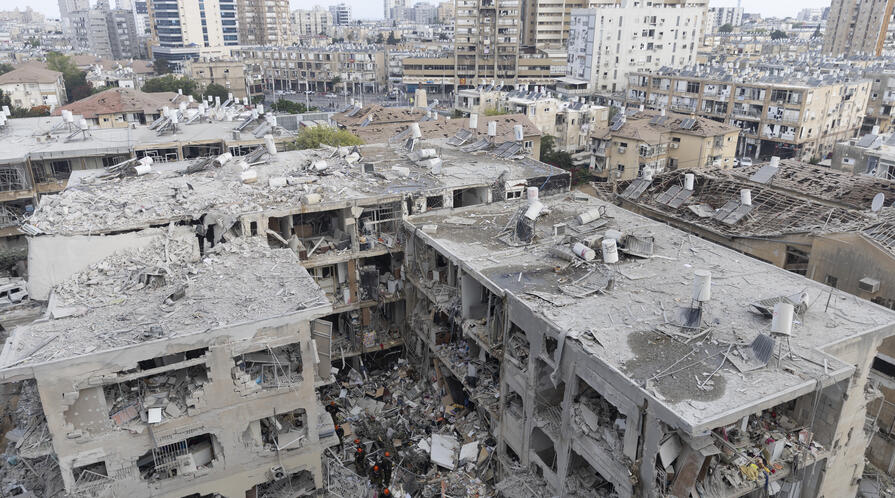
Every military strike produces two sets of numbers: the targets destroyed and the people harmed. Within hours of the February 28 strikes on Iranian territory, both the Iranian government and the US Department of Defense began issuing casualty figures that diverge dramatically. This divergence is not unusual — it is a consistent feature of modern air campaigns, from Kosovo to Libya to Yemen — but it creates an information environment in which concerned observers struggle to understand the actual human cost of the operation.
This article compiles what can currently be verified about civilian casualties, distinguishes confirmed facts from contested claims, and examines the emerging humanitarian crisis beyond the immediate death toll. The secondary effects of strikes — hospital capacity strain, population displacement, infrastructure damage to power and water systems, and disruption of supply chains for medical equipment and food — often cause more suffering than the strikes themselves over time. Understanding both the direct and indirect humanitarian impact is essential for assessing the proportionality of the operation, the adequacy of international response, and the likely trajectory of the crisis.
A critical caveat applies throughout: casualty verification in the early hours and days of an active conflict zone is inherently unreliable. Numbers from both sides serve strategic communication objectives. This article labels every figure with its source and confidence level, and will be updated as independent verification organizations (Airwaves, ICRC, Physicians for Human Rights) complete their assessments.
What We Know
The following information is drawn from official statements, humanitarian organization field reports, and open-source monitoring as of February 28, 2026. Each item is labeled with its source and assessed reliability.
- Iranian government claims (unverified): Iran's Ministry of Health and Medical Education has reported 1,437 civilian deaths and over 3,200 injuries across Isfahan, Tehran, Natanz, and Parchin strike zones. State broadcaster IRIB has aired footage of destroyed residential buildings and overwhelmed hospital emergency departments. These figures have not been independently verified, and Iran has a documented history of both inflating and concealing casualty figures depending on strategic narrative requirements. ICRC Iran operations
- Pentagon statements (claims of precision targeting): Department of Defense spokesperson has stated that all strikes targeted military installations, nuclear enrichment facilities, missile production sites, and IRGC command nodes using precision-guided munitions specifically selected to minimize civilian harm. The Pentagon has not provided a civilian casualty estimate but has stated that battle damage assessment is ongoing. The US has invoked the distinction and proportionality principles under international humanitarian law. US Department of Defense
- ICRC field assessment (partial, restricted access): The International Committee of the Red Cross has confirmed that its surgical teams in Isfahan are treating "an unprecedented volume of blast and burn casualties" and that hospital systems in the region are "overwhelmed beyond normal surge capacity." The ICRC has not provided specific casualty numbers but has described conditions consistent with a mass casualty event. Access to Natanz and Parchin areas remains restricted. ICRC
- UNHCR displacement estimates (preliminary): The UN Refugee Agency estimates that 120,000-180,000 people have fled areas surrounding major strike sites, with the majority moving toward Yazd, Shiraz, and Kerman. Displacement is driven by both direct strike damage and fear of further attacks on nuclear facilities due to potential radiological contamination concerns (though no radiological release has been detected). UNHCR
- Open-source satellite imagery (verified): Commercial satellite imagery from Planet Labs and Maxar Technologies shows extensive damage to structures within the perimeter of confirmed military and nuclear sites, with some damage extending into adjacent civilian areas, particularly near the Isfahan nuclear technology center where residential neighborhoods are within 2-3 kilometers of facility boundaries. Planet Labs
Analysis
Why casualty numbers diverge and how to read them
The gap between Iranian and US casualty claims follows a well-documented pattern in conflict reporting. The attacking party has incentives to minimize reported casualties to maintain domestic and international political support and demonstrate adherence to the laws of armed conflict. The defending party has incentives to maximize reported casualties to generate international sympathy, undermine the attacking party's legitimacy, and rally domestic support for retaliation. Neither set of numbers should be taken at face value.
Independent verification requires three things that are currently unavailable: unrestricted physical access to strike sites, comprehensive hospital and morgue records, and time. The Airwaves monitoring project, which tracks conflict casualties using a combination of open-source intelligence, satellite imagery, and local source networks, has stated that preliminary verification will take a minimum of 7-14 days. During the 2003 Iraq invasion, credible casualty estimates took months to develop. During the 2011 Libya intervention, the gap between initial NATO claims of minimal civilian casualties and subsequent human rights investigations was substantial.
The most reliable early indicators come from hospital admission data, which is harder to fabricate at scale than government press releases. ICRC reports describing hospitals at 200-300% capacity are consistent with a significant mass casualty event, though they do not distinguish between military and civilian patients or between direct strike casualties and secondary injuries from infrastructure collapse, vehicle accidents during evacuation, or pre-existing medical emergencies exacerbated by healthcare system disruption.
The infrastructure damage multiplier
Beyond direct casualties, the strikes have damaged critical civilian infrastructure that serves populations far larger than those in the immediate blast radius. Power grid damage near Isfahan and Natanz has cascaded through regional electricity distribution, causing outages affecting an estimated 400,000-600,000 people. These outages have disrupted:
Medical cold chains: Hospitals and pharmacies rely on continuous power for medication refrigeration. Insulin, blood products, certain antibiotics, and vaccines become unusable if cold chain is broken for more than a few hours. Iran's Health Ministry has reported that three major hospital blood banks in Isfahan province have been compromised.
Dialysis and ventilator-dependent patients: Iran has approximately 38,000 dialysis patients nationwide, with several thousand in Isfahan and Tehran provinces. Dialysis requires continuous power and purified water. Backup generators at dialysis centers typically provide 24-72 hours of operation. If grid power is not restored within that window, these patients face life-threatening complications.
Water treatment: Water treatment plants near strike zones have reported reduced output due to power fluctuations and physical damage to pumping stations. Untreated or partially treated water increases the risk of waterborne disease outbreaks — cholera, typhoid, hepatitis A — that can cause casualty numbers to rise dramatically in the weeks following strikes, even if no further military operations occur.
Displacement patterns and shelter gaps
The UNHCR estimate of 120,000-180,000 displaced persons reflects only the initial movement away from strike sites. Historical patterns from comparable air campaigns suggest that displacement numbers typically increase 3-5x over the first two weeks as secondary displacement occurs (people who initially sheltered in place decide to leave as infrastructure deterioration worsens conditions). If additional strike waves target new locations, displacement could accelerate further.
Iran's internal capacity to absorb displaced populations is significant but not unlimited. The country has experience managing large displacement from the 2003 Bam earthquake (26,000 killed, 75,000 displaced) and periodic flooding events. However, conflict displacement differs from natural disaster displacement because the affected population cannot return while hostilities continue, and the government's resources are simultaneously consumed by military operations rather than fully available for humanitarian response.
The Iranian Red Crescent Society has activated emergency shelters in Yazd and Kerman provinces, but capacity reports suggest current shelter availability covers approximately 40,000-60,000 people — well below the displacement estimates. Schools, mosques, and public buildings are being converted to temporary shelters, a pattern seen in every major displacement crisis but one that disrupts education and community services for host populations.
What's Next
The humanitarian trajectory depends on several variables that will become clearer over the coming days.
- Additional strike waves: If the US and Israel conduct further strikes, casualty numbers and displacement will increase proportionally. The Pentagon has indicated that "operations are ongoing," but has not specified whether additional waves will target the same sites or expand to new target sets. Each additional wave compounds the strain on hospitals, displaces more people, and damages additional infrastructure. US Department of Defense
- ICRC access expansion: The ICRC has formally requested expanded access to all strike-affected areas. Iran's willingness to grant this access will determine how quickly independent casualty verification can proceed. Restricted access benefits the Iranian government if it wants to control the narrative, but also delays the international aid coordination that Iran needs. ICRC
- Power grid restoration timeline: Iran's national grid operator (Tavanir) has not issued a public restoration timeline for affected areas. If power is restored within 48-72 hours, the secondary infrastructure effects (cold chain, dialysis, water treatment) can be mitigated. Beyond 72 hours, secondary health crises begin accelerating. WHO Iran
- UN flash appeal response: OCHA has circulated a draft flash appeal for emergency humanitarian funding. The speed and scale of donor response will determine whether international organizations can supplement Iran's domestic capacity before secondary health crises compound the direct strike casualties. UN OCHA
- Radiological monitoring: While no radiological release has been detected from strikes near Natanz and Isfahan, the IAEA has stated it is monitoring the situation. If any enrichment facility containment was breached and radioactive material released, the humanitarian crisis would escalate into a radiological emergency requiring evacuation of much larger areas. IAEA
Why It Matters
Civilian casualties are not a side effect of war — they are a central legal, moral, and strategic consideration that shapes the conflict's trajectory. Under international humanitarian law (IHL), specifically the Geneva Conventions and their Additional Protocols, attacking parties are required to distinguish between military objectives and civilian objects, to take precautions to minimize civilian harm, and to ensure that the anticipated civilian damage is not excessive in relation to the concrete military advantage sought. Documented civilian casualties become evidence in legal assessments of proportionality and distinction that can affect international coalition cohesion, UN Security Council dynamics, and potential future accountability proceedings.
Strategically, civilian casualties influence whether Iran's population rallies behind the government or fractures under pressure. Historical patterns are mixed: the 1980-88 Iran-Iraq War produced a powerful national unity effect that sustained eight years of devastating conflict, but that war was a defensive struggle against Iraqi invasion. The current strikes, targeting nuclear and military infrastructure, create a different political dynamic in which the population may blame its own government for provoking the attack through nuclear escalation or may blame the attackers. How the Iranian public perceives responsibility will shape whether the government faces pressure to retaliate (potentially escalating the conflict) or to negotiate.
For the United States and its allies, civilian casualty documentation directly affects the political sustainability of military operations. Graphic footage of civilian suffering, broadcast globally via social media and satellite television, erodes public support in democratic allied nations and provides diplomatic ammunition to adversaries. The difference between a campaign perceived as precise and proportionate versus one perceived as indiscriminate can determine whether allied coalitions hold together or fracture — a lesson repeatedly demonstrated from Vietnam through Iraq and Afghanistan.
Related Coverage
- How to Read Casualty Claims in Fast-Moving Conflicts
- Civilian Protection Rules for Strikes in Urban Areas
- Displacement Risks After Iran-Israel Escalation
- How to Verify Iran Strike Videos: OSINT Guide
- Iran Strikes Tonight: What Officials Have Confirmed
Research Hubs
- Iran-Israel-Dubai War Guide
- Iran Nuclear and Military Briefing
- Israel Security and Escalation Briefing
- Dubai and UAE Risk Briefing
- Source Center: Primary References
Sources
- International Committee of the Red Cross — Iran operations. www.icrc.org/en/where-we-work/middle-east/iran
- UNHCR operational updates — Middle East. www.unhcr.org/middle-east.html
- UN Office for the Coordination of Humanitarian Affairs. www.unocha.org
- World Health Organization — Iran country profile. www.who.int/countries/irn
- IAEA monitoring updates. www.iaea.org/newscenter/pressreleases
- AP live updates on Iran conflict (Feb 28, 2026). apnews.com/hub/iran