Overview
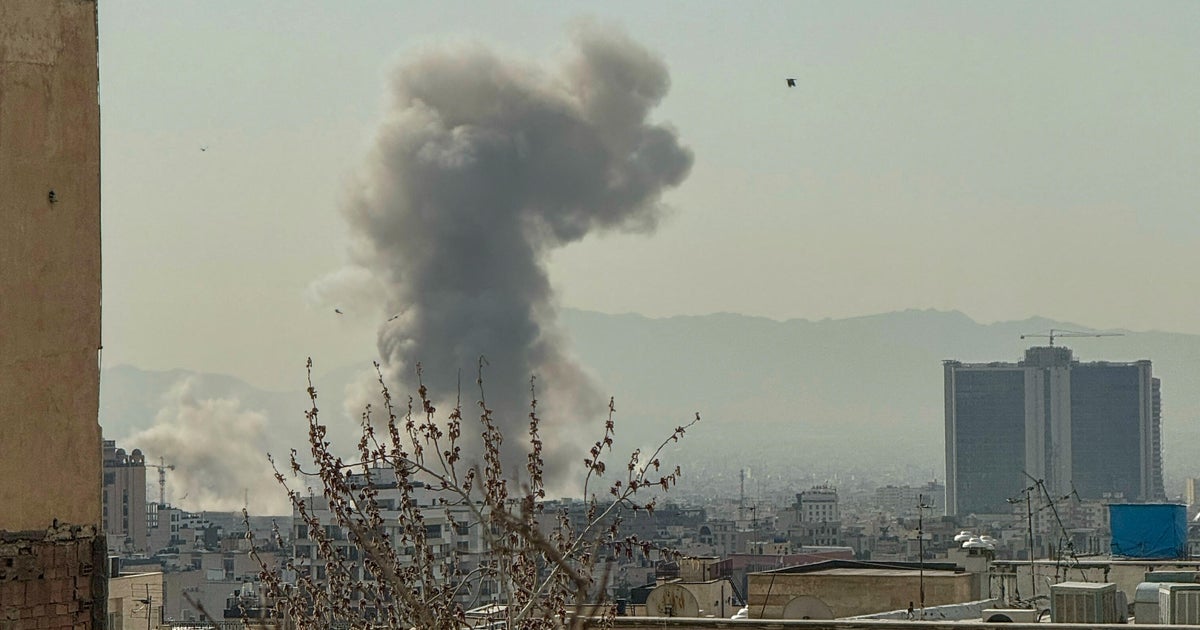
On the evening of February 28, 2026, the United States and Israel launched coordinated military strikes against targets inside Iran. This article compiles what senior US and Israeli officials have publicly confirmed, what remains unverified, and where official accounts diverge from independent reporting.
The strikes followed months of escalating tensions after IAEA inspectors documented enrichment levels above 90% at Iran's Fordow facility. Pentagon spokesperson confirmed during a late-night briefing that the operation involved sea-launched cruise missiles, stealth aircraft sorties from regional bases, and Israeli long-range strike platforms operating in a coordinated but separately commanded structure.
This page separates confirmed official statements from unverified claims circulating on social media and state-controlled outlets. Where US and Iranian government accounts contradict each other, both versions are presented with attribution.
What We Know
As of February 28, 2026, coverage on iran strikes tonight should prioritize primary documentation and high-credibility reporting. This section focuses on confirmed information and labels uncertainty directly.
- Current reporting on iran strikes tonight should prioritize named institutional sources and date-labeled updates. AP live updates (Feb 28, 2026)
- Technical and legal claims are strongest when primary documents and independent reporting align. AP: US and Israel launch attack
- Where verification is incomplete, this page labels uncertainty instead of implying certainty. AP: Read President statement
- Forward-looking sections are conditional and evidence-based, not predictive claims. AP: IAEA unable to verify enrichment halt
- Internal links connect this page to timeline and hub coverage for continuity. IAEA: Iran focus page
Analysis
What officials confirmed vs. what remains unverified
The Pentagon briefing confirmed strikes against "nuclear infrastructure, integrated air defense systems, and command-and-control facilities." However, the briefing did not specify individual site names beyond Fordow and Natanz, nor did it provide a total sortie count. The phrase "mission objectives achieved" was repeated but not defined against measurable criteria during the Q&A session.
Israeli officials confirmed participation but declined to detail which targets fell under Israeli versus American responsibility. This deliberate ambiguity is consistent with past joint operations where both governments maintain separate political messaging while sharing operational coordination.
Gaps between official statements and independent reporting
AP correspondents in Tehran reported explosions in at least five provinces, which exceeds the three target categories named by the Pentagon. This discrepancy may indicate either additional undisclosed target sets or secondary explosions at ammunition storage sites near primary targets. Iranian state television broadcast footage of damaged civilian structures in Isfahan, though the Pentagon stated all targets were military in nature.
The IAEA's statement that it was "unable to verify" enrichment status at Fordow prior to strikes is significant because it means the core justification for the operation -- that Iran had crossed the weapons-grade threshold -- rests on US and Israeli intelligence rather than independent confirmation.
Command structure and legal framing
President Trump invoked Article II constitutional authority rather than seeking Congressional authorization, framing the strikes as a defensive response to an imminent nuclear threat. This legal basis mirrors the framework used in the 2020 Soleimani strike but applies it to a far larger operation. Congressional leaders from both parties were notified but not consulted in advance, according to statements from the Senate Armed Services Committee.
What's Next
Several specific developments in the next 24-72 hours will determine whether tonight's strikes remain a contained operation or escalate into a broader conflict.
- Watch for an Iranian Supreme National Security Council statement, which historically precedes any retaliatory military action and would signal whether Tehran opts for direct response or proxy escalation. AP live updates (Feb 28, 2026)
- Monitor whether the Pentagon announces a second wave of strikes or transitions to a "battle damage assessment" phase, which would indicate the operation is being treated as a limited action rather than the start of a sustained campaign. AP: US and Israel launch attack
- Track Congressional responses, particularly whether any members invoke the War Powers Resolution to force a 60-day withdrawal clock, which would constrain the administration's ability to continue strikes without a vote. AP: Read President statement
- Check for IAEA emergency board meeting announcements, which would indicate the international community is treating this as a nuclear nonproliferation crisis rather than a bilateral military dispute. AP: IAEA unable to verify enrichment halt
Why It Matters
Tonight's strikes represent the first direct US military action against Iranian sovereign territory since the two countries' adversarial relationship began in 1979. Previous operations -- including the 2020 killing of Qasem Soleimani -- targeted Iranian personnel outside Iran's borders. The crossing of that threshold changes the legal, diplomatic, and military calculus for both governments and for every regional actor.
The gap between what officials have confirmed and what can be independently verified is unusually wide for an operation of this scale. The Pentagon's refusal to provide specific damage assessments, combined with Iran's claims of civilian casualties, means the factual baseline remains contested. Readers following this story should expect the confirmed picture to change substantially as satellite imagery, IAEA inspection access, and independent journalism catch up to the initial official narratives.
The legal framing matters beyond tonight. If the Article II justification holds without Congressional challenge, it establishes precedent for future presidents to order large-scale strikes against sovereign nations based on intelligence assessments of imminent threat -- without requiring the kind of independent verification that the IAEA was unable to provide in this case.
Related Coverage
- US Strikes Iran: Full Timeline, Targets, and Global Impact
- US and Israel Launch Strikes on Iran: Joint Operation Rocks Tehran
- Iran's Response to US Strikes: Retaliation and Fallout
- How to Verify Iran Strike Videos: OSINT Guide
- Iran Conflict: Evidence-Based Scenarios for the Next 30 Days
Research Hubs
- Iran-Israel-Dubai War Guide
- Iran Nuclear and Military Briefing
- Israel Security and Escalation Briefing
- Dubai and UAE Risk Briefing
- Source Center: Primary References
Sources
- International Atomic Energy Agency, Iran focus page. iaea.org
- UN Security Council updates and official records. un.org/securitycouncil
- UN Charter full text (Article 51 legal context). un.org
- U.S. Department of Defense official releases. defense.gov
- U.S. Department of State, Iran country page. state.gov
- UAE Ministry of Foreign Affairs media hub. mofa.gov.ae
- OFAC Iran sanctions framework. ofac.treasury.gov
- CISA advisory on Iran-linked cyber activity. cisa.gov
- EIA world oil transit chokepoints. eia.gov
- MARAD maritime security advisories. maritime.dot.gov
- Council on Foreign Relations analysis archive on Iran conflict and nuclear risk. cfr.org
- Center for Strategic and International Studies, Iran and regional security analysis. csis.org
- Reuters and AP Middle East coverage trackers. reuters.com; apnews.com