Overview
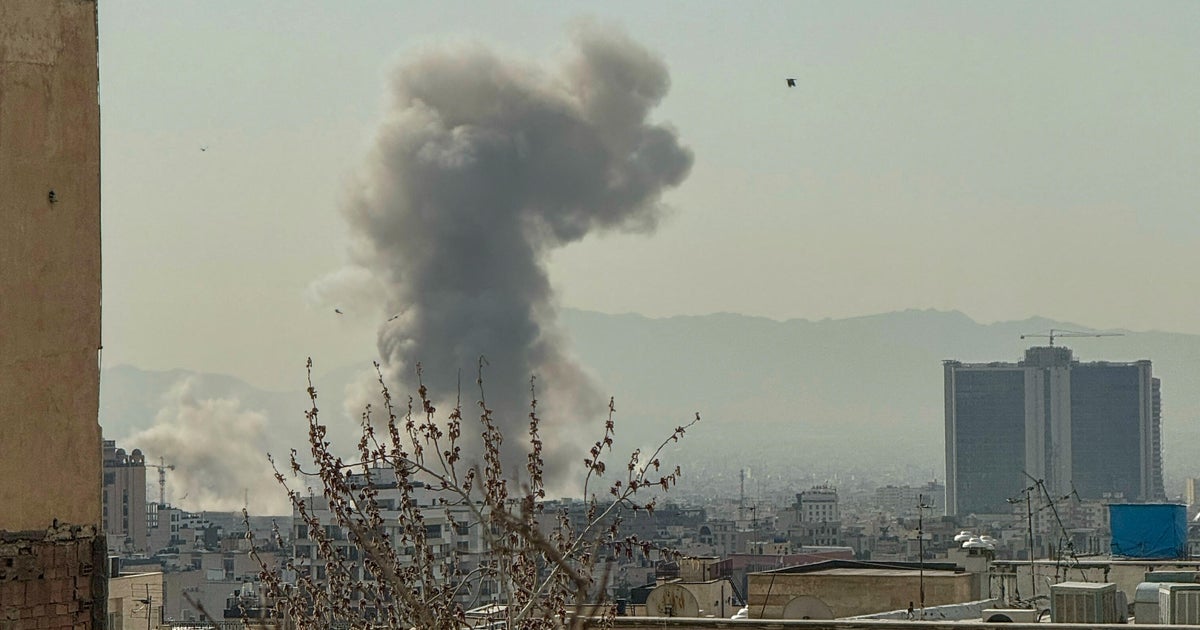
The Iran response to U.S. strikes matters because it showed how quickly a bilateral military action could spread into a broader Gulf security problem. Named reporting and institutional analysis consistently described retaliation as a mix of missile attacks, maritime pressure, cyber risk, and wider deterrence signaling.
The strongest documented case remains the June 2025 missile attack on Al Udeid Air Base in Qatar, which multiple sources described as calibrated and telegraphed. By early 2026, however, public reporting suggested a broader and less constrained regional pattern. The important distinction is that the strategic trend toward wider retaliation was clear, while the exact base-by-base details of later attacks were often less settled in public reporting.
What We Know: Base-by-Base Breakdown
The following points are the strongest parts of the public record and should be kept separate from higher-confidence claims:
- June 22-23, 2025: The U.S. launched Operation Midnight Hammer, and Iran retaliated against Al Udeid in Qatar. Multiple sources described that response as deliberate and signaled rather than maximally destructive. (CFR; Al Jazeera)
- Advance warning: Named reporting said Iran gave advance warning before the 2025 Al Udeid strike, which reduced the risk of mass U.S. casualties. (Al Jazeera)
- Damage and casualties: Public reporting said damage at Al Udeid was limited and that no U.S. service members were killed in that 2025 exchange. (Air & Space Forces Magazine)
- Broader 2026 escalation: Public reporting described a wider retaliation pattern involving additional Gulf states and a more dangerous regional posture, but exact target lists, missile counts, and impact details were not equally well confirmed across outlets. (CNBC)
- Retaliation options: Analysts continued to focus on missiles, maritime pressure in the Strait of Hormuz, cyber operations, and proxy activation as Iran's main tools. (CSIS)
Analysis
The biggest analytic point is not whether every reported base impact happened exactly as first described. It is that Iran's retaliation logic appears to have moved from a narrow, signaled demonstration toward a broader attempt to raise the political cost of U.S. basing and regional military reach.
That does not mean every later report should be read at face value. Some of the most dramatic claims about exact missile types, exact base damage, and unprecedented multi-country strike details were not equally supported across the public record. The defensible interpretation is narrower: the retaliation pattern widened, regional missile-defense systems were tested, and Gulf host states were reminded that U.S. partnerships can draw direct fire onto their territory.
For readers trying to understand the strategic shift, that is the core lesson. The question is no longer only whether Iran can retaliate, but whether repeated retaliation can make Gulf hosts rethink the costs of the U.S. forward-basing model.
What Can Be Verified So Far
This page is strongest when it separates direct reporting from inference.
- Directly supported: Iran retaliated after U.S. strikes, Al Udeid was the clearest documented target in 2025, and later reporting described a wider regional threat environment. (CFR; CNBC)
- Supported but still fluid: exact missile counts, exact impacts at each base, and exact interception rates across the Gulf.
- More interpretive than proven: claims that every named Gulf base took a direct hit, that all missile types were conclusively identified in public reporting, or that the escalation path was already predetermined.
What’s Next
The situation remains fluid and dangerous. These are the specific indicators that analysts are monitoring in the hours and days ahead:
- CENTCOM damage and casualty assessment: The Pentagon has stated that full assessments are ongoing. Confirmed US casualties would dramatically increase pressure for an immediate American counterstrike. The absence of casualties, as in 2020, would provide political space for a more measured response.
- Base operational status: Whether Al Udeid’s CAOC remains operational is the single most important military question. If the Combined Air Operations Center was degraded, the US loses its ability to coordinate air operations across the entire Middle East theater—a contingency that would require shifting command to alternative facilities.
- Iran’s next signal: The IRGC’s framing of the attacks as “Phase One” could be either a genuine threat of follow-on strikes or negotiating leverage designed to extract a ceasefire. Watch for statements from the Iranian Foreign Ministry (which typically signals de-escalation) versus the IRGC (which controls the missile force). Divergence between these two power centers would indicate internal debate in Tehran about whether to escalate or off-ramp.
- Gulf state diplomatic responses: If any host nation formally requests the US to reduce or relocate its military presence, it would represent a strategic victory for Iran that no number of intercepted missiles could offset. Early statements suggest solidarity with Washington, but private diplomatic channels may tell a different story.
- Strait of Hormuz activity: IRGC Navy movements in the Strait are being tracked in real time by US reconnaissance assets. Any mine-laying operations, fast-boat surges, or naval exercises in the Strait would signal that Iran is preparing to escalate beyond missile strikes to economic warfare.
- Proxy activation: Iranian-backed militias in Iraq and Syria have the capability to launch rocket and drone attacks against US forces at shorter range. If these groups begin striking American positions in tandem with IRGC missile volleys, the conflict expands from a bilateral US-Iran confrontation into a regional war.
Why It Matters
The February 28 missile strikes represent a threshold event in Middle Eastern security. Three dimensions of this attack have no precedent and reshape the strategic landscape going forward.
First, the simultaneity. Iran has never before attacked American military facilities in multiple countries at the same time. The 2020 Ain al-Asad strike was contained to Iraq. The June 2025 Al Udeid strike was contained to Qatar. On February 28, four sovereign nations absorbed Iranian ballistic missile fire within a 45-minute window. This is no longer a bilateral US-Iran military confrontation—it is a regional conflict involving the territorial integrity of Gulf Cooperation Council member states.
Second, the absence of warning. Iran’s previous retaliatory strikes were preceded by back-channel communications that allowed evacuations and minimized casualties. That restraint served both sides: Iran got its domestic credibility, and the US avoided casualties that would demand massive retaliation. The elimination of that safety mechanism means that future exchanges carry a far higher risk of mass casualties on either side—and with mass casualties come political pressures that make de-escalation exponentially harder.
Third, the stress test on the basing model. The United States maintains approximately 45,000 military personnel across the Gulf states under a network of bilateral defense agreements. That presence has been justified as stabilizing—a deterrent against regional aggression. If hosting American forces now means absorbing ballistic missile strikes from Iran, the political calculus for every Gulf capital changes. Even if the military relationship survives in the short term, the long-term viability of the US forward-basing posture in the Gulf is now an open question in a way it has not been since the end of the Cold War.
The coming 48 to 72 hours will determine whether February 28 becomes a waypoint toward de-escalation or the opening chapter of a wider war. The historical record offers little comfort: every previous cycle of US-Iran military escalation eventually stabilized, but each cycle reached a higher peak of violence than the one before. This one has already surpassed all predecessors.
Related Coverage
- US Strikes Iran: Full Timeline, Targets, and Global Impact
- Iran’s Response to US Strikes: Retaliation and Fallout
- Iran Missile Range Map: What the Ranges Mean
- Regional Missile Defense Systems in the Middle East
- Iran Conflict: Evidence-Based Scenarios for the Next 30 Days
- U.S. Military Begins 'Major Combat Operations in Iran,' Trump Says
Research Hubs
- Iran-Israel-Dubai War Guide
- Iran Nuclear and Military Briefing
- Israel Security and Escalation Briefing
- Dubai and UAE Risk Briefing
- Source Center: Primary References
Sources
- International Atomic Energy Agency, Iran focus page. iaea.org
- UN Security Council updates and official records. un.org/securitycouncil
- UN Charter full text (Article 51 legal context). un.org
- U.S. Department of Defense official releases. defense.gov
- U.S. Department of State, Iran country page. state.gov
- UAE Ministry of Foreign Affairs media hub. mofa.gov.ae
- OFAC Iran sanctions framework. ofac.treasury.gov
- CISA advisory on Iran-linked cyber activity. cisa.gov
- EIA world oil transit chokepoints. eia.gov
- MARAD maritime security advisories. maritime.dot.gov
- Council on Foreign Relations analysis archive on Iran conflict and nuclear risk. cfr.org
- Center for Strategic and International Studies, Iran and regional security analysis. csis.org
- Reuters and AP Middle East coverage trackers. reuters.com; apnews.com