Overview
The US-Israeli strikes on Iran have produced the most significant test of Western alliance cohesion since the 2003 Iraq War. Within hours of the first confirmed strikes, a familiar pattern emerged: Anglo-American solidarity at the core, continental European division in the middle, and Turkish opposition on the flank. But the Iran case carries additional complexity because the stated justification — preventing nuclear breakout — invokes a non-proliferation norm that most allies support in principle, even as many object to the method chosen to enforce it.
This article maps the official positions of each major NATO ally and key global power, explains the strategic calculations behind their stances, examines the NATO Article 4 and Article 5 questions that are dominating alliance deliberations, and assesses what the pattern of support and opposition means for the conflict's likely trajectory. The allied landscape matters because it determines whether the US can sustain operations politically, whether Iran can exploit diplomatic divisions to build international pressure for a ceasefire, and whether the conflict remains a US-Israel bilateral operation or expands into a broader coalition effort.
The picture is dynamic and will shift as events unfold. Positions that appear firm on day one often evolve under the pressure of casualties, economic consequences, and domestic political reaction. This article captures the landscape as of February 28, 2026, and will be updated as official positions change.
What We Know
The following positions are drawn from official government statements, press conferences, and diplomatic communications confirmed as of February 28, 2026.
- United Kingdom — qualified support with operational contribution: The Prime Minister's office issued a statement expressing "full understanding of the grave threat posed by Iran's accelerated nuclear program" and confirming that "British intelligence and logistical assets have supported the operation in a manner consistent with our shared non-proliferation objectives." RAF Akrotiri in Cyprus has been made available for medical evacuation and support operations. The UK has not confirmed direct combat participation. UK FCDO
- France — principled understanding without participation: The Elysee Palace released a statement noting that "France has consistently warned that Iran's enrichment trajectory posed an unacceptable proliferation risk" and expressed "understanding of the security imperatives that motivated this action." However, France explicitly declined to participate militarily and called for "the strictest adherence to international humanitarian law and immediate efforts to prevent broader regional escalation." French Ministry of Foreign Affairs
- Germany — opposition and diplomatic protest: The Chancellor described the strikes as "a dangerous unilateral escalation that undermines the multilateral frameworks Germany has worked to maintain." The US Ambassador was summoned for consultations — a significant diplomatic signal. Germany has called for an emergency EU foreign ministers meeting and is coordinating with Turkey on a joint call for immediate ceasefire. German Federal Foreign Office
- Turkey — opposition with NATO Article 4 request: President Erdogan condemned the strikes as "an act of aggression against a Muslim nation" and announced that Turkey will not permit use of Incirlik Air Base or Turkish airspace for Iran operations. Turkey has formally invoked NATO Article 4, requesting alliance consultations on the security implications. Ankara is simultaneously positioning itself as a potential mediator, building on its established diplomatic channels with Tehran. Turkish Ministry of Foreign Affairs
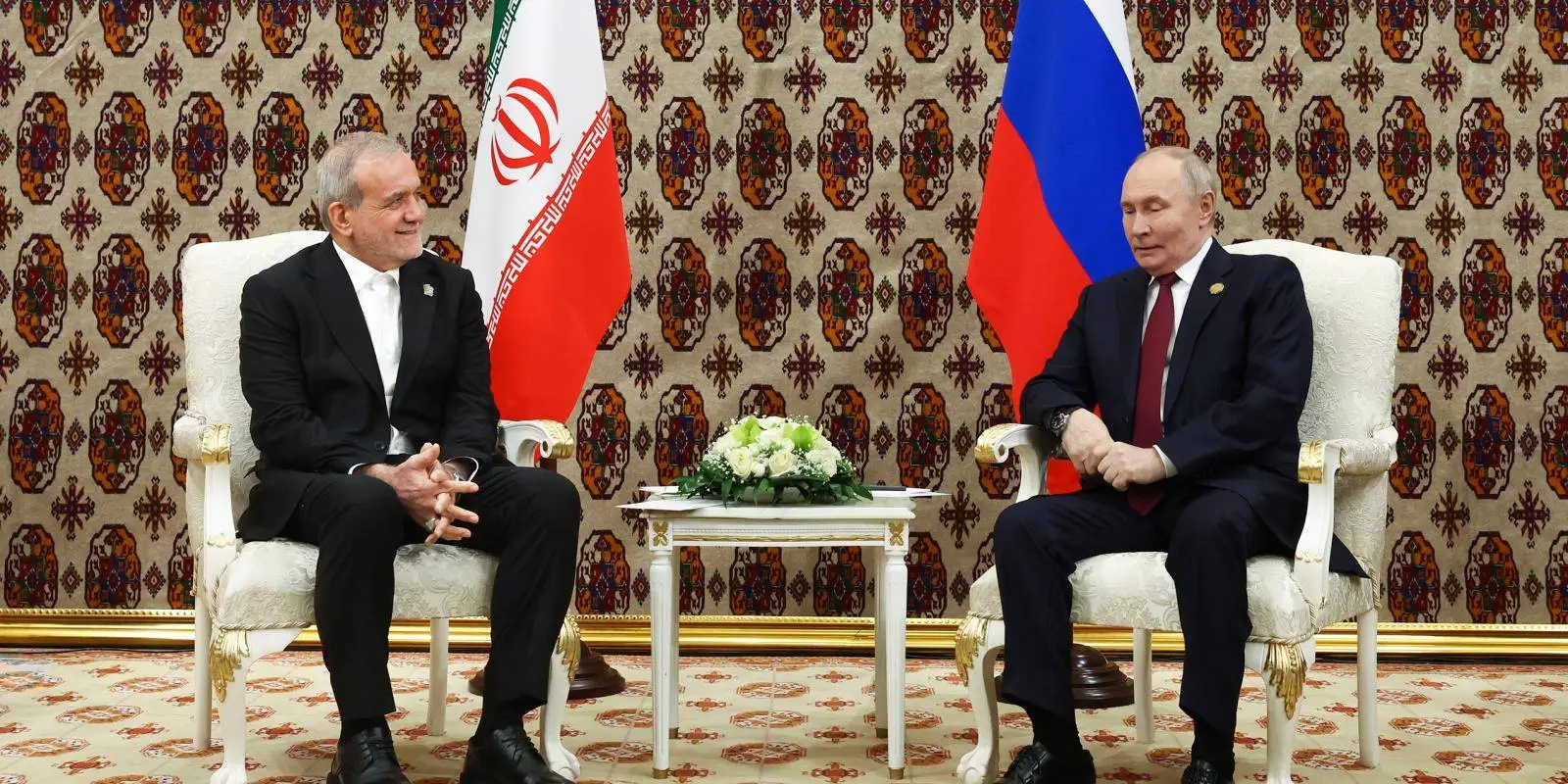
- Russia and China — condemnation at UNSC: Russia's UN Ambassador called the strikes "an illegal act of aggression" and introduced an emergency Security Council resolution demanding immediate cessation of hostilities. China's Foreign Ministry described the strikes as "a serious violation of international law and the UN Charter" and called for "all parties to exercise maximum restraint." Both nations are expected to push the resolution to a vote, forcing a US and UK veto that they will use to build a narrative of Western disregard for international institutions. UN Security Council
Analysis
The Article 5 question: why it does not apply
NATO Article 5 — the collective defense clause that states an armed attack against one ally is an attack against all — does not apply to the Iran strikes because the US initiated the military action. Article 5 is a defensive provision triggered when a member state is attacked. The US struck Iran; Iran did not strike the US or a NATO member. This distinction is critical because it means the US cannot invoke alliance solidarity to compel or even expect allied military participation.
If Iran retaliates by striking US military bases in NATO territory (such as Incirlik in Turkey or Ramstein in Germany), Article 5 could theoretically be triggered. However, Turkey's explicit opposition to the strikes and refusal to allow Incirlik to be used for Iran operations complicates even this scenario. An Iranian strike on Incirlik would create an extraordinary paradox: a NATO ally that opposes the operation being attacked because of it, and having to decide whether to invoke Article 5 against a country it does not consider an aggressor in this context.
The Article 4 consultation: what Turkey is doing
Turkey's invocation of NATO Article 4 — which allows any ally to bring matters of concern to the North Atlantic Council for consultation — is a diplomatic maneuver rather than a military one. Article 4 has been invoked only a handful of times in NATO's history, most recently by Turkey during the Syrian civil war. It does not commit the alliance to any action but forces a formal discussion in which Turkey can build a coalition of skeptical allies (Germany, Spain, Italy, Belgium, Hungary) to issue a collective statement expressing concern about the operation.
Turkey's motivations extend beyond principled objection. Ankara maintains significant economic ties with Tehran, including energy imports and trade relationships that would be disrupted by prolonged conflict. Turkey also shares a 534-kilometer border with Iran and faces the prospect of refugee flows if the conflict intensifies. Additionally, Erdogan sees an opportunity to position Turkey as an indispensable mediator — a role that elevates Turkey's diplomatic standing and gives Ankara leverage with both Washington and Tehran.
The UK-France divergence and what it signals
The gap between British operational support and French verbal-only understanding reflects a persistent structural difference in Anglo-French strategic culture. The UK's "special relationship" with the United States has consistently produced British support for American military operations — from Iraq 2003 to Libya 2011 — even when the domestic political costs are significant. British intelligence-sharing on Iranian nuclear facilities is longstanding, and the decision to provide intelligence and logistical support was likely made weeks before strikes began.
France's position is more nuanced. Paris shares Washington's non-proliferation concern (France was a key negotiator of the JCPOA) but has historically resisted being drawn into US-led military operations that lack UN Security Council authorization. France's refusal to participate in the 2003 Iraq invasion remains a defining moment in French strategic identity. By expressing "understanding" without participation, France preserves its relationship with the US while maintaining the diplomatic independence that allows it to engage with Iran, Russia, and China on potential de-escalation frameworks.
Gulf states: quiet enablers with exposure anxiety
Saudi Arabia and the UAE occupy the most strategically exposed position of any allied or partner state. Both have facilitated the operation through airspace access, intelligence sharing, and quiet diplomatic coordination with Washington. Neither has made a public endorsement because doing so would make them explicit Iranian retaliation targets. Iran has repeatedly threatened to strike Gulf state oil infrastructure (as it did at Abqaiq in 2019) if attacked, and Saudi Arabia's economic survival depends on uninterrupted oil exports.
The Gulf states' calculation is that Iranian nuclear breakout poses a greater long-term threat to their security than the short-term risk of Iranian retaliation — but they want the US to bear the visible responsibility for the strikes while they benefit from the strategic outcome. This is the same pattern that played out during the Abraham Accords period: tacit Israeli-Gulf cooperation on Iran, with public ambiguity maintained for domestic and regional political reasons.
The non-aligned middle: Japan, South Korea, India, Brazil
Major non-aligned powers have adopted carefully neutral positions that reflect their cross-cutting interests. Japan and South Korea depend on Middle Eastern oil imports transiting the Strait of Hormuz and want the conflict contained, but both are US treaty allies who cannot afford to publicly condemn American military action. India maintains significant energy ties with Iran (despite US sanctions pressure) and is pursuing an independent foreign policy that resists alignment with either side. Brazil, as the current rotating president of the G20, has called for emergency G20 consultations on the economic impact of the conflict — a procedural move that signals concern without taking a substantive position.
What's Next
Allied positioning will evolve based on several key developments over the coming days.
- UN Security Council vote: Russia's draft resolution demanding ceasefire will force a recorded vote that publicly crystallizes each nation's position. The US and UK are expected to veto, France may abstain (a significant signal if it does), and the vote count among non-permanent members will indicate the breadth of international opposition. UN Security Council
- EU Foreign Affairs Council emergency session: Germany has requested an emergency meeting of EU foreign ministers, likely to be convened within 48-72 hours. The outcome — whether the EU issues a unified statement and what it says — will signal whether European division hardens or whether a compromise position emerges. EU Foreign Affairs Council
- NATO Article 4 consultations: Turkey's Article 4 request will trigger a North Atlantic Council session. Watch for whether other allies (Germany, Spain, Belgium, Hungary) formally co-sponsor Turkey's concerns, which would transform this from a Turkish objection into a broader alliance rift. NATO
- Iranian retaliation targeting: If Iran retaliates against US forces based in allied territory, or strikes Gulf state infrastructure, the entire allied landscape reshifts. An attack on Saudi oil facilities would rally Gulf support. An attack on a European-hosted US base could either trigger Article 5 solidarity or deepen European opposition to the operation that provoked the attack. AP Iran coverage
- Civilian casualty reporting: As independent casualty assessments emerge, allies that offered qualified support may face domestic political pressure to distance themselves. The UK is particularly vulnerable — British public opinion on Middle Eastern military operations has been heavily influenced by Iraq War legacy, and significant civilian casualty reporting could erode parliamentary support for the government's position. ICRC
Why It Matters
Alliance cohesion determines the sustainability, legitimacy, and trajectory of military operations. The 1991 Gulf War succeeded in large part because of the unprecedented breadth of its coalition — 35 nations contributing forces, with UN Security Council authorization. The 2003 Iraq War suffered politically because the coalition was narrow, lacked UN authorization, and faced opposition from major allies (France, Germany, Russia). The Iran strikes fall somewhere between these precedents, with a non-proliferation justification that carries more normative weight than Iraq's WMD claims but without the UN authorization or broad allied participation that confer institutional legitimacy.
For the operational dimension, allied positions determine basing access, overflight rights, intelligence sharing, and logistical support. Turkey's refusal to allow Incirlik access removes a key node in the US Central Command operational architecture. Germany's opposition could complicate operations at Ramstein Air Base, which serves as a critical command and logistics hub. Conversely, UK support at Akrotiri and Gulf state airspace access provide alternative operational pathways — but the geographic constraints are tighter.
For the diplomatic dimension, the pattern of support and opposition shapes the eventual end-state. If the conflict remains a US-Israel bilateral operation opposed by most of the international community, the eventual resolution will likely require more American concessions to Iran to secure a ceasefire — because there will be no broad coalition to impose terms. If support broadens (particularly if Iran's retaliation strikes non-combatant states), the negotiating leverage shifts. The allied landscape is not static background to the conflict — it is an active variable that influences how the conflict ends and what follows.
Related Coverage
- World War 3 and Iran: Could the US-Iran Conflict Escalate Into a Global War?
- Iran Conflict: Evidence-Based Scenarios for the Next 30 Days
- US Strikes Iran: Full Timeline, Targets, and Global Impact
- UN Resolution 2231 and Snapback Sanctions Explained
- Regional Proxy Escalation Routes After Iran Strikes
Research Hubs
- Iran-Israel-Dubai War Guide
- Iran Nuclear and Military Briefing
- Israel Security and Escalation Briefing
- Dubai and UAE Risk Briefing
- Source Center: Primary References
Sources
- NATO official statements and press releases. www.nato.int/cps/en/natohq/news.htm
- UK Foreign, Commonwealth & Development Office. www.gov.uk/government/organisations/foreign-commonwealth-development-office
- French Ministry for Europe and Foreign Affairs. www.diplomatie.gouv.fr/en/
- German Federal Foreign Office. www.auswaertiges-amt.de/en
- UN Security Council meetings and resolutions tracker. www.un.org/securitycouncil/
- AP live updates on Iran conflict (Feb 28, 2026). apnews.com/hub/iran