Overview
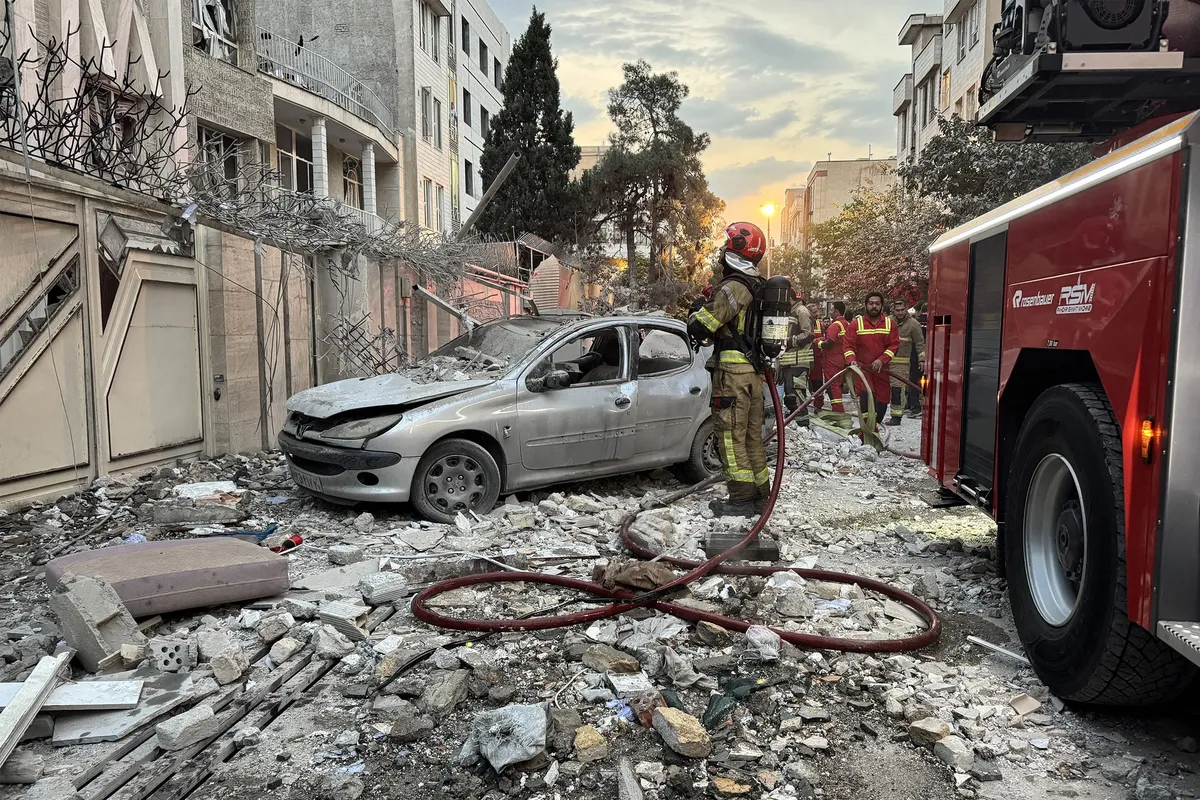
Within hours of the joint US-Israeli strikes on Iranian military and nuclear sites on February 28, 2026, Google Trends recorded a spike of more than 2,000% in searches for “World War 3.” The phrase trended globally on X (formerly Twitter), dominated Reddit threads, and appeared in push-notification headlines from major news outlets. The fear is understandable: images of explosions over Tehran, Iranian ballistic missiles arcing toward targets in the Gulf, and emergency UN Security Council sessions carry the visual grammar of catastrophic escalation.
But fear is not analysis. This article applies a structured, evidence-based framework to the question millions of people are asking: Is this the start of World War 3?
The short answer is no—not by any conventional definition. A “world war” requires multiple great powers fighting across multiple theaters simultaneously. Both World War I and World War II involved coalitions of major industrialized nations engaged in combat in Europe, Asia, Africa, and the Atlantic and Pacific oceans at the same time. The current conflict, as of this writing, involves two countries (the United States and Israel) conducting strikes against one country (Iran), with Iran retaliating through missile launches and proxy activation. Russia and China have issued diplomatic condemnations but committed zero military forces. NATO allies are divided, not unified. No fighting has spread beyond the Middle East.
That said, the gap between a regional conflict and a wider war is not infinite. Escalation pathways exist, and understanding them clearly—rather than either dismissing or amplifying them—is essential. The sections that follow lay out exactly what those pathways look like, how likely each one is, and what historical precedents tell us about how wars do and do not spread.
What We Know: Current Combatants and Positions
Before assessing escalation risk, it is necessary to establish the factual baseline: who is fighting, who is watching, and who is caught in the middle.
Direct Combatants
- United States: The US launched a coordinated multi-wave aerial campaign against Iranian targets on February 28, 2026, following months of escalating tensions since Operation Midnight Hammer in June 2025. The strikes targeted both nuclear infrastructure and military command nodes. The US has approximately 45,000 troops deployed across the Middle East, with major bases in Qatar (Al Udeid), Bahrain (Naval Support Activity), Kuwait (Camp Arifjan), and the UAE (Al Dhafra). The USS Eisenhower and USS Lincoln carrier strike groups are operating in the Arabian Sea. (CENTCOM)
- Israel: Israel participated directly in the February 28 strikes, contributing air assets and intelligence. Israel has been engaged in a broader regional security posture since the October 7, 2023 Hamas attack, including sustained operations against Hezbollah in Lebanon. Israel’s involvement deepens the conflict’s sectarian and geopolitical dimensions. (IDF)
- Iran: Iran has retaliated with ballistic missile launches targeting US military installations in the Gulf, drawing on its arsenal of over 3,000 ballistic missiles and cruise missiles—the largest such stockpile in the Middle East. Tehran has also activated proxy networks across the region. Iran’s regular military (Artesh), the Islamic Revolutionary Guard Corps (IRGC), and the Quds Force are all engaged. (CSIS)
Countries with Military Presence in the Region
- United Kingdom: The UK maintains a permanent naval base at Mina Salman in Bahrain and has Royal Navy vessels in the Gulf. UK Defence Secretary has expressed support for US operations and described them as “necessary to prevent Iranian nuclear breakout.” British Typhoon aircraft are deployed at Al Dhafra Air Base in the UAE.
- France: France operates a military base in Abu Dhabi (Camp de la Paix) and has naval vessels in the Indian Ocean. President Macron has called for “immediate de-escalation and a return to diplomacy,” stopping well short of endorsing the strikes.
- Other NATO members: Denmark, the Netherlands, and Canada have small military contingents in the region, primarily in advisory and logistics roles. None have signaled intent to participate in combat operations.
Russia and China: Stated Positions
- Russia: The Russian Foreign Ministry condemned the strikes as “a flagrant violation of international law and Iranian sovereignty.” Russia and Iran have deepened military cooperation since 2022, with Russia receiving Iranian Shahed drones for use in Ukraine and conducting joint naval exercises in the Caspian Sea and Indian Ocean. However, Russia’s military is heavily committed in Ukraine, and its force projection capability into the Middle East is limited to a small naval facility at Tartus, Syria. (RAND)
- China: Beijing called for “all parties to exercise calm and restraint” and proposed an emergency UN Security Council session. China imports approximately 10% of its crude oil from Iran and has a strategic partnership with Tehran. But China also conducts over $700 billion in annual trade with the United States and has no treaty obligation to defend Iran. Chinese naval forces in the region are limited to anti-piracy patrols. (Brookings)
Gulf States: Caught in the Middle
- Qatar: Hosts Al Udeid Air Base (the US military’s most important air operations hub in the Middle East) while simultaneously maintaining diplomatic relations with Iran and hosting Hamas political leadership. Qatar was targeted by Iranian retaliation in June 2025 and faces acute pressure from both sides.
- Bahrain: Home to the US Navy’s Fifth Fleet headquarters. Bahrain has a Shia-majority population governed by a Sunni monarchy, making it particularly vulnerable to Iranian-backed internal unrest.
- UAE: Hosts US and French military bases but has pursued a diplomatic normalization track with Iran since 2023, including ambassador exchanges. The UAE has publicly urged restraint.
- Saudi Arabia: Not directly involved but deeply invested in regional stability. The Saudi-Iran rapprochement brokered by China in 2023 has been strained by the current conflict. Riyadh has declined to offer basing for US strike operations.
Scenario 1: Regional Containment (Most Likely)
Assessed probability: 55–65%
In this scenario, the conflict remains a bilateral confrontation between the US/Israel and Iran. Fighting consists of air and missile exchanges but does not escalate to a ground invasion or draw in additional state combatants. Iranian proxy groups—Hezbollah, the Houthis, and Iraqi Shia militias—conduct harassment attacks (rocket fire, drone strikes, maritime provocations) but do not open sustained second fronts that pull in additional countries.
Why This Is the Most Likely Outcome
The strongest argument for containment is that none of the major external powers have an interest in joining this war. Russia is fighting in Ukraine. China’s economy depends on global trade. European nations are divided and war-weary. Iran itself, for all its defiant rhetoric, has historically calibrated its retaliation to avoid provoking a full-scale US ground invasion—as it did with the pre-warned strike on Al Udeid in June 2025.
The historical parallel is the 1991 Gulf War. When the United States led a coalition to expel Iraq from Kuwait, there was widespread fear that the conflict would ignite a broader Middle Eastern war. Iraq launched Scud missiles at Israel, hoping to provoke Israeli retaliation that would fracture the coalition. Israel, under immense US diplomatic pressure, chose not to respond. The war lasted 42 days, remained confined to the Kuwait-Iraq theater, and ended with a ceasefire. No additional states joined the fighting. (DoD Historical Office)
Key conditions favoring containment today:
- The US has stated it does not seek regime change in Iran, limiting its war aims to nuclear infrastructure destruction.
- Iran’s leadership has survival as its primary objective and understands that inviting a full-scale US ground campaign would be an existential threat.
- Gulf states are actively mediating through back-channels, with Oman playing a central intermediary role as it has in past crises.
- Global oil markets, while disrupted, have not collapsed—signaling that traders currently assess containment as likely.
Scenario 2: Wider Regional War (Moderate Risk)
Assessed probability: 25–30%
In this scenario, the conflict expands beyond the US-Israel-Iran triangle through the activation of Iran’s proxy network at full capacity, combined with an economic escalation that draws in additional countries indirectly.
How This Would Unfold
Hezbollah opens a northern front against Israel. Hezbollah possesses an estimated 130,000–150,000 rockets and missiles, many of which can reach deep into Israeli territory. A full-scale Hezbollah bombardment would force Israel into a two-front war and potentially trigger an Israeli ground incursion into southern Lebanon. (CSIS)
Houthis intensify Red Sea attacks. The Houthis have already demonstrated the capability to strike commercial shipping in the Red Sea and the Bab el-Mandeb strait, disrupting a waterway that handles 12% of global trade. A sustained Houthi campaign would force the US Navy to divert significant resources, potentially drawing in the UK and other European navies that have ships in the area.
Iraqi militias target US forces. Iranian-backed Popular Mobilization Forces (PMF) in Iraq have already conducted rocket and drone attacks on US bases at Al Asad and Erbil. Full activation could make the US presence in Iraq untenable and risk drawing the Iraqi government into a direct confrontation with Washington.
Strait of Hormuz closure or partial blockade. Roughly 20% of the world’s daily oil consumption passes through the Strait of Hormuz. Iran has mined the strait before (during the 1980–88 Iran-Iraq War) and possesses fast-attack craft, anti-ship cruise missiles, and submarine-launched torpedoes that could severely disrupt tanker traffic. Even a partial disruption would send oil prices above $150 per barrel, triggering a global economic crisis that could compel additional countries to intervene—not to fight Iran, but to secure energy supplies. (EIA)
Historical Parallel: The 1973 Yom Kippur War and Oil Embargo
The closest historical analogy is the October 1973 war. Egypt and Syria attacked Israel; the US airlifted supplies to Israel; Arab oil-producing nations imposed an embargo on the US and its allies. The embargo quadrupled oil prices globally and created economic turmoil that lasted years. The war itself remained in the Middle East, but its economic shockwaves were felt worldwide. Critically, the Soviet Union came close to intervening directly: on October 24, 1973, the Soviets signaled they might send airborne troops to enforce a ceasefire, prompting the US to raise its nuclear alert to DEFCON 3—the highest peacetime alert level in US history. (National Security Archive)
The lesson: a regional war can have global economic and security consequences without technically becoming a “world war,” but the boundary between the two can blur dangerously when nuclear-armed powers start posturing.
Scenario 3: Great Power Involvement (Low Probability)
Assessed probability: 5–10%
This is the scenario that animates “World War 3” fears: Russia or China moves beyond diplomatic support and begins providing direct military assistance to Iran, or a miscalculation leads to a confrontation between US and Russian/Chinese military forces.
What Russian Involvement Could Look Like
Russia would not send ground forces to Iran. It cannot. Russian forces are committed to Ukraine, and Russia’s power projection into the Middle East is limited to its small naval facility at Tartus, Syria, and a handful of Su-35 fighters at Khmeimim Air Base. What Russia could do:
- Intelligence sharing: Provide Iran with satellite imagery of US carrier positions and air operations patterns. This is likely already happening.
- Weapons transfers: Accelerate delivery of S-400 air defense systems, Su-35 fighters, or advanced anti-ship missiles. The transfer of S-400s would significantly complicate US air operations over Iran.
- Cyber operations: Conduct coordinated cyber attacks on US and allied infrastructure in support of Iranian objectives, with plausible deniability.
- UN obstruction: Veto any Security Council resolution that would legitimize the strikes or impose new terms on Iran.
The risk of direct US-Russian military confrontation in this scenario is low but not zero. If Russian military advisors are present at Iranian sites that the US strikes—as Soviet advisors were in Egypt during the 1970 War of Attrition—an accidental killing of Russian personnel could create an uncontrollable escalation dynamic.
What Chinese Involvement Could Look Like
China has even less incentive than Russia to intervene militarily. Beijing’s interests are primarily economic: maintaining oil flows from the Gulf, protecting the Belt and Road Initiative, and avoiding a rupture with Washington that would devastate its export economy. Chinese intervention would more likely take the form of:
- Economic countermeasures: Accelerating de-dollarization of oil trade with Iran, purchasing Iranian oil in yuan to circumvent US sanctions.
- Diplomatic pressure: Convening a parallel peace process through the Shanghai Cooperation Organization (SCO), positioning China as a mediator (as it did with the 2023 Saudi-Iran deal).
- Naval presence: Deploying additional warships to the Gulf of Aden under the pretext of protecting Chinese commercial shipping, which would increase the risk of accidental confrontation with US naval forces.
Historical Parallel: The Korean War (1950–1953)
The Korean War offers the clearest historical example of a regional conflict pulling in a great power. The US intervened in a civil war on the Korean Peninsula; China entered the war when US forces approached the Chinese border at the Yalu River. The result was three years of devastating combat between US and Chinese forces, with the Soviet Union providing air support covertly (Soviet pilots flew MiG-15s with Chinese markings). The conflict remained confined to Korea but came perilously close to nuclear use—General MacArthur openly advocated for nuclear strikes on China before being relieved of command. (RAND)
The key takeaway: great power involvement is most likely to happen not through a deliberate decision but through a cascading series of miscalculations, where each side’s “red lines” are crossed inadvertently.
Scenario 4: Full Global Conflict (Very Low Probability)
Assessed probability: Less than 2%
A true “World War 3”—defined as simultaneous great-power combat across multiple continents—would require a sequence of events that, while theoretically possible, would require multiple governments to make decisions that are fundamentally contrary to their survival interests.
What Would Have to Happen
- Iran directly attacks NATO member territory. Not a US military base in the Gulf, but sovereign territory of a NATO member—such as a missile strike on a British base in Cyprus or an attack on a European city. This would trigger Article 5 consultations and potentially a collective NATO military response.
- Russia commits combat forces against US/NATO. This would require Moscow to conclude that the destruction of Iran constitutes an existential threat to Russian security—a threshold that no serious analyst assesses has been reached. Russia’s nuclear doctrine reserves the right to use nuclear weapons only in response to an attack on Russian sovereignty or when the existence of the state is threatened.
- China initiates naval operations against US forces. This would require Beijing to determine that its strategic position in the Middle East justifies a potential war with the United States—a calculation that makes no economic or military sense given China’s dependence on global trade and its military inferiority to the US in naval power projection.
- Conflict spreads to a second theater. A Chinese move against Taiwan coinciding with the Iran crisis, or a Russian escalation in the Baltics, creating genuinely simultaneous multi-theater combat among nuclear-armed states.
Why This Is Extremely Unlikely
The single most important factor preventing global escalation is nuclear deterrence. The United States, Russia, and China each possess nuclear arsenals capable of destroying the others. This creates a condition that international relations scholars call the “nuclear taboo” or “mutual assured destruction” (MAD)—the recognition that a direct war between nuclear-armed great powers would be civilizational suicide. This deterrent has held since 1945 through far more dangerous crises than the current one, including the Cuban Missile Crisis (1962), the Able Archer NATO exercise scare (1983), and the Kargil Crisis between India and Pakistan (1999). (CFR)
The second factor is economic interdependence. The global economy in 2026 is orders of magnitude more interconnected than it was in 1914 or 1939. China and the United States are each other’s largest trading partners. European economies depend on global supply chains that would be annihilated by a great-power war. The economic cost of a true world war would be measured in the tens of trillions of dollars and would likely trigger a global depression far worse than 2008. Every major government understands this.
The third factor is institutional constraint. The UN Security Council, for all its limitations, provides a forum for great-power communication that did not exist before 1945. Hotlines between Washington, Moscow, and Beijing allow for rapid de-escalation communication. International organizations, while imperfect, create friction against the kind of rapid, uncontrolled escalation that characterized July 1914.
NATO and Alliance Dynamics
Much of the “World War 3” discourse conflates US military action with NATO action. This is incorrect, and the distinction matters.
Article 5: What It Does and Does Not Do
NATO’s Article 5—the mutual defense clause that states an attack on one member is an attack on all—has been invoked exactly once in the alliance’s 77-year history, after the September 11, 2001 attacks on the United States. The article applies specifically to armed attacks against the territory of a member state in Europe or North America (as defined in Article 6). (NATO)
Critically, Article 5 is not triggered by a member state’s offensive operations. The US decision to strike Iran was a unilateral (with Israeli cooperation) offensive action, not a response to an attack on US or NATO territory. If Iran were to retaliate by striking the continental United States or a European NATO member’s sovereign territory, Article 5 consultations would follow—but even then, each ally decides independently what action to take. Article 5 does not mandate automatic military participation.
European Allies: A Fractured Response
- United Kingdom: The closest US ally in this crisis. The UK has offered logistical support, intelligence sharing, and has not ruled out direct participation if the conflict escalates. British submarines and surface vessels are operating in the Gulf.
- France: President Macron has taken a markedly different position, calling the strikes “disproportionate” and demanding an immediate ceasefire. France has proposed a European diplomatic initiative separate from Washington’s approach. This Franco-American divergence echoes the split over the 2003 Iraq War.
- Germany: Chancellor has stated that Germany will not participate in military operations against Iran and has called for an emergency EU foreign ministers meeting. Germany’s position reflects both pacifist public opinion and its vulnerability to energy price shocks.
- Turkey: A NATO member with a complex relationship with both Iran and the United States. Turkey shares a 534-kilometer border with Iran and has economic ties with Tehran. Ankara has condemned the strikes and refused overflight permission for US aircraft.
Asian Allies: Stability Concerns
Japan and South Korea, both US treaty allies, are watching the Iran crisis primarily through the lens of energy security and the implications for their own regional challenges. Japan imports approximately 90% of its oil from the Middle East and has urged both sides to de-escalate. South Korea’s concern is that US military attention diverted to the Middle East could embolden North Korea. Neither country has any interest in being drawn into a Middle Eastern conflict.
What’s Next: Indicators to Watch
Rather than speculating about worst-case scenarios, informed observers should monitor specific, concrete indicators that would signal either escalation or de-escalation.
Escalation Indicators (Warning Signs)
- Strait of Hormuz shipping status: Any Iranian mining operations, seizure of tankers, or sustained attacks on commercial vessels would indicate a decision to escalate economically. Monitor Lloyd’s of London insurance rates for Gulf shipping—a sharp increase signals market assessment of rising risk.
- Russian military movements: Deployment of additional Russian naval vessels to the Mediterranean or the Indian Ocean, transfer of advanced weapons systems to Iran (particularly S-400 batteries), or movement of Russian military advisors into Iranian command structures.
- Hezbollah activation level: Sporadic rocket fire from southern Lebanon is a baseline. A sustained barrage of hundreds of rockets per day, combined with Hezbollah ground force mobilization, would signal full activation and a multi-front war.
- Chinese diplomatic posture: If China moves from calling for “restraint” to explicitly condemning the US and announcing military cooperation with Iran, the escalation calculus changes significantly.
- NATO emergency consultations: Invocation of Article 4 (consultation when a member feels threatened) would indicate that European allies assess the conflict is spreading toward their interests.
- Iranian nuclear posture: Any IAEA report indicating Iran has moved to enrich uranium above 60% or has expelled inspectors would suggest Tehran is pursuing a nuclear breakout under the cover of the conflict.
De-escalation Indicators (Positive Signs)
- UN Security Council ceasefire resolution: If Russia and China allow (rather than veto) a ceasefire resolution, it signals that all major powers prefer containment.
- Back-channel diplomacy: Reports of Omani, Qatari, or Swiss mediation efforts suggest both sides are seeking an off-ramp.
- Mutual restraint in targeting: If both sides continue to avoid mass-casualty strikes on civilian population centers, it indicates a shared interest in keeping the conflict limited.
- Oil market stabilization: If oil prices spike but then stabilize below $130/barrel, markets are pricing in containment.
- Iranian rhetoric shifts: If Iranian leadership moves from “annihilation of the Zionist entity” rhetoric to language about “proportional response” and “defense of sovereignty,” it signals a preference for de-escalation.
Why It Matters
The 2,000% spike in “World War 3” searches reflects something real: people are scared, and they deserve honest answers rather than either dismissive reassurance or algorithmic fear-mongering. The purpose of this analysis is not to minimize the severity of the US-Iran conflict—it is severe, people are dying, and the economic consequences will be felt globally. The purpose is to distinguish between the genuine risks (regional escalation, oil price shocks, proxy wars, potential nuclear proliferation) and the viral panic that distorts those risks into something they are not.
Wars expand not because they are destined to, but because of specific decisions made by specific leaders under specific conditions. The conditions that produced World War I—a web of rigid alliance commitments, mobilization timetables that could not be reversed, and leaders who believed war would be short and glorious—do not exist today. The conditions that produced World War II—expansionist totalitarian powers seeking territorial conquest across continents—are also absent. What exists today is a dangerous regional conflict between a superpower and a mid-sized regional power, with the potential to destabilize energy markets and activate proxy networks.
That is serious enough without needing to call it World War 3.
One question that has appeared widely in search trends: “Will there be a draft?” The US military is an all-volunteer force, and the current conflict involves air and naval operations, not the kind of large-scale ground invasion that would require mobilization beyond existing forces. There is no credible indication from any US government official that conscription is under consideration. We will address this question in detail in a forthcoming article.
Related Coverage
- Iran Conflict: Evidence-Based Scenarios for the Next 30 Days
- Regional Proxy Escalation Routes After Iran Strikes
- Why Did Israel Attack Iran: Nuclear Threats and the Path to War
- US Strikes Iran: Full Timeline, Targets, and Global Impact
- Strait of Hormuz Shipping Risk Scenarios
Research Hubs
- Iran-Israel-Dubai War Guide
- Iran Nuclear and Military Briefing
- Israel Security and Escalation Briefing
- Dubai and UAE Risk Briefing
- Source Center: Primary References
Sources
- International Atomic Energy Agency, Iran focus page. iaea.org
- UN Security Council updates and official records. un.org/securitycouncil
- UN Charter full text (Article 51 legal context). un.org
- U.S. Department of Defense official releases. defense.gov
- U.S. Department of State, Iran country page. state.gov
- UAE Ministry of Foreign Affairs media hub. mofa.gov.ae
- OFAC Iran sanctions framework. ofac.treasury.gov
- CISA advisory on Iran-linked cyber activity. cisa.gov
- EIA world oil transit chokepoints. eia.gov
- MARAD maritime security advisories. maritime.dot.gov
- Council on Foreign Relations analysis archive on Iran conflict and nuclear risk. cfr.org
- Center for Strategic and International Studies, Iran and regional security analysis. csis.org
- Reuters and AP Middle East coverage trackers. reuters.com; apnews.com