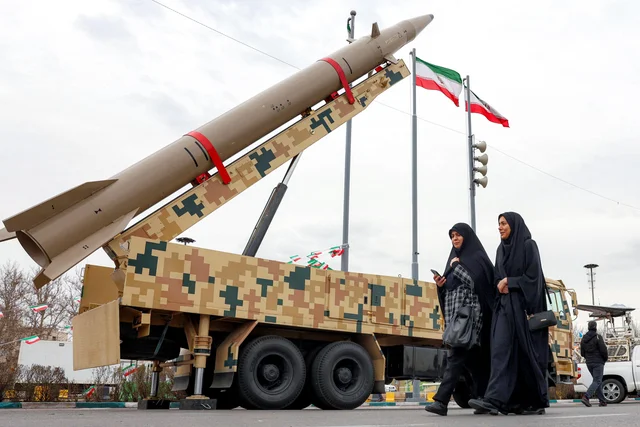
Breaking: US and Israel Launch Strikes on Iran
The U.S. and Israel launch strikes on Iran story quickly moved from early explosion reports to a confirmed public description of a major coordinated operation. Named reporting from NBC News, CBS News, Reuters, and others consistently supported the fact of a large U.S.-Israeli strike campaign in the early hours of February 28, 2026.
The strongest public record supports several core points: the operation happened, it was geographically broad, and it quickly triggered retaliation and market disruption. The weaker part of the early reporting involved the most exact target lists, exact city-by-city counts, and the full damage picture, which this revision treats more cautiously.
Operation Shield of Judah: The Joint US-Israel Military Campaign
Named reporting described a coordinated operation with distinct U.S. and Israeli components operating under related but not identical labels. The strongest supported conclusion is that Washington and Jerusalem were closely aligned operationally while still using separate military and political framing.
What is less settled in the public record is exactly how much of the first-wave success claimed by various officials had already been independently confirmed. This page therefore keeps the existence and breadth of the joint campaign in the foreground without treating every early claim as equally certain.
Targets Across Iran: Tehran to Isfahan
Public reporting repeatedly linked the operation to military, nuclear, and government-linked facilities across several Iranian cities. Tehran, Isfahan, Qom, Karaj, Kermanshah, Tabriz, Hamedan, and Qeshm were among the locations most often cited. The broad target pattern is therefore well supported, even if the exact city-by-city and building-by-building lists were not equally settled.
The safest way to read the target picture is that this was a geographically broad campaign aimed at high-value military and nuclear-linked infrastructure. It is harder, based on the public record alone, to treat every detailed list of facilities and impacts as final.
Military Assets Deployed in the Joint Strikes
The military hardware deployed as the US and Israel launch strikes on Iran represents the most powerful combined force projection in the Middle East since the 2003 Iraq War. Strikes were conducted from air, sea, and potentially submarine platforms across the theater.
U.S. Naval Assets
Two full carrier strike groups were pre-positioned ahead of the operation:
- USS Abraham Lincoln (CVN-72) carrier strike group — already on station in the region
- USS Gerald R. Ford (CVN-78) carrier strike group — ordered to the Middle East in early February, arriving with a full complement of escort destroyers and support vessels
- Multiple Arleigh Burke-class destroyers and littoral combat ships positioned for Tomahawk missile launches
U.S. Weapons Systems
- Tomahawk cruise missiles (BGM-109) — Fired from Navy surface ships in the Persian Gulf and Arabian Sea. These subsonic cruise missiles have a range exceeding 1,000 miles and carry 1,000-pound warheads. (NBC News)
- GBU-57A/B Massive Ordnance Penetrator (MOP) — The 30,000-pound bunker-buster bomb, first used in conventional combat during the June 2025 strikes against Iran. Designed specifically to penetrate hardened and deeply buried targets like Fordow. (Arms Control Association)
- Strike aircraft — Dozens of fighter and bomber aircraft operating from regional bases and carrier decks. According to U.S. officials cited by major outlets, combat aircraft from the U.S. Air Force and carrier-based naval aviation are involved in the strikes. (Reuters, U.S. Department of Defense)
Israeli Weapons Systems
- F-35I Adir stealth fighters — Israel's customized variant of the F-35 Lightning II, equipped with Israeli-developed electronic warfare systems, used for deep-penetration strike missions into Iranian airspace
- Long-range precision-guided missiles — Targeting IRGC command infrastructure and nuclear-related facilities
- Arrow and David's Sling missile defense — Pre-activated to intercept Iranian retaliatory strikes
During the June 2025 strikes, Joint Chiefs Chairman Gen. Dan Caine acknowledged that the U.S. "lacks military capability to completely destroy" Iran's most deeply buried facilities at Isfahan, raising questions about whether the February 2026 operation can achieve its stated objectives against similarly hardened targets at Fordow and other underground sites. (Arms Control Association)
Timeline: How the US and Israel Strikes on Iran Unfolded Hour by Hour
The following chronological timeline traces the escalation from the weeks before the operation through the night the US and Israel launch strikes on Iran, based on reporting from NBC News, CBS News, the Times of Israel, Al Jazeera, and the Washington Post:
Weeks Before the Strikes
Trump declares on Truth Social that "a massive Armada is heading to Iran." The USS Gerald R. Ford carrier strike group deploys to the Middle East, joining the already-present USS Abraham Lincoln group. (Axios)
U.S. and Iran begin indirect nuclear negotiations in Oman's capital, Muscat. The talks are described as exploratory, with mediators shuttling between the two delegations.
At the inaugural meeting of Trump's "Board of Peace," the president issues a public ultimatum: Iran has "about 10 days to make a deal ending its nuclear program, or bad things will happen."
Russia, China, and Iran launch "Maritime Security Belt 2026" joint naval drills in the Strait of Hormuz as a show of force. The UK withholds approval for U.S. use of the Diego Garcia base for any Iran strike. (Bloomberg)
Two additional rounds of nuclear talks in Switzerland. The U.S. demands Iran destroy Fordow, Natanz, and Isfahan facilities and surrender all enriched uranium. An Omani mediator reportedly indicates a deal is "within reach," but Trump expresses dissatisfaction: "They don't want to say the key words: 'We're not going to have a nuclear weapon.'" (Washington Post)
Talks conclude without agreement. The Washington Post reports a mediator believed a deal was close, but Trump was already moving toward military action. The U.S. ambassador to Israel orders emergency evacuation preparations. (Washington Post)
The Night of the Strikes — February 28, 2026
Israeli aircraft enter Iranian airspace. First explosions reported in western Iran, targeting air defense installations and radar systems to open corridors for follow-on strikes.
U.S. Navy launches volleys of Tomahawk cruise missiles from ships in the Persian Gulf. Trump records a video address from the Oval Office confirming strikes. He declares: "We are going to destroy their missiles and raze their missile industry to the ground."
Anti-aircraft fire erupts over Tehran, Isfahan, and Shiraz. Iranian state TV goes dark momentarily before resuming. Iran activates all air defense systems nationwide.
Trump formally announces "major combat operations" via Truth Social video, describing it as "a massive and ongoing operation to prevent this very wicked, radical dictatorship from threatening America." (CBS News)
Seven missiles confirmed striking the leadership district in Tehran housing Khamenei's compound and the presidential palace. Explosions reported across Qom, Kermanshah, Isfahan, and Karaj. (Al Jazeera)
Internet monitoring group NetBlocks reports Iran's connectivity has plunged to 4% of normal levels — a near-total nationwide blackout. Cell service is cut in multiple Tehran neighborhoods. Iran closes all airspace to civilian flights. (NBC News)
Iran's Islamic Revolutionary Guard Corps announces the "first broad wave of missile and drone attacks" toward Israel. Air raid sirens sound across Israel, including Tel Aviv, Haifa, and Jerusalem. Israeli military begins intercepting incoming threats. Israel declares a 48-hour nationwide state of emergency, closing schools and banning public gatherings. (Times of Israel)
U.S. embassies in Qatar, Bahrain, and Kuwait order personnel to shelter in place. The U.S. ambassador to Israel urges all Americans to remain near shelters. Israeli airspace closes to all civilian traffic.
Iran's Retaliation: Missiles, Drones, and Blackout
Iran's response to the US and Israel strikes on Iran came faster and with more force than many analysts expected. Within hours of the first explosions over Tehran, the Islamic Revolutionary Guard Corps issued a formal declaration:
"In an answer to the hostile and criminal enemy assault to the Islamic Republic of Iran, the first broad wave of missile and drone attacks of the Islamic Republic of Iran toward the occupied land has begun." (Al Jazeera)
Missile and Drone Barrages
Iranian ballistic missiles were launched toward Israel, triggering nationwide air raid sirens. The Israeli Defense Forces confirmed interception operations were underway using the Arrow, David's Sling, and Iron Dome multi-layered defense systems. Explosions were reported in northern Israel as the country's air defenses engaged incoming threats. This mirrors the pattern from June 2025, when Iran fired approximately 550 ballistic missiles and over 1,000 one-way attack drones during a 12-day exchange, with interception rates estimated at 85-90%. (CSIS)
An Iranian official told Reuters that Tehran is preparing a response described as "crushing," while Iranian state TV reported the country was preparing to "take revenge" with a "strong response." Iranian parliamentary member Ebrahim Azizi posted a defiant warning: "We warned you! Now you've started down a path whose end is no longer in your control." (NBC News)
The Internet Blackout
Perhaps the most chilling indicator of the severity of the strikes is the near-total internet shutdown inside Iran. According to NetBlocks, a global internet monitoring organization, Iranian connectivity dropped to just 4% of normal levels — the most severe disruption since the 2019 nationwide internet shutdown during mass protests. Cell phone service was cut in multiple areas of Tehran, and Iran's airspace was closed to all civilian flights. (NBC News)
Iran's Full Menu of Retaliation Options
According to CSIS analyst Benjamin Jensen, Iran can escalate through five primary channels beyond direct missile strikes:
- Cyberattacks — Iran demonstrated a 700% increase in cyber operations against Israeli targets in 2025. Potential targets include U.S. critical infrastructure and financial systems. Precedent: Operation Ababil (2012-2014) targeted major U.S. banks.
- Targeting unmanned systems — In 2019, Iran downed an American RQ-4A Global Hawk drone near the Strait of Hormuz as a calibrated warning. This low-escalation option signals resolve without risking wider war.
- Maritime disruption — Iran has decades of experience in maritime harassment, including mining operations and attacks on commercial shipping. The Strait of Hormuz carries roughly 20% of the world's daily oil supply.
- Proxy operations — Through regional proxy groups, though CSIS notes that "decades of investments in counterterrorism" have degraded these networks significantly.
- Ballistic missile salvos against U.S. bases — The most dramatic option, targeting Al-Udeid in Qatar and other regional installations. Iran previously fired 14 ballistic missiles at Al-Udeid during the June 2025 conflict.
(CSIS)

The Nuclear Question: Why Strike Iran Again?
The fact that the US and Israel launch strikes on Iran just eight months after Trump declared Iran's nuclear program had been "completely and fully obliterated" in the June 2025 Operation Midnight Hammer raises pointed questions about the effectiveness of military force against Iran's nuclear ambitions.
What June 2025 Actually Accomplished
Operation Midnight Hammer targeted three primary nuclear sites: the Fordow enrichment facility (deeply buried underground), the Natanz enrichment facility, and the Isfahan uranium conversion complex. The GBU-57A/B Massive Ordnance Penetrator was used in conventional combat for the first time. (Arms Control Association)
Despite Trump's public claims of total success, a classified Defense Intelligence Agency assessment concluded the strikes only set Iran's nuclear program back by "maybe a few months." IAEA Director Grossi independently confirmed that Iran could resume uranium enrichment in a "matter of months." Vice President JD Vance admitted the U.S. "doesn't know" whether Iran's stockpile of enriched uranium was destroyed.
What Survived the First Strikes
- Enriched uranium stockpile — Pre-strike IAEA data showed Iran possessed over 400 kilograms of uranium enriched to 60% U-235, enough for approximately 10 nuclear weapons if further enriched to weapons-grade 90%
- Centrifuge manufacturing capability — Largely reported as intact at the Karaj facility
- Technical expertise — Iran's nuclear scientific workforce cannot be eliminated through bombing
- Deeply buried infrastructure — Gen. Dan Caine acknowledged the U.S. "lacks military capability" to fully destroy Isfahan's deepest facilities
Iran Cut Off IAEA Access
On July 1, 2025, a new Iranian law took effect prohibiting cooperation with the International Atomic Energy Agency. President Massoud Pezeshkian told France's Macron that Iran's trust in the IAEA was "broken." Ambassador Amir Iravani declared the agency "cannot have access" to nuclear sites until security assurances were provided. With international oversight eliminated, the West lost visibility into Iran's nuclear progress — creating a dangerous intelligence gap that likely contributed to the decision to strike again. (Arms Control Association)
CNN's own analysis, published days before the February strikes under the headline "Trump said Iran's nuclear program was 'obliterated.' So why is he looking to strike again?", directly addressed this contradiction, noting the gap between political rhetoric and intelligence assessments. (CNN)
Oil Prices and Economic Shockwaves

The moment the US and Israel launch strikes on Iran, global energy markets convulsed. Brent crude oil prices surged approximately 10-15% in overnight trading, while West Texas Intermediate jumped over 5%. The spikes reflect the terrifying proximity of the conflict to the Strait of Hormuz — the narrow waterway through which roughly 20% of the world's oil supply passes daily. (CNBC)
Pre-crisis forecasts had Brent Crude averaging $63.85 per barrel in 2026. Bloomberg reported that oil had already reached a six-month high before the strikes began, driven by escalation fears. Analysts now warn that if hostilities are sustained and Iranian oil exports cease entirely, the result would be a 4% reduction in global oil supply, potentially pushing Brent toward $90-100 per barrel through 2026. (Bloomberg)
Consumer Impact
CBS News analysis warns that Americans will feel the impact directly through higher gasoline prices, increased inflation on consumer goods, and potentially higher borrowing costs as the Federal Reserve adjusts monetary policy to account for energy-driven inflation. (CBS News)
Oxford Economics estimates that in the most adverse scenario, world GDP would fall approximately 0.3% below the current baseline in 2026, with the U.S. and Eurozone facing hits of 0.4% and 0.5% respectively. Countries heavily reliant on Middle Eastern oil imports — particularly India, Pakistan, Indonesia, and Bangladesh — face the most severe exposure to supply disruptions and price shocks. (Oxford Economics)
The Strait of Hormuz Risk
CSIS's analysis on oil disruption scenarios outlines multiple tiers of potential impact, from limited price spikes with targeted military strikes to severe global supply shocks if the Strait of Hormuz is actively contested. Iran has demonstrated its capability to threaten shipping through the Strait in past confrontations, and any move to mine or restrict the waterway would represent the most extreme economic escalation available. (CSIS)
Failed Diplomacy: From Oman Talks to Tomahawks
The path to the moment the US and Israel launch strikes on Iran runs through months of failed diplomacy, broken trust, and escalating demands that Iran rejected.
The June 2025 Betrayal
Iran's Foreign Minister Abbas Araghchi accused the U.S. of having "betrayed diplomacy mid-negotiation" when the June 2025 strikes interrupted the sixth round of nuclear deal talks. That experience, Araghchi warned, made any future negotiations "far more complex and complicated." (Arms Control Association)
The February 2026 Negotiations
Despite the wreckage of June 2025, both sides returned to the negotiating table. Three rounds of talks were held in February 2026:
- Round 1 (February 6, Muscat, Oman) — Indirect talks described as exploratory. Mediators shuttled between the two sides. Both parties expressed willingness to continue.
- Round 2 (February 20-22, Geneva, Switzerland) — More substantive discussions. The U.S. demanded Iran destroy Fordow, Natanz, and Isfahan and surrender all enriched uranium. Special Envoy Steve Witkoff indicated "enrichment is the redline," requiring Iran to abandon enrichment entirely — a demand Tehran has consistently rejected as a violation of its NPT rights.
- Round 3 (February 24-26, Geneva) — Final round. An Omani mediator said a deal was "within reach," but Trump publicly expressed frustration, telling reporters he was "not happy" with Iran's position: "They don't want to say the key words: 'We're not going to have a nuclear weapon.'"
The Washington Post later revealed that even as negotiations continued, the military planning for Operation Shield of Judah was already well advanced. Israeli defense officials confirmed launch dates had been decided "weeks in advance," raising questions about whether the talks served as genuine diplomacy or as a political prelude to predetermined military action.
The Legal Question
French President Macron, while sharing nonproliferation goals, criticized the operation: "There is no legality" in the U.S.-Israeli military action against Iran's nuclear facilities without explicit UN Security Council authorization. U.S. Senator Ruben Gallego (D-Arizona) called the strikes potentially "illegal" and opposed what he characterized as "regime change and a war that hasn't been explained or justified." (CBS News)
Global and Congressional Reaction
The international community's response to the moment the US and Israel launch strikes on Iran has been a mix of alarm, condemnation, and cautious support depending on geopolitical alignment:
International Reactions
- United Nations — An emergency Security Council session was convened. IAEA Director Grossi has previously condemned strikes on nuclear facilities as violations of international norms, calling for protection of nuclear sites under international law.
- United Kingdom — Had withheld approval for U.S. use of the Diego Garcia military base ahead of the strikes, signaling reluctance to be directly involved in the operation. (Bloomberg)
- Russia and China — Had conducted joint naval exercises with Iran in the Strait of Hormuz just days before the strikes. However, CSIS analysis notes they have shown "no interest in direct involvement" in a U.S.-Iran military conflict. (CSIS)
- UAE and Saudi Arabia — Both quickly condemned the attacks. Both nations have worked to improve relations with Iran in recent years and want to avoid being drawn into a regional escalation. (Oxford Economics)
- France — President Macron stated: "There is no legality" in the strikes, while still affirming shared nonproliferation goals.
U.S. Congressional Response
The strikes have triggered an immediate war powers confrontation between Congress and the White House:
- Both the House and Senate announced votes on resolutions to restrict presidential strike authority against Iran
- Senator Ruben Gallego (D-AZ) called the action potentially "illegal" and opposed what he termed "regime change and a war that hasn't been explained or justified"
- Trump has not sought explicit Congressional authorization for the operation, relying instead on executive authority to respond to "imminent threats"
(CBS News)
Israeli Emergency Measures
Israel declared a 48-hour nationwide state of emergency immediately following the strikes, implementing severe restrictions:
- All civilian airspace closed
- Schools and workplaces shuttered
- Public gatherings banned
- Citizens ordered to remain near shelters
- Defense Minister Katz warned of a "high probability of an attack on the civilian population"
Reza Pahlavi: The Exiled Crown Prince Speaks
Reza Pahlavi, son of Iran's last shah, addressed the Iranian people via social media, characterizing the operation as "humanitarian intervention" targeting the regime rather than civilians. He urged Iranian security forces to "join the people rather than defend the regime" and called on Iranians to prepare for eventual street action to reclaim their nation. (NBC News)
What Can Be Verified So Far
This page is strongest when it separates direct reporting from inference.
- Directly supported: a large joint U.S.-Israeli operation took place, public reporting tied it to nuclear, missile, military, and government-linked targets, and Iran retaliated afterward.
- Supported but still fluid: exact target counts, exact target-by-target damage, and the full strategic effect of the first wave.
- More interpretive than proven: claims that every early target list was complete, that every reported hit represented the same level of damage, or that the campaign's long-term effect was already clear from the first day.
What Happens Next
The decision by the US and Israel to launch strikes on Iran has set in motion a chain of events whose final outcome remains deeply uncertain. Based on expert analysis, historical precedent, and the current trajectory, several scenarios are possible:
Scenario 1: Escalation Spiral
CSIS analyst Benjamin Jensen warns that while leaders typically prefer limited violence to preserve negotiation space, the risk of escalation increases dramatically when "psychological factors like fear or national honor override rational cost-benefit analysis." The frequency of missile exchanges, casualty numbers, and public opinion pressure could trigger what Jensen calls a "losses frame" — risk-acceptant behavior where neither side can afford to be seen backing down. The June 2025 exchange demonstrated this dynamic: Iran's 14-missile salvo against Al-Udeid was followed by Trump's ceasefire call — but only after both sides had demonstrated willingness to absorb casualties. (CSIS)
Scenario 2: Limited Exchange and Off-Ramp
Historical precedent from June 2025 offers some hope. After the initial strikes, Iran launched retaliatory missiles with what appeared to be advance warning, and Trump announced a ceasefire call the following day. A similar pattern — symbolic retaliation followed by backchannel diplomacy — is possible. However, the scale of Operation Shield of Judah is significantly larger than the June 2025 action, potentially making face-saving off-ramps harder to find.
Scenario 3: Nuclear Breakout
Perhaps the most consequential long-term question: will the strikes delay or accelerate Iran's path to a nuclear weapon? With IAEA access already severed since July 2025, the international community has no visibility into Iran's nuclear activities. The Iranian parliament has drafted NPT withdrawal legislation, and if enacted, it would remove the last international oversight mechanisms. Many experts argue that bombing drives nuclear programs underground rather than eliminating them — a lesson learned from failed attempts to bomb Iraq's Osirak reactor in 1981, which Iraqi scientists later admitted accelerated their weapons program. (Arms Control Association)
Key Variables to Watch
- Iranian missile volleys — Scale and targeting of retaliatory strikes against Israel and U.S. bases in the region
- Strait of Hormuz — Any attempt to mine or restrict shipping through this critical chokepoint would send oil above $100/barrel
- U.S. Congressional war powers vote — Whether bipartisan resolutions to restrict strike authority gain momentum
- Oil prices — Sustained prices above $80-90/barrel would signal markets expect prolonged conflict
- IAEA access — Whether any channel for international nuclear monitoring survives
- Russian and Chinese posture — Currently uninvolved, but any material shift would dramatically alter the conflict calculus
- Iranian domestic situation — With mass anti-regime protests already ongoing since December 2025, the strikes could either galvanize nationalist unity or accelerate internal fractures
- Trump's stated regime change rhetoric — Whether the operation's scope expands beyond military targets toward the stated goal of toppling the Iranian government
U.S. officials have indicated the operation could span "several days," suggesting this is a sustained campaign rather than a single-night strike. Whether it remains limited or escalates into a broader regional conflict depends on the interactions between Iranian retaliation, Israeli responses, Congressional politics, and the willingness of both sides to find an off-ramp before the cycle of escalation becomes uncontrollable.
Trump himself acknowledged the gravity of the moment, telling reporters: "We may have casualties" — a rare admission that suggests this operation is not expected to be a clean, risk-free strike. (CBS News)
Related Coverage
- US Strikes Iran: Full Timeline, Targets, and Global Impact
- Operation Midnight Hammer: Damage Assessment
- Iran Strikes Tonight: What Officials Have Confirmed
- Does Iran Have Nuclear Weapons? What the Evidence Shows
- War Powers Resolution and Iran Strikes: Congress Response
- U.S. Military Begins 'Major Combat Operations in Iran,' Trump Says
Research Hubs
- Iran-Israel-Dubai War Guide
- Iran Nuclear and Military Briefing
- Israel Security and Escalation Briefing
- Dubai and UAE Risk Briefing
- Source Center: Primary References
Sources
- International Atomic Energy Agency, Iran focus page. iaea.org
- UN Security Council updates and official records. un.org/securitycouncil
- UN Charter full text (Article 51 legal context). un.org
- U.S. Department of Defense official releases. defense.gov
- U.S. Department of State, Iran country page. state.gov
- UAE Ministry of Foreign Affairs media hub. mofa.gov.ae
- OFAC Iran sanctions framework. ofac.treasury.gov
- CISA advisory on Iran-linked cyber activity. cisa.gov
- EIA world oil transit chokepoints. eia.gov
- MARAD maritime security advisories. maritime.dot.gov
- Council on Foreign Relations analysis archive on Iran conflict and nuclear risk. cfr.org
- Center for Strategic and International Studies, Iran and regional security analysis. csis.org
- Reuters and AP Middle East coverage trackers. reuters.com; apnews.com