Overview: What Is Happening Right Now
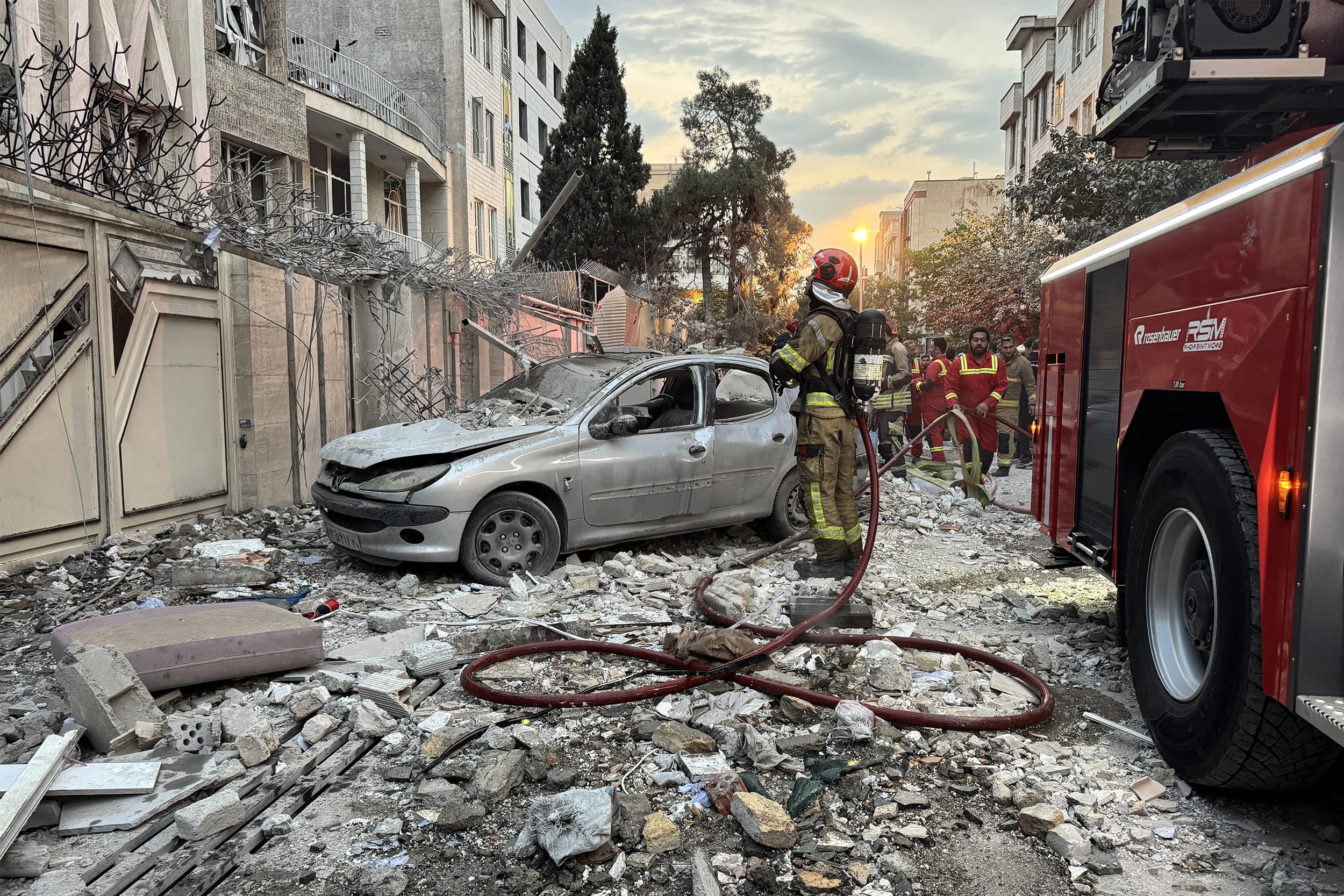
On February 28, 2026, the United States and Israel launched coordinated military strikes on Iran, initiating the largest American military operation in the Middle East since the 2003 invasion of Iraq. The strikes began at approximately 2:45 a.m. Eastern Standard Time (10:15 a.m. Iran Standard Time) when explosions were reported simultaneously in Tehran, Isfahan, and multiple other Iranian cities. This is a rolling summary of everything confirmed so far, organized by category. We will continue updating this article as new information becomes available. (AP)
President Donald Trump confirmed the operation in a video posted to Truth Social, declaring: "A short time ago, the United States military began major combat operations in Iran." He stated the objective was to "defend the American people by eliminating imminent threats from the Iranian regime" and directly addressed Iranian civilians, saying: "Your hour of freedom is at hand." The US component of the operation is designated Operation Epic Fury. The Israeli component operates under the dual designations Operation Shield of Judah and The Roar of the Lion. (NBC News)
Within approximately four hours, Iran launched retaliatory missile strikes at US military installations across Qatar, Kuwait, the UAE, Bahrain, and Iraq. The IRGC designated the retaliation "True Promise III." Multiple US bases have reported damage, though casualty figures remain unconfirmed. The situation continues to develop rapidly, with ongoing strikes in both directions, near-total internet blackout inside Iran, airspace closures across the region, and an emergency UN Security Council session underway. (Reuters)
Confirmed Strikes and Targets
Based on Pentagon briefings, Israeli Defense Forces statements, satellite data, and reports from journalists on the ground in neighboring countries, the following strikes have been confirmed. (AP)
| City | Confirmed Targets | Source |
|---|---|---|
| Tehran | Supreme Leader compound area, IRGC HQ, Ministry of Defence, Ministry of Intelligence, AEOI offices, Parchin military complex | Pentagon, CNN, Al Jazeera |
| Isfahan | Natanz enrichment complex, Isfahan Uranium Conversion Facility | Pentagon, IAEA |
| Qom | Fordow Fuel Enrichment Plant (bunker-busting munitions confirmed) | Pentagon, CSIS |
| Bushehr | Bushehr Nuclear Power Plant complex | Pentagon, Reuters |
| Karaj | Centrifuge manufacturing workshops | IDF statement |
| Arak | Heavy water reactor facility | Pentagon |
| Kermanshah | Military installations, missile production | Al Jazeera, NBC News |
| Tabriz | IRGC and military facilities | Reuters |
| Hamedan | Air base and military installations | AP |
| Shiraz | IRGC Quds Force facilities | NBC News |
| Semnan | Missile testing and space launch facilities | Pentagon |
| Qeshm Island | IRGC Navy facilities, strategic Persian Gulf position | Reuters |
The geographic breadth of the strikes is unprecedented. No previous US military operation against a single country has simultaneously struck targets in 12 or more cities across such a wide area. The target set spans approximately 1,500 kilometers from Tabriz in the northwest to Qeshm Island in the southeast, requiring complex multi-axis coordination of air assets from multiple staging areas. (CSIS)
The Pentagon has confirmed the use of B-2 Spirit stealth bombers carrying GBU-57A/B Massive Ordnance Penetrators against the deeply buried Fordow enrichment facility near Qom. This represents the first confirmed combat use of the MOP, a 30,000-pound bunker-busting bomb specifically designed to penetrate hardened underground facilities. Additional platforms confirmed in the operation include F-35C Lightning IIs, F/A-18E/F Super Hornets, F-15E Strike Eagles, and Tomahawk Land Attack Missiles launched from naval vessels. (NBC News)
Official Statements From Both Sides
United States: President Trump's video statement, posted to Truth Social at approximately 3:30 a.m. EST, was the first official confirmation. He described the operation's objective as eliminating "imminent threats" from Iran's nuclear program and missile arsenal. He warned the IRGC to "lay down your arms or face certain death" and told Iranian civilians their "hour of freedom is at hand." Pentagon spokesperson Maj. Gen. Patrick Ryder subsequently held a briefing confirming the operation's designation as "Epic Fury" and stating that strikes were targeting nuclear infrastructure, ballistic missile production, IRGC command and control, and air defense systems. Defense Secretary Pete Hegseth issued a written statement describing the operation as "precise, proportionate, and necessary to protect the American people and our allies." Secretary of State Marco Rubio stated that the US had "exhausted every diplomatic option" before resorting to military force. (AP)
Israel: Israeli Defense Minister Israel Katz characterized the operation as "preemptive," stating that Israel and the United States had embarked on an operation to "remove the existential threat posed by the terrorist regime." He warned that Iranian missile and drone retaliation against Israeli territory was expected. Israeli Prime Minister Benjamin Netanyahu addressed the nation in a televised statement, declaring: "Tonight, we are acting to ensure that Iran never possesses the means to destroy us. This is the most significant operation in the defense of the Jewish state since its founding." The IDF designated the Israeli component as "Operation Shield of Judah" and "The Roar of the Lion." (Reuters)
Iran: Supreme Leader Ali Khamenei issued a statement through state media calling the strikes "an act of war that will not go unanswered" and vowing that Iran would "make the aggressors regret their decision." President Masoud Pezeshkian convened an emergency meeting of the Supreme National Security Council. IRGC Commander-in-Chief Major General Hossein Salami announced the launch of "True Promise III" retaliatory strikes and claimed on state television that "the nests of the aggressors across the region have been struck." Iranian Foreign Minister Hossein Amir-Abdollahian called the strikes "a flagrant violation of international law and the UN Charter" and demanded an emergency UN Security Council session. (Al Jazeera)
Casualty Numbers
Reliable casualty figures from the strikes on Iran are extremely difficult to establish due to the near-total internet blackout and the fog of war. What follows is a summary of claims from various sources, with appropriate caveats about their reliability. (AP)
Iranian government claims: Iranian state media has reported that the strikes killed "dozens of civilians" and caused "widespread destruction" in residential areas near military targets. The Iranian Red Crescent Society stated that it had mobilized emergency response teams to Tehran, Isfahan, and Bushehr but provided no specific casualty figures. The IRGC has not released any statements about military casualties. These figures are likely understated by the regime, which has an interest in minimizing the perceived effectiveness of the strikes. (Reuters)
US and Israeli claims: The Pentagon stated that the operation was designed to "minimize civilian casualties" through the use of precision-guided munitions and careful target selection. Pentagon officials emphasized that strikes were directed at military and nuclear infrastructure, not population centers. However, many of the targeted facilities are located in or near urban areas, including sites in Tehran, a city of approximately 9 million people. Israel has not provided casualty estimates. Independent military analysts have noted that large-scale strikes on urban-area military targets inevitably produce civilian casualties, regardless of the precision of the munitions used, due to blast radius, secondary explosions, and debris. (NBC News)
Independent estimates: With internet at 4% and no independent journalists currently on the ground in Iran, real-time independent verification is essentially impossible. The International Committee of the Red Cross (ICRC) issued a statement calling for all parties to "respect international humanitarian law and protect civilian lives and infrastructure" but provided no casualty data. Satellite imagery from commercial providers is expected to provide the first independent damage assessment within 24 to 48 hours. (CNN)
US base casualties: The Pentagon has stated that there are "injuries being assessed at several locations" following Iranian retaliatory strikes but has not confirmed any fatalities. Iranian state media claims of "hundreds of American soldiers killed" are unverified and should be treated with significant skepticism based on Iran's track record of exaggerating strike outcomes. Iraq's Joint Operations Command reported 3 Iraqi soldiers killed and 11 wounded near Ain Al Asad Air Base. (Al Jazeera)
Iranian Retaliation
Iran's retaliatory strikes began at approximately 5:18 a.m. EST, when infrared satellite sensors detected multiple ballistic missile launches from locations in western and central Iran. The IRGC Aerospace Force launched what appears to be a coordinated, multi-axis attack targeting US military installations across five countries. The operation was designated "True Promise III" by the IRGC, following the naming convention from previous operations against Israel. (Reuters)
Confirmed targets include Al Udeid Air Base in Qatar (CENTCOM forward headquarters), Ali Al Salem Air Base and Camp Arifjan in Kuwait, Al Dhafra Air Base in the UAE, Naval Support Activity Bahrain (US Fifth Fleet headquarters), and Ain Al Asad Air Base in Iraq. The IRGC used a combination of Shahab-3 medium-range ballistic missiles, Fateh-110 short-range ballistic missiles, and land-attack cruise missiles. Iranian state media claimed the use of Fattah-2 hypersonic missiles, though this has not been independently confirmed. (AP)
US missile defense systems, including THAAD, Patriot PAC-3, and ship-based Aegis systems, engaged incoming threats. The Pentagon confirmed that defenses achieved a significant intercept rate but acknowledged that "several missiles penetrated defenses," resulting in impacts at Al Udeid (2 confirmed), Ali Al Salem (1 confirmed), and Ain Al Asad (3+ confirmed). Damage assessments at all installations are ongoing. For a detailed breakdown of the Iranian retaliation, see our full report: Iran Strikes Back: Where Iran Retaliated, What Was Hit, and Damage Reports. (CNN)
Airspace Closures
The military operations have triggered a cascade of airspace closures across the Middle East and parts of Central and South Asia. The Federal Aviation Administration (FAA) issued an emergency NOTAM (Notice to Air Missions) prohibiting all US-registered aircraft from operating in Iranian airspace and within 200 nautical miles of Iran's borders. The European Union Aviation Safety Agency (EASA) issued a parallel conflict zone information bulletin advising European airlines to avoid the entire region. (Reuters)
Countries that have fully closed their airspace or restricted overflights include: Iran (total closure), Iraq (total closure), Kuwait (total closure), Bahrain (restricted to military traffic), and Qatar (commercial operations suspended at Hamad International Airport). Saudi Arabia, the UAE, Oman, and Jordan have restricted portions of their airspace near conflict zones while keeping major airports operational with modified routing. Pakistan and Afghanistan have closed airspace along their western borders with Iran. (AP)
The airspace closures have caused massive disruption to commercial aviation. Emirates, Qatar Airways, Etihad, Gulf Air, and Kuwait Airways have suspended all operations. Turkish Airlines has cancelled all flights to Gulf destinations. European and Asian carriers operating routes that normally transit Gulf airspace, including Lufthansa, British Airways, Air France, Singapore Airlines, and Cathay Pacific, have been forced to reroute flights, adding hours of travel time and fuel costs. The International Air Transport Association (IATA) described the disruption as "the most significant airspace closure event since the closure of European airspace following the 2010 Eyjafjallajokull volcanic eruption." (NBC News)
Internet and Communications Blackout
Internet connectivity inside Iran dropped to approximately 4% of normal levels within the first hour of the strikes, according to real-time monitoring by NetBlocks, Cloudflare Radar, and the Open Observatory of Network Interference (OONI). The shutdown affects both mobile and fixed-line internet services and represents a near-total digital blackout. Only government, military, and select banking networks appear to remain operational. (CNN)
The shutdown follows a pattern established during previous crises. The Iranian government maintains centralized control over the country's internet infrastructure through the Telecommunication Infrastructure Company (TIC), a state-owned entity that controls international gateway connections. This architecture allows the government to effectively "switch off" the internet at will. Iran had already been operating at significantly reduced connectivity levels (10-30% of normal) since November 2025 as part of its crackdown on nationwide protests. The February 28 blackout represents a further intensification of these restrictions. (Reuters)
The communications blackout has profound implications for both the military situation and the humanitarian response. From a military perspective, it prevents real-time documentation of strikes and their effects, giving both the US/Israel and the Iranian regime control over the narrative. From a humanitarian perspective, it prevents civilian coordination, cuts off families from information about the safety of relatives, disrupts hospital communications, and hampers the work of humanitarian organizations. The ICRC has stated that its ability to assess humanitarian needs inside Iran is "severely compromised" by the blackout. (AP)
Limited information is emerging through satellite phone communications (primarily Thuraya and Iridium), amateur ham radio operators, and a small number of individuals with access to Starlink satellite internet terminals that bypass Iran's terrestrial infrastructure. These channels are providing fragmentary reports of explosions, fires, and civilian displacement, but the volume and reliability of this information is far below what would be available with normal internet connectivity. (NBC News)
International Reactions
International reactions have split along largely predictable geopolitical fault lines, with Western allies offering measured support or cautious statements and non-Western powers condemning the strikes. (Reuters)
United Kingdom: Prime Minister stated that the UK "stands with the United States and Israel in their right to defend against the Iranian nuclear threat" while calling for "proportionality and protection of civilian life." The UK has military personnel at several of the targeted Gulf bases and confirmed all British forces are safe.
France: President Macron called for an emergency NATO Article 4 consultation and urged "maximum restraint from all parties," stopping short of explicitly endorsing or condemning the strikes. France has historically maintained a more independent Middle East policy than other NATO allies.
Germany: Chancellor issued a statement calling for an "immediate return to diplomacy" and expressing "deep concern about the potential for regional escalation." Germany, heavily dependent on Middle East energy supplies, is particularly vulnerable to the economic fallout.
Russia: President Putin convened an emergency Security Council meeting and issued a statement calling the strikes "an act of unprovoked aggression against a sovereign state." Russia's UN Ambassador called for an emergency Security Council session and described the operation as "a flagrant violation of the UN Charter."
China: The Foreign Ministry spokesperson stated that "the root cause of the current crisis is the illegal use of force by the United States" and called for "all parties to exercise restraint and return to the path of dialogue." China is Iran's largest oil customer and has significant economic interests at stake.
Saudi Arabia: In a notably careful statement, the Kingdom called for "calm, restraint, and the resolution of disputes through dialogue" without explicitly condemning either side, reflecting Riyadh's complex position as a US security partner that has also been pursuing rapprochement with Iran. (Al Jazeera)
UN Response
The UN Security Council convened an emergency session at approximately 6:00 a.m. EST at the joint request of Russia, China, and Iran. Secretary-General Antonio Guterres opened the session with a statement calling for an "immediate cessation of all military operations by all parties" and warning that "the Middle East is on the brink of a full-scale regional war that could have catastrophic consequences for millions of people." He invoked Article 99 of the UN Charter, which allows the Secretary-General to bring matters threatening international peace to the Council's attention, marking only the fifth time this article has been formally invoked in UN history. (AP)
The Security Council session quickly revealed the deep divisions that make collective action impossible. Russia introduced a draft resolution demanding an "immediate and unconditional ceasefire" and condemning "the illegal use of force against the Islamic Republic of Iran." The United States vetoed the resolution, with Ambassador Linda Thomas-Greenfield stating that "the United States acted in self-defense and in defense of its allies against an imminent nuclear threat, consistent with Article 51 of the UN Charter." France and the UK abstained. China supported the Russian resolution. (Reuters)
The UN General Assembly is expected to convene an Emergency Special Session under the "Uniting for Peace" procedure if the Security Council remains deadlocked, though General Assembly resolutions are non-binding. The IAEA Director General Rafael Grossi issued a statement expressing "grave concern about the safety and security of nuclear facilities in Iran" and calling on all parties to "refrain from any actions that could endanger nuclear safety." Grossi noted that IAEA inspectors had been withdrawn from Iran in the hours before the strikes and that the agency had lost contact with its remote monitoring systems at Iranian nuclear facilities. (CNN)
The International Committee of the Red Cross (ICRC) and the UN Office for the Coordination of Humanitarian Affairs (OCHA) have both issued appeals for humanitarian access and protection of civilians. OCHA is activating its emergency response protocols and has placed regional humanitarian teams on standby, though access to Iran remains impossible under current conditions. (NBC News)
What Remains Unverified
In a fast-moving conflict with an active information war on both sides, there is a significant gap between what has been claimed and what has been independently verified. The following key questions remain unanswered: (AP)
Civilian casualties in Iran: Neither the Iranian government nor independent sources have provided reliable figures. The near-total internet blackout prevents real-time civilian reporting. Satellite imagery may provide indirect evidence (damage to residential areas, fires, etc.) but cannot count casualties.
Damage to underground nuclear facilities: The Pentagon claims that B-2 bombers delivered MOPs to the Fordow facility, but the extent of damage to deeply buried centrifuge halls is unknown. Even post-strike satellite imagery can only reveal surface-level damage; underground damage assessment requires either on-the-ground access or seismic analysis. Previous strikes during Operation Midnight Hammer (June 2025) were initially claimed as successful but IAEA later found underground facilities largely intact.
US military casualties: The Pentagon has acknowledged "injuries being assessed" but has not confirmed or denied fatalities. The careful wording suggests there are casualties but the extent is not yet clear. Iranian claims of "hundreds killed" are not credible based on available evidence.
Iranian hypersonic missile use: Iran claims to have used Fattah-2 hypersonic missiles. The Pentagon has not confirmed this. Western analysts are skeptical of the Fattah's advertised capabilities. Whether any missiles that penetrated US defenses were Fattah variants or conventional ballistic missiles remains unknown.
Status of Iranian leadership: There are unconfirmed reports that strikes targeted the compound where Supreme Leader Khamenei normally resides. Khamenei's current status and location are unknown. His statement was issued through state media and could have been pre-recorded. Iran has not provided proof of life.
Strait of Hormuz status: As of the latest reporting, commercial shipping in the Strait of Hormuz has largely suspended on a voluntary basis due to insurance concerns, but Iran has not announced a formal blockade or begun visible mine-laying operations. The situation is fluid and could change rapidly.
What to Watch
As this story continues to develop, these are the key indicators that will shape the trajectory of the conflict in the coming hours and days: (Reuters)
Second and third wave strikes: Pentagon officials have described Epic Fury as a "multi-phase campaign." Whether additional waves of strikes are launched, and whether the target set expands, will indicate whether this remains a contained operation or escalates into a sustained air campaign.
Additional Iranian retaliation: IRGC Commander Salami stated that the initial retaliatory strikes were "merely the first chapter." Whether Iran launches additional attacks, activates proxy forces (Hezbollah, Houthis, Iraqi militias), or initiates cyberattacks on US infrastructure will determine the breadth of the conflict.
Strait of Hormuz: Any Iranian moves to mine, blockade, or interdict commercial shipping in the strait would represent a dramatic escalation with global economic consequences. Monitor commercial vessel tracking data and maritime incident reports.
Israeli territorial defense: Iran has threatened retaliation against Israel directly. Whether Iranian or proxy missiles/drones are launched at Israeli territory would significantly expand the conflict's geographic scope and could trigger a large-scale Israeli ground or air response.
Casualty figures: The political dynamics of the conflict will be heavily influenced by confirmed casualty numbers on both sides. American casualties in particular would increase domestic pressure for escalation.
Diplomatic channels: Watch for any indication that backchannel communications through Switzerland or Oman are active. Any statement from either side signaling willingness to pause operations would be a critical de-escalation signal.
OPEC+ response: Whether Saudi Arabia and other OPEC+ members increase production to offset lost Iranian supply will significantly affect oil prices and the global economic impact of the conflict.
This article will be updated as new confirmed information becomes available. For deep-dive analysis on specific aspects of the developing situation, see the related articles below.
Related Coverage
- US Strikes Iran: Full Timeline, Targets, and Global Impact
- Iran Strikes Tonight: What Officials Confirmed
- Operation Epic Fury Explained: What It Is, What's Being Targeted, and What Comes Next
- Iran Strikes Back: Where Iran Retaliated, What Was Hit, and Damage Reports
- US Military Begins Major Combat Operations in Iran, Trump Says
Research Hubs
- Iran-Israel-Dubai War Guide
- Iran Nuclear and Military Briefing
- Israel Security and Escalation Briefing
- Dubai and UAE Risk Briefing
- Source Center: Primary References
Sources
- International Atomic Energy Agency, Iran focus page. iaea.org
- UN Security Council updates and official records. un.org/securitycouncil
- UN Charter full text (Article 51 legal context). un.org
- U.S. Department of Defense official releases. defense.gov
- U.S. Department of State, Iran country page. state.gov
- UAE Ministry of Foreign Affairs media hub. mofa.gov.ae
- OFAC Iran sanctions framework. ofac.treasury.gov
- CISA advisory on Iran-linked cyber activity. cisa.gov
- EIA world oil transit chokepoints. eia.gov
- MARAD maritime security advisories. maritime.dot.gov
- Council on Foreign Relations analysis archive on Iran conflict and nuclear risk. cfr.org
- Center for Strategic and International Studies, Iran and regional security analysis. csis.org
- Reuters and AP Middle East coverage trackers. reuters.com; apnews.com