Overview: Day 6 of Operation Epic Fury
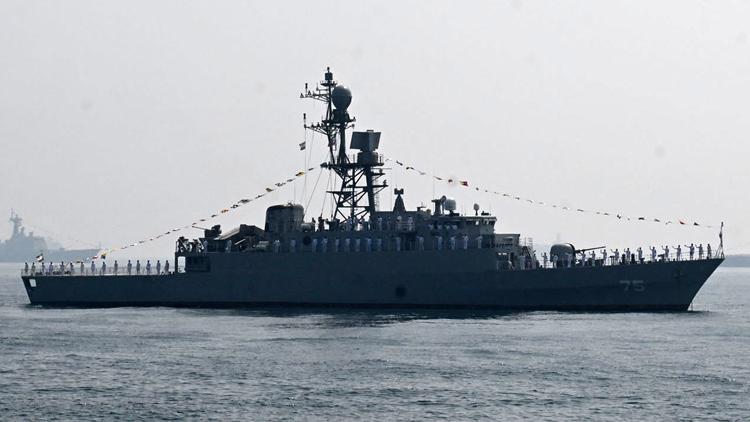
Iran vows revenge after U.S. sinks warship in what named reporting described as a rare naval escalation in the 2026 Iran conflict. AP reported that a U.S. submarine struck the Iranian warship IRIS Dena off Sri Lanka on March 4, and that Defense Secretary Pete Hegseth later confirmed the action publicly. The event marked an unusual threshold in a conflict that had already expanded beyond Iran's territory into Gulf transport, energy, and regional military positioning. (AP)
The strike came during a widening conflict that had already raised questions about the geographic limits of U.S. and Israeli operations. AP described the Dena sinking as a politically sensitive escalation because it occurred near Sri Lanka after the vessel had recently attended an Indian-hosted naval review, creating immediate fallout not just with Tehran but also with South Asian partners watching how far the war was spreading. (AP)
The loss of the IRIS Dena carried symbolic weight because it showed that the maritime dimension of the conflict had widened. But the strongest claims that can be supported directly are narrower than the rhetoric around them: a U.S. submarine strike occurred, Iran publicly vowed revenge, and Sri Lanka became part of the aftermath through rescue and custody operations.
The Attack: IRIS Dena Goes Down
The IRIS Dena was a Moudge-class frigate and had recently participated in India's International Fleet Review 2026. That recent diplomatic visibility is part of what made the sinking so politically sensitive: the ship was not described in public reporting as operating in a declared war zone near Iran, but rather as transiting the Indian Ocean after a multinational naval event. (AP)
AP reported that the warship was struck in international waters off Sri Lanka, roughly 40 nautical miles from Galle. Reuters separately reported that Sri Lanka's foreign minister said the country had rescued 30 people from a distressed Iranian ship, helping establish the basic public timeline for the rescue phase even as operational details remained incomplete. (AP; Reuters)
Public reporting described the strike as a submarine torpedo attack, but the more granular technical claims about the exact munition, under-keel effects, and precise sinking mechanics were not consistently supported across stronger named reporting. The safer reading is that a submarine-launched attack sank the vessel and that the Pentagon publicly acknowledged the result after the fact.
Defense Secretary Pete Hegseth confirmed the attack the following morning and framed it as a signal that the campaign had widened. AP described the incident as one of the few known examples since World War II of a submarine sinking a ship in combat, which is a more defensible formulation than some of the stronger "first ever" or "first since" claims that circulated afterward. (AP)
The historical comparison most often made in reporting was to the 1982 sinking of the Argentine cruiser ARA General Belgrano during the Falklands War. That analogy is useful because it underscores how uncommon submarine-versus-surface-vessel kills are in modern conflict, but it should not be stretched into overconfident legal or historical conclusions.
Approximately 180 crew members were reported aboard the IRIS Dena when it sank. Early casualty reporting described a severe loss of life, with dozens of deaths and missing personnel reported as rescue efforts continued. The scale of casualties placed the incident among the deadliest naval losses in the region in decades.
Iran's Vow for Revenge
Iran wasted little time making clear that the sinking of the IRIS Dena would not go unanswered. Iran's Foreign Minister Abbas Araghchi issued a stark and widely-quoted condemnation:
"The U.S. has perpetrated an atrocity at sea, 2,000 miles away from Iran's shores. Mark my words: the US will come to bitterly regret the precedent it has set."
— Abbas Araghchi, Iranian Foreign Minister, March 4, 2026
Araghchi also condemned the location of the attack — the Indian Ocean, thousands of miles from any active front of the war — as evidence that the United States was targeting Iranian military assets globally rather than confining operations to the region around Iran. He called the strike on a vessel that had recently participated in a friendly naval review hosted by India "an act of aggression with no geographic limits." The Hill reported his warning under the headline: "Iranian leaders vow revenge on Donald Trump after US sinks warship."
Beyond the diplomatic condemnation, Iran's military response was swift and multi-pronged. Iran launched expanding drone strikes across U.S. military sites, travel hubs, and oil facilities throughout the Persian Gulf — attacks that Tehran characterized as direct retaliation for the IRIS Dena sinking. Iranian state media vowed to "completely destroy the Middle East's military and economic infrastructure" if the campaign against Iran continued.
Iran's National Security Council chief Ali Larijani added to the chorus of condemnation, criticizing Trump over the mounting Iranian civilian death toll. Larijani referenced the strike on a Shajareh Tayyebeh elementary school in Minab that killed an estimated 168 people — many of them children — saying the "mass martyrdom of innocent girls" had "stained" the conflict in blood. NBC News reported these statements as part of its running live blog coverage on March 4–5.
Iran's Foreign Ministry also flatly rejected any suggestion of ceasefire negotiations. When asked by reporters whether Tehran had requested a ceasefire through back channels, Araghchi denied it and said Iran was "confident that we can confront" any U.S. ground invasion should one materialize, calling such a prospect "a big disaster" for Washington.
The totality of Iran's response — political condemnations, drone retaliation, and flat refusal of negotiations — left little ambiguity: Iran's response to U.S. strikes had entered a new and more dangerous phase, one that military analysts warned could draw in proxies across Lebanon, Iraq, Yemen, and beyond.
Rescue Operations & Sri Lanka
The sinking of the IRIS Dena thrust Sri Lanka unexpectedly into the center of the 2026 Iran conflict. Sri Lankan authorities moved quickly into rescue and recovery mode, and named reporting from Reuters and AP consistently placed Colombo in the awkward position of managing a humanitarian and diplomatic crisis tied to a war it was not part of. (Reuters; AP)
Casualty reporting is one place where caution matters most. AP reported that Sri Lanka's navy recovered 87 bodies and rescued 32 sailors. But AP also said Sri Lanka's foreign minister initially put the number aboard at about 180, while Araghchi later said the vessel had carried almost 130. Those conflicting denominators change how readers interpret the number missing, so this page should not present one neat casualty total as if all public reporting agreed. (AP; AP)
The crisis did not end with the IRIS Dena. AP later reported that Sri Lanka took custody of a second Iranian ship, the IRIS Bushehr, after it escorted the frigate toward Sri Lanka. That detail deepened the diplomatic pressure on Colombo and made the sinking a regional political issue rather than a single maritime incident. (AP)
BBC coverage noted the diplomatic awkwardness for Colombo, which maintains relations with both the United States and Iran and had not been consulted before the attack occurred in waters adjacent to its coast.
India Caught in the Middle
The IRIS Dena's sinking generated intense political fallout in India. The frigate had been a guest of the Indian Navy just days before its destruction, participating in the International Fleet Review 2026 hosted by New Delhi from February 15–25 — a major demonstration of Indian maritime diplomacy attended by warships from more than 40 nations. The IRIS Dena was sailing home through the Indian Ocean, still in what India considers its sphere of maritime influence, when the U.S. submarine struck.
The Modi government made no immediate public comment on the sinking, a silence that Indian opposition figures quickly turned into a political weapon. Lok Sabha Leader of Opposition Rahul Gandhi was particularly pointed, accusing Modi of failing to protect India's strategic autonomy:
"Conflict has reached our backyard, yet the Prime Minister has said nothing. We are surrendering India's strategic autonomy."
— Rahul Gandhi, Leader of the Opposition, Lok Sabha, March 5, 2026
Congress MP Jairam Ramesh was similarly sharp: "I have never seen such a timid and fearful Indian government." A Bloomberg analysis published March 5 concluded that the U.S. sinking of the IRIS Dena "piles pressure on India's Modi," describing the episode as "a massive blow to New Delhi's regional credibility." Bloomberg noted that the attack took place through what is considered an area of Indian naval influence, just days after an Indian-hosted event at which the IRIS Dena had been a formally invited participant.
Former Indian officials quoted by the National Herald described the IRIS Dena as having been effectively "defenceless" at the time of the attack — a vessel in transit through peaceful international waters with no active weapons deployment posture. The Middle East Eye similarly quoted Indian authorities characterizing the ship as "defenceless." The framing intensified India's domestic political controversy: was it acceptable for the United States to sink a warship that had just attended India's fleet review, in waters adjacent to India, without any prior notification to New Delhi?
Modi's government's silence was itself read as an implicit answer: India would not challenge Washington over the strike. But the political cost of that silence was mounting rapidly.
The U.S. Senate War Powers Battle
As news of the IRIS Dena sinking spread, the U.S. Senate was simultaneously debating a war powers resolution that would have required President Trump to halt or obtain congressional authorization for military operations against Iran. The resolution, which needed only a simple majority of 51 votes to pass, was brought forward by a coalition of Democratic and some Republican senators concerned about the scope and legality of Operation Epic Fury.
The final vote was 47 in favor, 53 against — the resolution failed. NBC News reported the outcome under the headline that Iran had vowed revenge after the U.S. sank its warship — the two events occurring on the same day. The Senate vote effectively cleared the path for the Trump administration to continue and expand its military campaign without any immediate congressional check.
The vote came just as the IRIS Dena strike was being publicly confirmed, and opponents of the resolution argued that halting operations mid-campaign would leave U.S. forces vulnerable and telegraph weakness to Tehran at a critical moment. Supporters countered that the strike on a vessel in peaceful international waters thousands of miles from Iran — a vessel that had just attended an Indian naval review — represented exactly the kind of unlimited, geographically unbounded warfare that the War Powers Resolution was designed to prevent.
Trump responded by saying he needed personal involvement in selecting Iran's next supreme leader, calling Khamenei's son "a lightweight" — a statement that underscored the maximalist ambitions of the current U.S. operation far beyond the original stated objective of eliminating Iran's nuclear capability. For more context on the legal debates, see our war powers resolution explainer.
What Can Be Verified So Far
This article should separate what was directly reported from what remains interpretive.
- Directly supported by named reporting: a U.S. submarine strike sank the IRIS Dena; Sri Lankan authorities recovered bodies and rescued survivors; Araghchi publicly condemned the attack; and the ship had recently attended an Indian-hosted naval review. (AP; Reuters)
- Still variable in public reporting: exact crew size, the number still missing, and the full legal interpretation of the strike in international waters.
- Interpretive rather than directly proven: claims that the strike permanently altered deterrence, that no Iranian naval asset was safe anywhere in the world, or that the attack single-handedly reset U.S.-India relations.
What Comes Next
The sinking of the IRIS Dena and Iran's vow for revenge have set the stage for a potentially dangerous new phase in the 2026 Iran conflict. Several escalation vectors are now in play.
Iranian naval retaliation. Having lost its most capable frigate, Iran has strong domestic and military incentives to strike back at U.S. naval assets in the Persian Gulf, the Strait of Hormuz, or the Arabian Sea. Iran retains a significant inventory of anti-ship missiles, fast attack craft, and submarines, as well as the ability to mine the Strait of Hormuz — a move that would immediately paralyze global energy markets. CENTCOM has publicly acknowledged striking over 20 Iranian naval vessels; further degradation of Iranian naval capability may reduce — but not eliminate — this risk.
Proxy escalation. Iran has already launched drone attacks across the Persian Gulf. Hezbollah in Lebanon, the Houthis in Yemen, and Iranian-backed militias in Iraq each retain the capability to strike U.S. military bases, commercial shipping lanes, or Israeli territory. The IRIS Dena sinking provides fresh impetus for all three groups to escalate their own activities.
Diplomatic fallout. The India dimension of this event may have lasting strategic consequences. India is a critical U.S. partner in the Indo-Pacific, and the optics of the sinking — a vessel that attended India's fleet review destroyed in India's maritime region without consultation — create real friction. How Modi ultimately responds will signal whether Washington can count on New Delhi's quiet acquiescence or faces a more independent Indian stance.
International law questions. Unlike previous strikes on Iranian nuclear and military facilities on Iranian soil — which the U.S. justified under Operation Epic Fury's stated mandate — the IRIS Dena was struck in international waters, thousands of miles from Iran, in a region with no declared combat zone. This geographic scope, combined with the Senate's failure to pass a war powers resolution, means the legal architecture around these operations remains deeply contested.
For the moment, both sides appear locked into a cycle of strike and counter-threat. Iran's public posture remained defiant, the Senate declined to impose an immediate war-powers constraint, and the Dena sinking gave the conflict a maritime flashpoint with unresolved casualty and legal questions still surrounding it.
Sources
- Associated Press — U.S. sinks Iranian warship off Sri Lanka; Sri Lankan navy says 87 bodies recovered. apnews.com
- Associated Press — Sri Lanka takes custody of second Iranian ship after attack on the IRIS Dena. apnews.com
- Reuters — Sri Lanka rescues 30 people on board distressed Iranian ship, Foreign Minister says. reuters.com
- Bloomberg — US Sinking of Iran Ship Piles Pressure on India's Modi. bloomberg.com
- Associated Press — Senate rejects war-powers measure as the Iran conflict widens. apnews.com