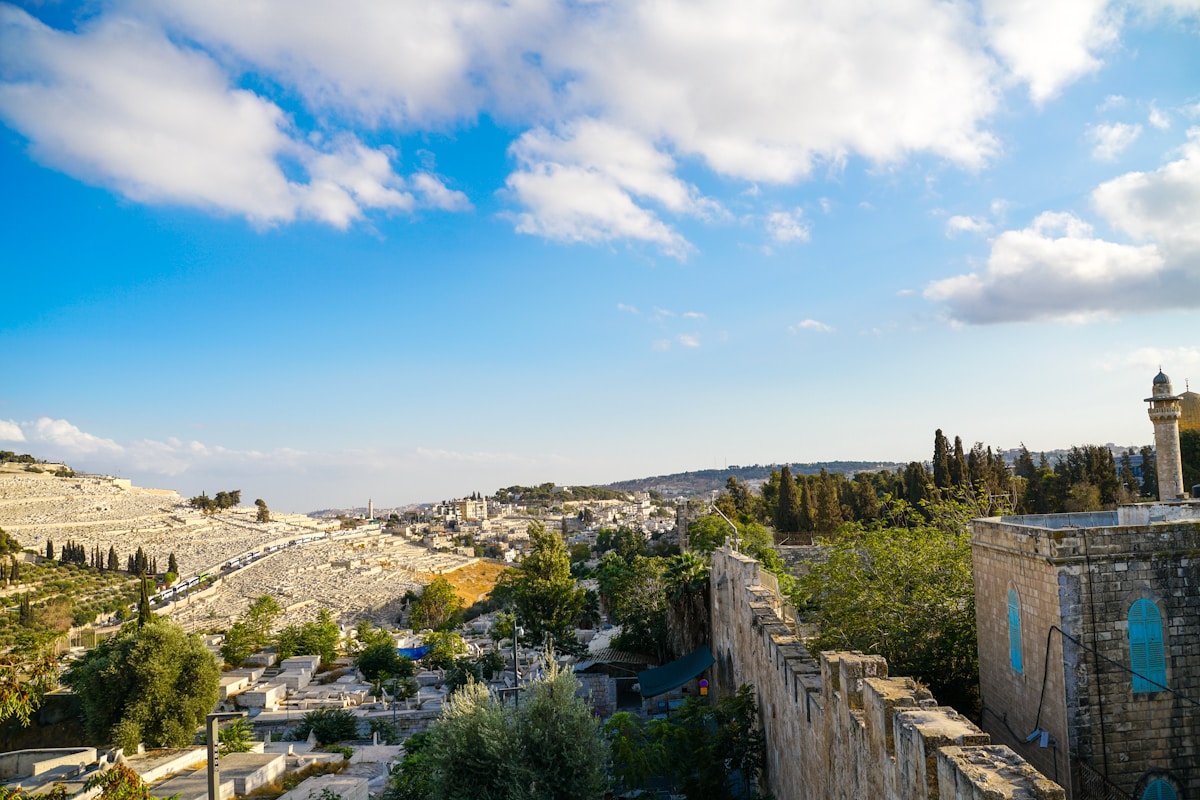
Is Israel safe to travel right now?
Is Israel Safe to Travel depends on the exact route, the current Israel travel advisory 2026 language, and whether Ben Gurion Airport flights can operate without regional disruption. A Tel Aviv hotel stay, a Jerusalem religious itinerary, a West Bank visit, a northern border route, and any Gaza-adjacent plan are five different risk decisions. Treating them as one countrywide answer is the fastest way to misunderstand the trip.
The short answer is conditional: Israel may be workable for some essential, family, religious, or highly prepared travelers, but it is not a low-friction leisure destination during active regional escalation. Official guidance matters because governments do not only describe danger; they also signal where consular support, insurance coverage, airline operations, and emergency response may become harder. The safest plan begins by reading the advisory detail and then cutting the itinerary down to only the places with a clear reason to be included.
For most tourists, the core distinction is central travel versus conflict-edge travel. Central Israel and Jerusalem can remain active while still experiencing sirens, shelter instructions, demonstrations, checkpoints, flight cancellations, or sudden restrictions. Border areas near Gaza, Lebanon, and Syria carry a different risk profile because escalation can change the security picture quickly. The West Bank also needs separate treatment because access, checkpoints, protests, settler violence risk, and consular limitations do not match the Tel Aviv city-break model.
That route-based approach is consistent with the wider framework in our Middle East travel safety guide. The highest-probability failure point is often not a visitor being directly harmed. It is an itinerary that depends on smooth flights, no advisory change, no shelter disruption, no insurance exclusion, and no border or checkpoint delay. In 2026, a resilient Israel trip should be smaller, more flexible, and easier to exit than a normal vacation.
| Trip type | Baseline risk | Main planning issue |
|---|---|---|
| Tel Aviv business or family visit | Conditional and route-sensitive | Flight continuity, shelter instructions, demonstrations |
| Jerusalem religious or heritage trip | Conditional with crowd-control complexity | Old City access, holy-site tensions, checkpoint timing |
| West Bank itinerary | Materially higher and highly localized | Checkpoints, unrest, consular limits, route approvals |
| Northern border travel | High during escalation windows | Rocket, drone, and cross-border conflict risk |
| Gaza or Gaza-adjacent travel | Do-not-travel category for tourists | Armed conflict, access restrictions, extreme emergency risk |
What does the Israel travel advisory mean?
The U.S. State Department Israel, the West Bank, and Gaza advisory is the main baseline for American travelers. Its practical message is not simply "go" or "do not go." It separates Israel and the West Bank from Gaza and from specific border or conflict areas, which means route design is more important than a national headline. If your trip cannot be explained city by city, road by road, and airport by airport, it is not ready.
Travel advisory levels also affect non-safety decisions. Employers may block travel into higher-risk regions. Universities and organized tours may cancel. Insurers may apply exclusions for war, terrorism, civil unrest, or travel against government advice. Airlines may issue waivers, suspend flights, or reroute through different hubs. A traveler who reads only the first sentence of an advisory can miss the operational consequences that decide whether the trip is practical.
The UK FCDO Israel travel advice reinforces the same idea by dividing the risk map into areas with different recommendations. That matters even for travelers who are not British because FCDO pages are often detailed about border areas, protests, terrorism risk, and insurance implications. When U.S., UK, Canadian, Australian, or EU-linked advice converges around a named area, treat that convergence as a strong signal, not as background noise.
The advisory should also be read alongside the conflict context. Israel is not isolated from the regional aviation system, missile-defense posture, or diplomatic escalation cycle. A new warning around Iran, Lebanon, Syria, or the Red Sea can ripple into Israeli travel before local tourist districts visibly change. Our Middle East airspace conflict-zone guide explains why flight-routing risk belongs in travel safety planning rather than in a separate aviation category.
How to translate advisory language into decisions
| Advisory signal | What it usually means | Traveler response |
|---|---|---|
| Reconsider travel | The trip may be possible but requires a strong reason and flexible terms | Proceed only if the route is essential or clearly manageable |
| Do not travel | Government considers the area too dangerous for ordinary travel | Remove it from tourist planning |
| Border-area warning | Risk can change faster than a city itinerary can absorb | Stay well away from named corridors |
| Limited consular access | Emergency support may be delayed or impossible | Do not depend on embassy extraction as a safety plan |
| Airline waiver or suspension | Operational risk has moved from theoretical to practical | Rebook, reroute, or postpone before the airport queue forms |
Which areas of Israel should travelers avoid?
Travelers should avoid Gaza for ordinary travel and should not treat any Gaza-adjacent area as a spontaneous side trip. Access restrictions, armed conflict risk, humanitarian conditions, and emergency-service limitations put Gaza in a category that normal tourist checklists cannot solve. If your reason for travel involves journalism, aid, family emergency, official work, or another non-tourism purpose, it requires a professional security plan, not a travel-blog itinerary.
Northern border areas require similar caution during escalation periods. The practical risk is not only a scheduled attack; it is the uncertainty created by rocket fire, drone activity, air-defense alerts, road closures, evacuation orders, and local military movement. A rural guesthouse or scenic stop that looks quiet on a map can become a poor decision if it is near a named border-warning zone. Do not use distance from Tel Aviv as your only measure of safety.
The West Bank is not a single risk category either. Bethlehem, Ramallah, Hebron, Jericho, settlement roads, checkpoints, and rural areas can produce different movement and security conditions. Tourists who visit religious or heritage sites sometimes underestimate how much a checkpoint delay, protest, road closure, or sudden tension can change a day. If a West Bank visit is essential, use a reputable operator, keep the schedule daylight-based, avoid demonstrations, and know where the route can be turned around.
Southern routes near Gaza and the Eilat corridor should also be analyzed separately. Eilat may be far from the central Israel itinerary and attractive as a Red Sea destination, but regional missile and drone threats, Red Sea instability, and long ground transfers can complicate the risk picture. A traveler planning Eilat as part of a Jordan or Egypt itinerary should compare it with our Jordan travel safety guide and the broader Iran-Israel-Dubai conflict guide before assuming the route is simple.
Route risk by area
| Area | Risk driver | Practical traveler stance |
|---|---|---|
| Gaza | Armed conflict, access limits, emergency collapse risk | Do not include in ordinary travel |
| Northern border | Cross-border fire, drones, evacuation orders | Avoid unless essential and professionally supported |
| West Bank | Checkpoints, unrest, consular limitations, road volatility | Use separate route planning and reputable local support |
| Jerusalem | Crowds, holy-site tension, protests, security closures | Plan daylight movement and avoid demonstrations |
| Tel Aviv and central coast | Air alerts, demonstrations, airport disruption | Potentially workable with flexible logistics |
Is Ben Gurion Airport reliable during escalation?
Ben Gurion Airport can be open and still be unreliable for a specific traveler. The question is not only whether the terminal is operating. It is whether your airline is flying, whether your aircraft is positioned correctly, whether airspace restrictions force delays, whether your connection can absorb a retime, and whether your return flight is protected if the security picture changes. In conflict-adjacent travel, airport reliability is a moving operational status rather than a fixed destination trait.
The first control is ticket structure. Same-ticket itineraries are usually safer than split tickets because the airline has clearer obligations if a delay causes a missed connection. A nonstop flight is simpler than a route that depends on two stressed regional hubs. A fare that allows changes is safer than a bargain fare that becomes expensive when a waiver does not cover your exact date. For Israel in 2026, the cheapest itinerary is often the least resilient itinerary.
The second control is time. Do not arrive at Ben Gurion with a tight onward connection or a same-day critical obligation at home. If the trip is important, build a return buffer and keep one extra night of hotel budget available. Families, older travelers, and travelers with medication schedules should carry more essentials than usual because an airport delay can become a health or care problem quickly. This is the same logic used in our Lebanon travel safety analysis, where the airport question often dominates the city question.
The third control is alert discipline. Track carrier notices, government alerts, and route changes beginning a week out, not the night before departure. Watch whether your airline is issuing waivers for Israel, whether partner airlines are suspending service, and whether other carriers are rerouting around the same airspace. If multiple carriers change policy within 48 hours, that is a stronger signal than a single delayed flight.
For Israel trips, treat the airport as part of the risk environment, not merely as transportation at the beginning and end of the journey.
Airport disruption checklist
| Check | Lower-risk setup | Higher-risk setup |
|---|---|---|
| Ticket type | Single itinerary with protected connections | Split ticket with no rebooking duty |
| Flight route | Nonstop or one stable hub | Multiple connections through stressed airspace |
| Return buffer | One spare day before work, cruise, or event | Same-day critical obligation after arrival |
| Carrier policy | Changeable fare or active waiver | Nonrefundable fare with no waiver coverage |
| Documents | Offline passport, insurance, hotel, and embassy info | Everything stored only in email or cloud apps |
Is Tel Aviv or Jerusalem safer for tourists?
Tel Aviv is usually the easier city for travelers who want a compact, modern, coastal base close to the main airport. It has strong hotel infrastructure, direct transport options, and a familiar large-city rhythm. The main tourist controls are straightforward: stay near the areas you plan to use, avoid demonstrations, monitor alerts, know your shelter instructions, and keep airport plans flexible. That does not make Tel Aviv risk-free. It makes the risk easier to organize than a route with multiple checkpoints or border-adjacent stops.
Jerusalem is different. It is central to many religious, family, and heritage itineraries, but it carries more complex crowd, political, and security dynamics. The Old City, holy sites, large gatherings, and access points can change quickly during tense periods. A visitor may have a calm hotel stay and still experience a delayed site visit, police cordon, protest, or checkpoint-related disruption. The safer Jerusalem itinerary uses daylight movement, fewer daily stops, reputable transport, and flexible expectations around religious-site access.
Both cities require ordinary urban precautions that headlines can obscure. Theft, scams, fatigue, heat, road safety, and poor nighttime transport decisions still matter. A traveler who focuses only on missiles may miss the more likely mistake of walking exhausted with visible valuables, accepting an unlicensed ride, joining a crowd without understanding it, or letting a phone battery die before a late transfer. Conflict-aware travel should improve basic travel discipline, not replace it.
For travelers who want a lower-friction regional alternative, compare Israel honestly with destinations whose current advisory profile better matches a vacation. Our Dubai travel safety guide and Abu Dhabi travel safety guide cover a different risk environment: still exposed to regional airspace and maritime tension, but not the same day-to-day security posture as Israel during escalation. The right comparison is not whether Israel is interesting. It is whether your trip purpose justifies the extra controls.
City-by-city planning model
| City | Best fit | Key control |
|---|---|---|
| Tel Aviv | Business, family, short central-coast visits | Airport flexibility and shelter awareness |
| Jerusalem | Religious, heritage, family, diplomatic visits | Daylight routing and crowd avoidance |
| Dead Sea routes | Resort or nature add-on if route is clear | Road timing, checkpoint context, backup transport |
| Eilat | Red Sea trip with extra route review | Long transfers, regional airspace, Red Sea context |
| West Bank sites | Specific religious, family, or professional reason | Specialized local support and separate risk plan |
How should travelers decide whether to go?
Start with purpose. A discretionary beach vacation, an essential family visit, a pilgrimage, a business obligation, and a journalism assignment do not deserve the same answer. The more discretionary the trip, the less conflict-related uncertainty you should accept. If you can get most of what you want from the trip somewhere else, postponement or substitution may be the rational choice. If the trip is essential, the goal is not to ignore the risk; it is to remove unnecessary complexity.
Next, build a one-page route audit. List every flight, city, road transfer, border or checkpoint exposure, hotel, and time-sensitive activity. Mark each leg green, amber, or red. Green means central, flexible, and covered by normal support. Amber means it depends on timing, airport reliability, or local conditions. Red means do-not-travel advice, border-area exposure, no backup, or weak emergency support. If the route has more than one red item, it is not a normal tourist itinerary.
Insurance deserves a direct check before money is committed. Ask whether your policy covers cancellation after a government advisory change, whether war or terrorism exclusions apply, whether airline disruption alone is enough to trigger benefits, and whether medical evacuation is covered in Israel, the West Bank, or any planned route outside Israel. Do not rely on the phrase "travel insurance" as if it means every disruption is covered. Conflict-related exclusions are exactly where assumptions become expensive.
Entry rules also belong in the decision. Israel has moved toward electronic travel authorization for visa-exempt visitors, and travelers should verify the current requirement through the official Israel ETA-IL system before booking. An entry requirement is not the same as a safety judgment, but paperwork failure can strand a traveler just as effectively as a flight disruption. Confirm passport validity, visa or ETA status, medication rules, and any special documentation for minors before final payment.
Set decision thresholds before the final week. Postpone if your government raises advice for your specific route. Reroute if your carrier suspends service or issues broad Israel waivers. Remove any border-area stop if local warnings intensify. Cancel discretionary West Bank travel if checkpoints, protests, or access warnings harden. Add an airport hotel if your return flight becomes the single point of failure. Thresholds prevent last-minute bargaining with risk.
Seven-day Israel travel checklist
| Timing | Action | Why it matters |
|---|---|---|
| 7 days out | Read U.S., UK, and home-country advisory details | Finds route-specific warnings before penalties tighten |
| 5 days out | Check ETA, passport, insurance, and airline waiver rules | Confirms paperwork and cost exposure |
| 72 hours out | Track carrier operations and inbound aircraft status | Detects disruption before departure-day queues |
| 48 hours out | Save documents, embassy contacts, and hotel addresses offline | Reduces dependence on cloud access during disruption |
| 24 hours out | Review local alerts, demonstrations, and shelter guidance | Protects first-day movement decisions |
| In country | Refresh alerts each morning and keep return options visible | Maintains situational awareness without improvising |
Finally, do not let sunk costs decide. A nonrefundable hotel is not a security argument. A once-in-a-lifetime itinerary is not a substitute for a working exit plan. If the advisory map, flight picture, and insurance terms all point in the wrong direction, the stronger decision is to redesign the trip while you still control the terms.
FAQ
Is Israel safe to travel right now?
Israel is a conditional travel decision in 2026, not a routine low-risk destination. Travelers should separate central-city trips from Gaza, border zones, the West Bank, and any area named in current government advisories. If the trip is discretionary and depends on smooth flights or tight schedules, postponement or redesign may be the lower-risk choice.
Is Tel Aviv safe for tourists in 2026?
Tel Aviv is usually more workable than border areas for prepared visitors, but it still requires alert monitoring, flexible flights, and readiness for shelter instructions or demonstrations. The main travel risk is not ordinary city tourism; it is how quickly missile, airspace, or advisory changes can disrupt a short trip. Keep lodging central and avoid building the itinerary around same-day critical connections.
Can tourists visit Jerusalem during conflict escalation?
Jerusalem can remain open to visitors, but it has a more complex security profile than a standard city break because of holy sites, protests, checkpoints, and crowd-control decisions. Travelers should build daylight movement plans, avoid political gatherings, and keep lodging close to the areas they actually intend to visit. Religious or heritage trips should include flexible expectations around access to sensitive sites.
Is Ben Gurion Airport open and reliable?
Ben Gurion Airport may operate while still being vulnerable to cancellations, airline waivers, airspace rerouting, or sudden security pauses. Treat airport reliability as a day-by-day operational question, not as a yes-or-no safety label. Use same-ticket itineraries, wider buffers, and changeable fares when possible.
What areas of Israel should travelers avoid?
Travelers should avoid Gaza and any border or conflict area their government places under do-not-travel advice. They should also treat the West Bank and northern or southern border corridors as separate risk decisions rather than extensions of a Tel Aviv or Jerusalem itinerary. If a route requires checkpoints, local permissions, or emergency support assumptions, it needs a stronger plan than ordinary tourism.
Sources
- U.S. Department of State, Israel, the West Bank, and Gaza Travel Advisory. travel.state.gov
- UK Foreign, Commonwealth & Development Office, Israel travel advice. gov.uk
- Israel Population and Immigration Authority, ETA-IL entry authorization. israel-entry.piba.gov.il
- Images sourced from Unsplash's open-use photo library and resized locally for this page.