Is Turkey safe to travel right now?
Is Turkey safe to travel in 2026 depends less on the country name and more on the exact route, timing, and risk tolerance behind your itinerary. A standard first-time trip built around Istanbul, Cappadocia, Ephesus, Antalya, Bodrum, or the Aegean coast is a different risk decision from a road trip into southeastern provinces or a route that approaches the Syria and Iraq border zone. Most tourists are not choosing between "safe Turkey" and "unsafe Turkey"; they are choosing between well-established tourism corridors and areas that official advisories separate out for armed conflict, terrorism, or consular-access reasons.
That distinction matters during Iran conflict escalation. Turkey is not the same risk category as Iran, Iraq, Syria, Lebanon, or Israel, but it sits beside the regional aviation system that can absorb missile warnings, interception activity, diplomatic warnings, and airline rerouting. The resulting traveler problem is often continuity risk. Your hotel in Sultanahmet may be open, your guide in Goreme may be operating, and your Antalya resort may be calm, while your inbound flight still gets retimed because aircraft and air corridors are under pressure elsewhere.
The most useful planning model is to separate destination risk from route risk. Destination risk covers crime, protests, terrorism warnings, local laws, road safety, and earthquake exposure inside Turkey. Route risk covers whether your flights, connections, travel insurance, and return options can survive a regional shock. The same distinction appears in our Middle East travel safety framework, where the highest-probability failure point is usually a brittle itinerary rather than immediate street-level danger.
Turkey also has enough tourism depth to support conservative travel planning. Official Turkish communications said the country hosted about 64 million foreign visitors in 2025 and generated roughly $65 billion in tourism revenue, which reflects a large, mature visitor infrastructure rather than an experimental destination. But scale is not a guarantee of personal safety. It simply means that Istanbul Airport, major hotels, domestic carriers, licensed tour operators, and resort corridors have experience absorbing normal travel friction. In a conflict-adjacent year, that infrastructure is valuable only if you use it with flexible bookings and advisory discipline.
| Trip type | Baseline risk | Main 2026 planning issue |
|---|---|---|
| Istanbul city break | Usually manageable with urban awareness | Crowds, protests, airport disruption, terrorism caution |
| Cappadocia itinerary | Generally lower tourist-area risk | Flight buffers through Istanbul, Ankara, or Kayseri |
| Antalya or Aegean coast | Resort infrastructure and strong tourism presence | Seasonal congestion, airport changes, road timing |
| Southeast Turkey route | Materially higher advisory exposure | Armed conflict, terrorism, border-zone restrictions |
| Border areas near Syria or Iraq | High risk under official warnings | Do-not-travel guidance and limited emergency support |
What does the Turkey travel advisory mean in practice?
The U.S. State Department Turkey advisory is the starting point for American travelers, but it should not be read as one countrywide sentence. As of the April 28, 2026 advisory update surfaced in search results, Turkey was listed at Level 2, meaning exercise increased caution, with sharper warnings for specific areas. The advisory separated general caution from a Level 3 reconsider-travel warning for southeast Turkey and a Level 4 do-not-travel warning for the border region with Syria and Iraq. That is the risk map, and it is more important than the headline level alone.
For a tourist, the practical implication is clear: a week in Istanbul and Cappadocia is not the same decision as a road route through Van, Hakkari, Sirnak, or areas near the Syrian and Iraqi borders. The advisory also matters because it can affect insurance, employer travel approvals, school programs, and consular response expectations. A route that technically looks short on a map can become a poor decision if it crosses a named caution zone or puts you in a place where your government has limited emergency-service capacity.
The UK FCDO guidance reinforces the same core idea: read the regional-risk pages, not only the national headline. The UK Turkey travel advice points travelers toward border-specific warnings, terrorism risk, demonstrations, and insurance implications when traveling against government advice. That insurance point is not bureaucratic trivia. If you choose a route your government advises against, parts of your policy may not respond the way you assume. This is especially important for travelers who buy cheap coverage and never read war, terrorism, civil unrest, or government-advisory exclusions.
One 2026-specific issue is that the U.S. advisory language connected southeastern restrictions to regional hostilities after February 28, including missile and air-defense spillover affecting Turkish airspace. You do not need to be flying over a missile path to be affected by that fact. Airlines respond to risk perception, air-traffic control decisions, insurance constraints, and fleet-positioning realities. That is why our Middle East airspace conflict-zone guide treats reroute risk as a travel-safety input rather than a narrow aviation technicality.
How to read the advisory without overreacting
| Advisory signal | What it usually means | Traveler response |
|---|---|---|
| National Level 2 caution | Travel can be reasonable with preparation | Proceed only with alert monitoring and flexible terms |
| Level 3 region inside Turkey | Risk is materially higher than tourism hubs | Redesign discretionary routes away from the region |
| Level 4 border warning | Official do-not-travel area | Do not include it in tourist planning |
| Consular-service reduction | Emergency help may be harder or slower | Avoid dependence on local consular access |
| Airline waiver expansion | Network stress is rising | Rebook early if your itinerary is brittle |
Is Istanbul safe for tourists and airport connections?
Istanbul is generally workable for tourists who use normal city precautions, stay in well-reviewed areas, and avoid demonstrations or high-density public events when advisories warn of elevated risk. The main tourist districts have deep hotel, restaurant, museum, guide, and transport infrastructure. That does not eliminate risk. It changes the risk profile from "can anyone visit?" to "can this itinerary absorb crowded streets, petty theft, protest restrictions, terrorism caution, and flight disruption without cascading failure?"
For first-time visitors, the most practical urban controls are simple. Keep valuables controlled in crowded places such as tram stops, ferry piers, bazaars, and major squares. Use licensed transport or app-booked rides rather than improvised taxis. Avoid political gatherings even if they look calm. Follow local law around photography, public order, and social media commentary, especially because official advisories warn that arbitrary detention and exit bans have affected some foreign nationals. These are not reasons to avoid Istanbul by default; they are reasons to travel with discipline.
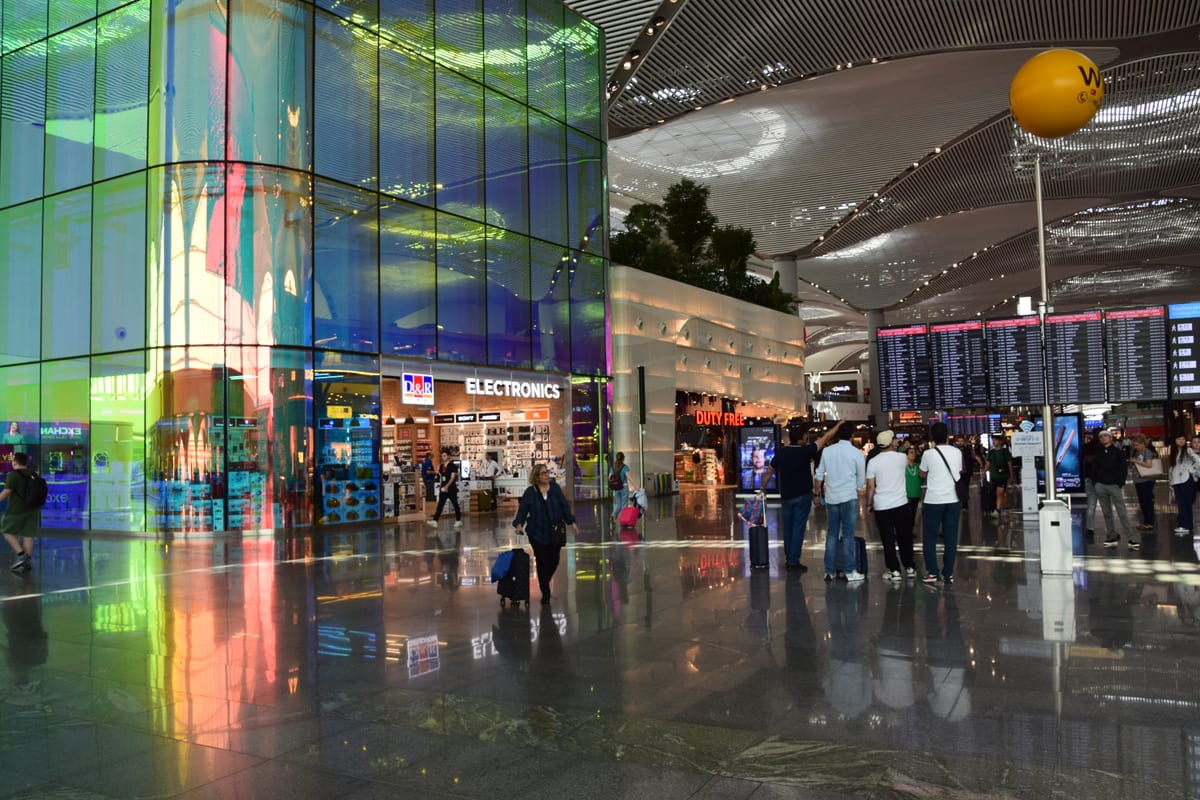
Istanbul Airport creates a second layer of analysis. It is a massive international hub and usually one of Turkey's strongest travel assets, but hub scale can amplify disruption. A 30-minute regional reroute may propagate into missed onward legs if your itinerary is built on short connections. Split tickets are especially fragile because one airline may not be responsible for fixing a missed second booking. During regional stress windows, same-ticket itineraries, wider buffers, and a planned overnight in Istanbul can be more valuable than the cheapest routing.
Travelers should also check whether their aircraft has already been delayed before it reaches Turkey. Flight-tracking the inbound aircraft 12 to 24 hours before departure gives you better signal than looking only at your scheduled departure time. If your aircraft is stuck in a reroute chain, the probability of a late departure rises before your airline sends the final notification. This is the same route-continuity principle we use in our Qatar travel safety guide and Lebanon travel safety guide.
Istanbul decision matrix
| Question | Lower-risk answer | Higher-risk answer |
|---|---|---|
| Where are you staying? | Central, reviewed, transit-accessible hotel | Remote lodging with late-night transfers |
| How are you connecting? | Same ticket, 3+ hour buffer, backup flight | Split ticket, short connection, no rebooking rights |
| What is your daily plan? | Flexible museum and neighborhood schedule | Compressed schedule across multiple districts |
| What alerts are active? | No recent change in advisory or carrier notices | Multiple new alerts or waiver expansions in 48 hours |
The practical conclusion is not that Istanbul is unsafe. It is that Istanbul trips should be built like real travel operations during conflict-adjacent periods. The more your itinerary depends on everything running exactly on time, the less resilient it is.
Are Cappadocia, Antalya, and coastal Turkey safer than the southeast?
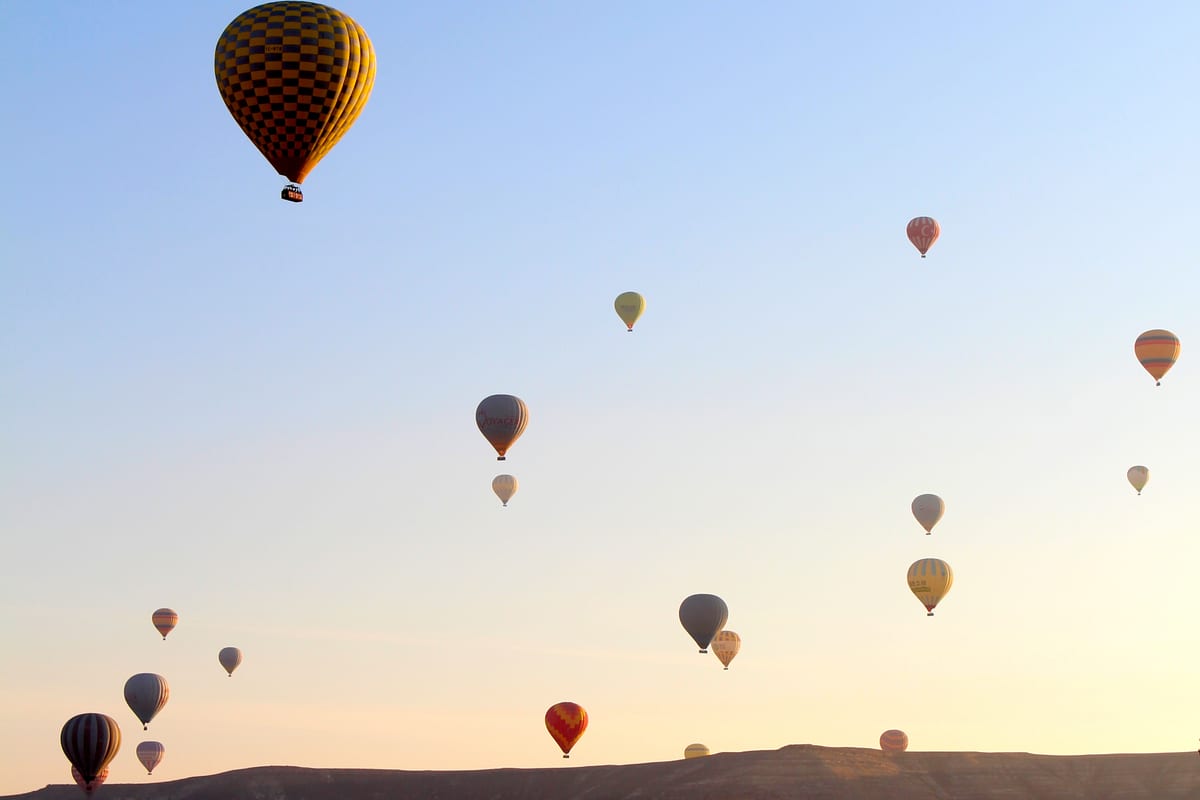
For most leisure travelers, yes, Cappadocia, Antalya, Izmir, Bodrum, and the Aegean and Mediterranean corridors are usually lower-risk choices than the southeast and border regions named in government advisories. They are not risk-free; they simply do not carry the same armed-conflict and border-zone profile. Cappadocia's main issues are transport reliability, weather-driven balloon cancellations, road timing, and the usual visitor logistics. Antalya's main issues are seasonal congestion, road safety, resort-area theft or scams, and flight continuity. Those are familiar travel problems, not the same category as a do-not-travel border warning.
That said, the word "safer" should not create complacency. Turkey is seismically active, and earthquake risk is a real background condition across parts of the country. The CDC's Turkey traveler-health page is also worth checking for routine health preparation, medication rules, vaccination recommendations, and transport-safety reminders. A conflict-focused traveler can overlook basic health and road risks because headlines feel more urgent. Good planning handles both.
Cappadocia trips are especially sensitive to connection quality. Many visitors fly through Istanbul or Ankara before continuing to Kayseri or Nevsehir. If the first leg slips, a tightly scheduled balloon ride or one-night stay can collapse. The fix is not complicated: arrive one day earlier than the activity you care about, keep one flexible morning, and avoid scheduling your most important experience on the first possible dawn after a late arrival. This is boring advice, but it is the difference between a disrupted trip and a merely delayed one.
Antalya and the coastal resorts require a different control set. The route itself may be simpler, but seasonal demand can create crowded airports, full hotels, and limited same-day rebooking options. If regional airspace pressure causes a wave of schedule changes, high-season coastal travelers may compete for fewer spare seats and rooms. Build your plan around refundable hotel terms where possible and keep a realistic cash reserve for an extra night. If traveling with children or older relatives, protect rest windows and daylight transfers. Fatigue turns small disruptions into poor decisions.
For mainstream Turkey tourism, the safest itinerary is usually the one with fewer transfers, wider buffers, and no border-zone improvisation.
The southeast is different because official guidance can name entire provinces or border corridors as higher risk. Travelers with family, journalism, NGO, academic, or business reasons to visit those areas should use a separate security plan rather than adapting a tourism checklist. That plan should include local support, communications redundancy, route authorization, insurance confirmation, and a clear exit strategy. A discretionary tourist should usually avoid trying to solve that complexity at all.
How should travelers build a Turkey go/no-go plan?
A strong Turkey go/no-go plan should fit on one page. Start with your actual route, not the country. List each city, airport, road transfer, and activity that would be expensive or hard to replace. Then mark whether any leg touches an official caution area, depends on a short connection, or carries a nonrefundable cost. That exercise immediately shows whether the trip is robust or fragile.
Next, set decision thresholds before the final 72 hours. For example: postpone if your home government raises advice for your specific region; reroute if your airline issues a waiver covering your travel dates; remove the southeast if consular services are reduced; add an overnight buffer if two flights in your chain are retimed; cancel discretionary border-region travel if there is any fresh armed-conflict warning. Thresholds prevent argument when conditions change because the decision was made before the stress arrived.
Insurance should be reviewed with unusual care. Ask three questions in writing if necessary: does the policy cover cancellation after a government advisory change, does it exclude war or terrorism-related disruption, and does it cover extra accommodation if your airline reroutes or delays you? Many travelers learn the exclusions only after the event. If you are spending thousands on flights and hotels, a 15-minute policy review is not optional risk work.
Communication is the next layer. U.S. travelers should consider enrolling in STEP; other travelers should use their own government's registration or alert tools where available. Save embassy contacts, airline numbers, booking references, passport scans, insurance documents, and hotel addresses offline. Do not rely only on cloud access or email search. During disruption, you may be managing low battery, poor connectivity, long queues, and limited support at the same time.
Finally, compare Turkey against alternatives honestly. If your goal is a low-friction beach holiday and your route requires tight connections through stressed airspace, a different Mediterranean itinerary may be more rational. If your goal is a long-planned Istanbul and Cappadocia trip, the right answer may be to keep the trip but simplify it. Remove one destination. Add a night near the airport. Pay for the fare class that can be changed. Keep the experience you value and cut the failure points you do not need.
Seven-day Turkey safety checklist
| Timing | Action | Why it matters |
|---|---|---|
| 7 days out | Read U.S., UK, or home-country advisory detail | Identifies regional warnings before penalties tighten |
| 5 days out | Confirm insurance exclusions and carrier waiver terms | Clarifies who pays if the trip changes |
| 72 hours out | Track inbound aircraft and route status | Catches disruption before departure-day queues |
| 48 hours out | Save all documents and embassy contacts offline | Reduces dependence on connectivity |
| 24 hours out | Recheck demonstrations, airport notices, and weather | Protects first-day movement decisions |
| In country | Refresh alerts each morning and avoid protests | Maintains situational awareness without panic |
If your Turkey decision is part of a wider regional itinerary, read it alongside our Iran-Israel-Dubai conflict guide, Iraq travel safety analysis, and Turkiye missile-intercept reporting recap. The best planning context comes from comparing country-level advisories with route-level airspace indicators.
FAQ
Is Turkey safe to travel right now?
Turkey is broadly travelable for visitors staying in Istanbul, Cappadocia, the Aegean coast, and Mediterranean resort corridors, but it is not a uniform-risk country. The major planning issue in 2026 is separating normal tourist-area risk from official warnings in the southeast and from possible flight disruption during regional escalation.
Is Istanbul safe for tourists in 2026?
Istanbul remains one of the most visited urban destinations in the region and is generally workable for prepared tourists. Use normal large-city precautions, avoid demonstrations, keep valuables controlled in crowded areas, and monitor official alerts. The highest-probability trip problem is often connection reliability rather than day-to-day sightseeing.
Is Cappadocia safe during Iran conflict escalation?
Cappadocia is far from Turkey's Syria and Iraq border warnings and is usually a lower-risk tourism corridor. Travelers should still protect arrival and departure buffers because most Iran-conflict spillover affects flights and connections before it affects central Turkey sightseeing. Avoid scheduling your most important activity immediately after a tight inbound connection.
What areas of Turkey should tourists avoid?
Tourists should avoid areas that their home government places under do-not-travel advice, especially border zones near Syria and Iraq and specific southeastern provinces when advisories harden. Do not treat a safe Istanbul itinerary as permission to improvise around high-risk border regions. Advisory detail matters more than the national headline level.
Should Americans travel to Turkey now?
Americans can consider Turkey trips if their route avoids higher-risk southeastern areas, uses flexible bookings, and follows State Department and embassy alerts. If the trip depends on tight connections, border-region travel, or nonrefundable logistics, postponement or redesign may be the lower-risk choice. Registering for official alerts and saving emergency contacts offline are sensible controls.
Sources
- U.S. Department of State, Turkey Travel Advisory. travel.state.gov
- U.S. Department of State, Turkey country information. travel.state.gov
- UK Foreign, Commonwealth & Development Office, Turkey travel advice. gov.uk
- CDC Travelers' Health, Turkey destination guidance. cdc.gov
- Republic of Turkey Directorate of Communications, 2025 tourism results. iletisim.gov.tr
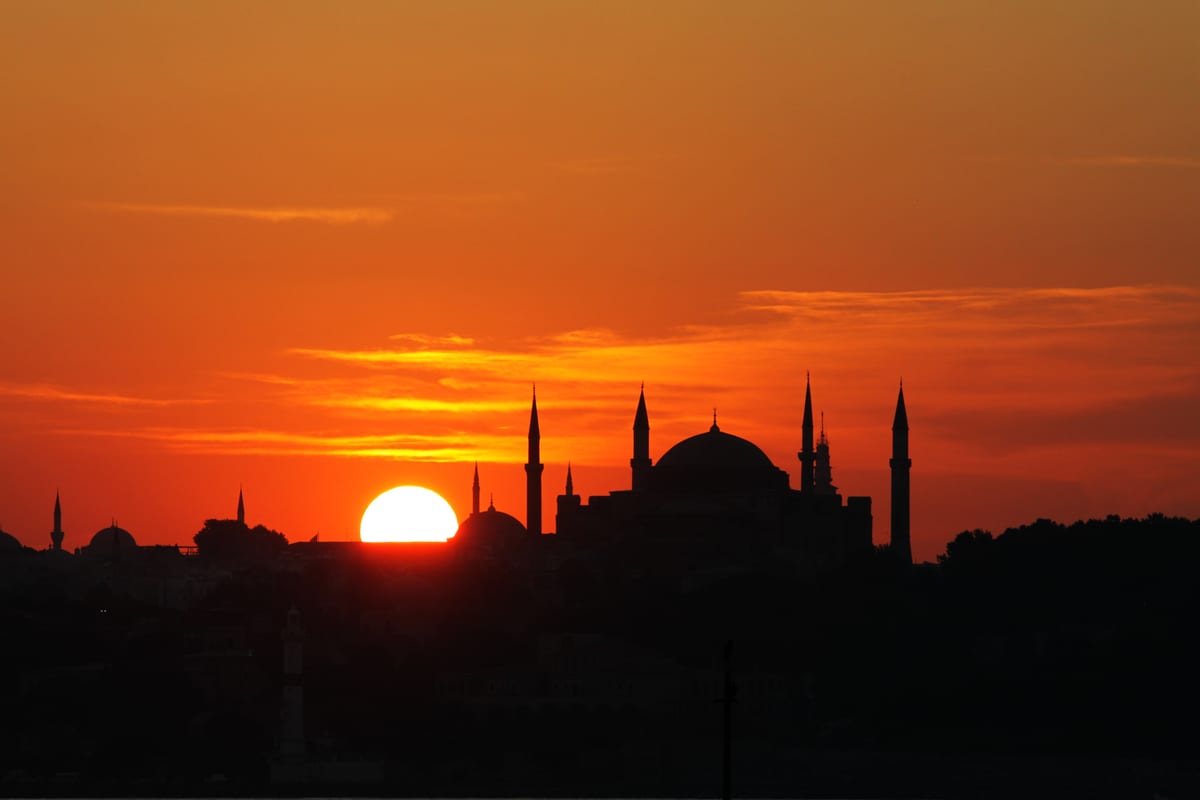
- Wikimedia Commons licensed images: Istanbul Hagia Sophia by BenGoetzinger (CC BY-SA 3.0), Istanbul Airport by Jean Housen (CC BY-SA 4.0), and Cappadocia balloons by Mygeorgianguide (CC BY-SA 4.0).