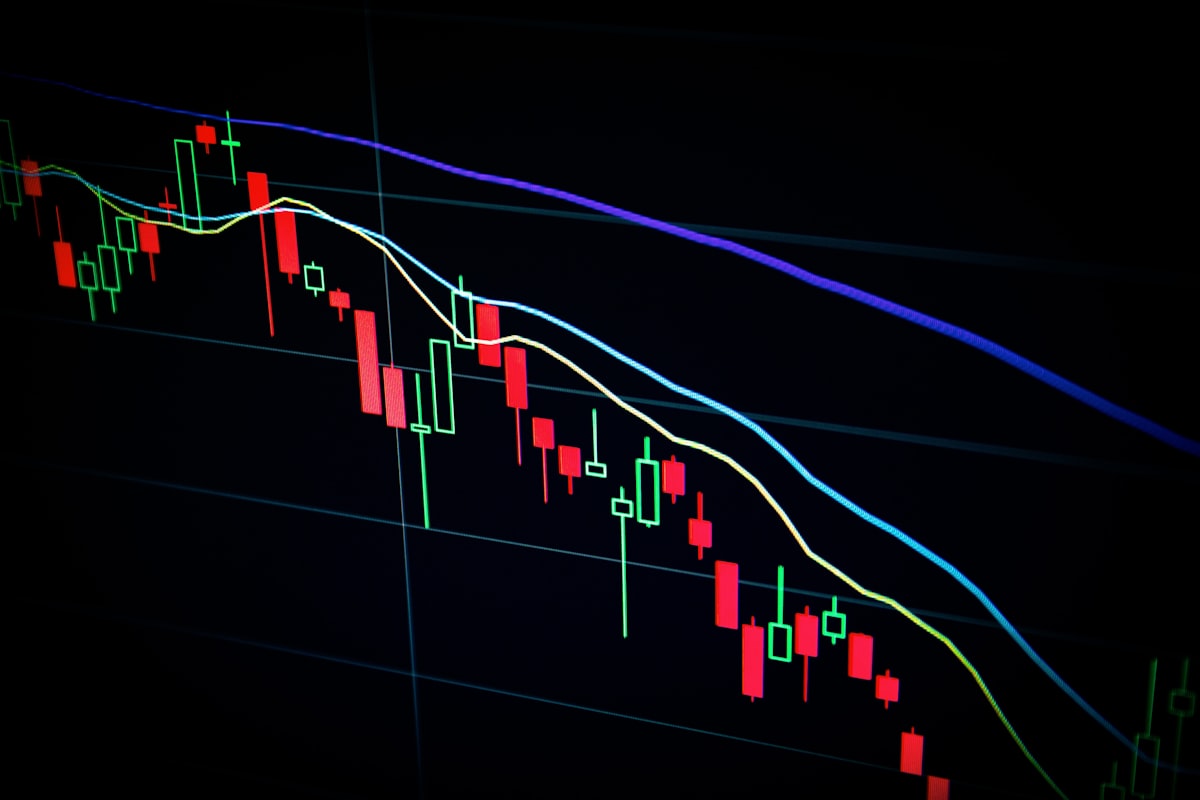
Overview: Markets in Crisis Mode
Global financial markets entered full crisis mode in the overnight hours of February 28, 2026, as news of coordinated US-Israeli strikes on Iran and subsequent Iranian retaliation against US military bases sent shockwaves through every major asset class. The speed and magnitude of market moves reflect not just the immediate military events but the deep uncertainty about what comes next: a contained exchange or a prolonged regional war that could reshape the global energy landscape. (Bloomberg)
The market reaction has been most extreme in energy commodities. Iran produces approximately 3.2 million barrels of oil per day and controls the northern shore of the Strait of Hormuz, through which roughly 20% of the world's oil supply and 25% of global liquefied natural gas (LNG) transits daily. Any sustained disruption to Iranian production or Strait of Hormuz shipping would remove millions of barrels per day from an already tight global supply market. Brent crude, the international benchmark, surged from a pre-strike level of approximately $82 per barrel to above $95 in Asian trading, a gain of more than 15% in a matter of hours. West Texas Intermediate (WTI), the US benchmark, followed suit, reaching $92 per barrel. (Reuters)
Equity markets have plunged. S&P 500 futures fell 4.2% in pre-market trading, pointing to a loss of approximately 230 points at the open. Nasdaq 100 futures dropped 5.1%, reflecting the technology sector's particular vulnerability to rising energy costs and supply chain disruption. European markets opened sharply lower, with the FTSE 100 down 3.8%, the DAX down 4.5%, and the CAC 40 down 4.1%. Asian markets, which were open when the strikes began, saw the Nikkei 225 plunge 4.7% and the Hang Seng fall 3.9%. (Bloomberg)
Safe-haven assets surged. Gold hit a historic $5,000 per troy ounce, breaching the psychologically critical level for the first time. The US dollar strengthened against most major currencies, with the DXY index gaining 1.8%. US Treasury yields fell sharply as investors piled into government bonds, with the 10-year yield dropping 22 basis points to 3.82%. Bitcoin initially fell 8% before partially recovering, demonstrating that cryptocurrency markets continue to behave more like risk assets than safe havens during geopolitical shocks. (Reuters)
Oil Price Surge Timeline
The oil price surge unfolded in three distinct waves, each corresponding to a new development in the military situation. The first wave began at approximately 2:50 a.m. EST when the first reports of explosions in Tehran reached energy trading desks in London and Singapore. Brent crude, which had been trading at approximately $82.40 on the ICE Futures exchange, spiked to $88 within 20 minutes as traders scrambled to price in the geopolitical risk premium of a US-Iran war. (Bloomberg)
The second wave came between 4:00 and 5:00 a.m. EST as the scale of the US-Israeli operation became apparent. When President Trump's video statement confirmed "major combat operations" and multiple news outlets reported strikes across at least 12 Iranian cities, Brent pushed through $90 and traded as high as $93.50. This move reflected the market's assessment that the operation was not a limited, one-off strike but the beginning of a sustained military campaign. (Reuters)
The third and most dramatic wave occurred after 5:30 a.m. EST when Iran launched retaliatory missile strikes at US bases across the Gulf. This was the development traders feared most, because it confirmed a two-way conflict rather than a one-sided strike, and it raised the specter of escalation involving the Strait of Hormuz. Brent surged through $95 and touched $97.20 before pulling back slightly to the $95-96 range. At these levels, Brent crude is trading at its highest since June 2022 and has gained more than 15% in a single session. (EIA)
| Time (EST) | Event | Brent Crude | WTI Crude |
|---|---|---|---|
| 2:00 AM | Pre-strike baseline | $82.40 | $79.10 |
| 3:00 AM | First Tehran explosions reported | $88.00 | $84.50 |
| 4:30 AM | Trump confirms combat operations | $93.50 | $89.80 |
| 5:45 AM | Iran retaliates at US bases | $97.20 | $93.40 |
| 8:00 AM | Pre-US market open | $95.80 | $92.10 |
Brent and WTI Projections
Energy market analysts have begun issuing revised price forecasts reflecting the new geopolitical reality. The consensus is that oil prices are likely to remain elevated for weeks or months, with the ultimate trajectory depending on whether the Strait of Hormuz remains open and whether the conflict escalates beyond the current exchange of strikes. (Bloomberg)
Goldman Sachs raised its Brent crude forecast to $110 per barrel for Q2 2026, up from a pre-conflict estimate of $78, citing "a fundamental repricing of Middle East risk premium that will persist regardless of near-term ceasefire outcomes." The bank's commodity analysts noted that even if the Strait of Hormuz remains open, the loss of Iranian exports alone (3.2 million barrels per day) would create a supply deficit that OPEC+ spare capacity cannot fully offset, particularly given that Saudi Arabia's spare capacity is estimated at approximately 2.5 to 3 million barrels per day and cannot be brought online instantaneously. (Reuters)
JPMorgan issued a scenario-based analysis. In their base case (conflict contained, Hormuz open), Brent averages $100-110 through mid-2026. In their escalation case (Hormuz partially disrupted), Brent could reach $130-150. In their extreme scenario (full Hormuz closure for more than two weeks), oil would spike to $150-200, triggering a global recession. The bank noted that the Strategic Petroleum Reserve (SPR), which the US had been refilling after drawing it down in 2022, contains approximately 380 million barrels and could moderate price spikes for a limited period. (IMF)
The US Energy Information Administration (EIA) is expected to issue an emergency market assessment in the coming days. Prior EIA modeling had estimated that a sustained loss of Iranian production combined with transit disruptions would add a "risk premium" of $15 to $25 per barrel, on top of fundamental supply-demand pricing. The current surge, at approximately $15 above pre-conflict levels, suggests the market is pricing in the loss of Iranian exports but has not yet fully priced in Strait of Hormuz disruption risk. (EIA)
Strait of Hormuz Risk Premium
The Strait of Hormuz, a narrow waterway between Iran and Oman at the mouth of the Persian Gulf, is the single most important chokepoint in global energy markets. Approximately 20.5 million barrels of oil per day transited the strait in 2025, representing roughly 20% of global consumption. Additionally, approximately 25% of global LNG shipments pass through the strait, primarily from Qatar, the world's largest LNG exporter. The strait is only 21 miles wide at its narrowest point, and shipping lanes are just 2 miles wide in each direction, making it highly vulnerable to disruption. (EIA)
Iran has long maintained that it could close the Strait of Hormuz in retaliation for a military attack. The IRGC Navy has deployed a combination of fast attack craft, naval mines, anti-ship cruise missiles (including the Noor, a variant of the Chinese C-802), and anti-ship ballistic missiles along the Iranian coastline. Iran has also invested heavily in asymmetric naval capabilities, including midget submarines and explosive-laden unmanned surface vessels that could harass commercial shipping. (Reuters)
The immediate market impact has been felt most acutely in shipping insurance. War-risk insurance premiums for tankers transiting the Persian Gulf have increased by approximately 10 times overnight, from an already elevated level. Lloyd's of London, the world's leading marine insurance market, convened an emergency meeting of its Joint War Committee, which manages the Listed Areas designation that triggers higher insurance requirements. Several major tanker operators, including Frontline, Euronav, and Teekay, have reportedly suspended new bookings for Gulf transits pending security assessments. (Bloomberg)
The US Navy's Fifth Fleet, headquartered in Bahrain, maintains a permanent presence in the Gulf specifically to ensure freedom of navigation through the strait. The carrier strike group currently in the Gulf includes an aircraft carrier, guided-missile cruisers and destroyers, and mine countermeasure vessels. However, the Fifth Fleet's ability to simultaneously defend its own installations from Iranian missile attack (as occurred on February 28) and maintain a protective corridor for commercial shipping is untested. A sustained Iranian mine-laying campaign in the strait would require extensive mine countermeasure operations that could take weeks to complete, even with a full naval blockade of Iranian naval forces. (IMF)
Stock Market Futures
US equity futures pointed to one of the worst opening sessions in years. S&P 500 futures fell 4.2%, or approximately 230 points, in pre-market trading, with the contract touching its overnight low at approximately 5:30 a.m. EST coinciding with the Iranian retaliatory strikes. Dow Jones Industrial Average futures fell 3.8%, or approximately 1,600 points. Nasdaq 100 futures dropped 5.1%, reflecting the technology sector's acute sensitivity to energy costs, supply chain disruption, and the risk-off sentiment that drives investors out of high-growth, high-valuation stocks. (Bloomberg)
The CBOE Volatility Index (VIX), often called the "fear gauge," surged to 38 from a pre-conflict level of 17, indicating extreme market stress. A VIX reading above 30 is generally associated with significant market turmoil. For context, the VIX reached 82 during the March 2020 COVID-19 crash and 37 during the August 2024 Japan carry-trade unwind. The current reading suggests the market is pricing in significant ongoing uncertainty but has not yet reached full panic levels. (Reuters)
Circuit breaker provisions at the New York Stock Exchange and Nasdaq are designed to halt trading temporarily if the S&P 500 falls 7% (Level 1), 13% (Level 2), or 20% (Level 3) in a single session. If the pre-market losses hold and worsen after the opening bell, a Level 1 trading halt is a realistic possibility. The NYSE has activated its Rule 48 procedures, which allow designated market makers to open stocks without publishing pre-opening indications, a measure typically used only during extreme volatility events. (Bloomberg)
European and Asian markets that have already completed or are nearing the end of their trading sessions provide a preview. The Euro Stoxx 50 fell 4.3%, led by declines in airlines, tourism, and manufacturing. Japan's Nikkei 225 fell 4.7%, its largest single-day decline since the August 2024 selloff. South Korea's KOSPI fell 3.6%, while India's Sensex dropped 2.9%. Notably, equity markets in the Gulf Cooperation Council (GCC) states, which normally correlate with oil prices, also fell sharply: Saudi Arabia's Tadawul dropped 2.1% and Dubai's DFM fell 3.4%, reflecting investor concern that the conflict could directly impact Gulf state economies and infrastructure. (Reuters)
Gold and Safe Haven Surge
Gold breached the $5,000 per troy ounce mark for the first time in history, hitting an intraday high of $5,024 in Asian trading before settling around $4,980 in London morning trading. The move represents a gain of approximately 6% in a single session, building on a year-long rally that had already taken gold from approximately $2,700 in early 2025 to $4,700 on the eve of the strikes. The $5,000 level had been widely viewed as a major psychological barrier, and its breach is likely to attract additional momentum-driven buying. (Bloomberg)
The gold rally reflects multiple converging forces. The immediate driver is geopolitical safe-haven demand: investors seeking to preserve capital during periods of extreme uncertainty have historically fled to gold, US Treasuries, and the US dollar. Central bank gold purchases, which reached record levels in 2024 and 2025 as countries including China, India, Turkey, and Poland diversified away from dollar reserves, have reduced available supply in the market. The conflict adds a new dimension: if it triggers a global recession through energy price shocks, gold would benefit from the resulting central bank easing, while if it triggers inflation through higher energy costs, gold benefits from its traditional role as an inflation hedge. (Reuters)
Silver followed gold higher, gaining 7.2% to reach $62 per ounce. Silver tends to move more dramatically than gold in both directions due to its smaller market size and its dual role as both a precious metal and an industrial commodity. Platinum gained 4.8%, while palladium surged 9.1%, partly reflecting concerns about supply disruptions if the conflict broadens to impact Russian exports (Russia is a major palladium producer and a key Iran ally). (Bloomberg)
The US dollar strengthened broadly, with the DXY index gaining 1.8% to reach 107.4. The dollar's strength reflects its traditional safe-haven status and the fact that the US, as a net energy exporter, is less vulnerable to oil price shocks than Europe or Asia. The Japanese yen, another traditional safe haven, gained 1.2% against the dollar. The Swiss franc gained 1.5%. Currencies of oil-importing emerging market economies sold off sharply: the Indian rupee fell 2.3%, the Turkish lira fell 4.1%, and the Thai baht fell 1.8%. (IMF)
Sector Winners and Losers
The conflict is producing dramatic divergences in sector performance, creating winners and losers that will persist as long as energy prices remain elevated and geopolitical uncertainty continues. (Bloomberg)
Winners: The most obvious beneficiaries are energy companies. Pre-market trading showed ExxonMobil up 8.2%, Chevron up 7.6%, ConocoPhillips up 9.4%, and Occidental Petroleum up 11.3%. International oil majors BP and Shell gained 7.1% and 6.8% respectively in London trading. Oil field services companies, including Halliburton, Schlumberger, and Baker Hughes, gained between 6% and 10%. Defense contractors also rallied sharply: Lockheed Martin gained 6.5%, Raytheon (RTX) gained 8.1% (boosted by its production of Patriot and Tomahawk systems being used in the conflict), Northrop Grumman gained 5.8%, and General Dynamics gained 4.9%. Gold mining companies surged, with Newmont up 12.4% and Barrick Gold up 11.7%. (Reuters)
Losers: Airlines are among the hardest hit, facing both surging jet fuel costs and the closure of Middle Eastern airspace. Delta fell 7.2%, United fell 8.1%, and American Airlines fell 6.9% in pre-market trading. International carriers with heavy Middle East exposure, including Emirates, Qatar Airways, and Turkish Airlines, face particularly acute disruption. Cruise lines, including Carnival and Royal Caribbean, fell 5% to 7%. Consumer discretionary stocks broadly declined on fears that higher energy costs will reduce household spending power. Technology stocks suffered from the general risk-off sentiment, with the "Magnificent Seven" megacaps all trading lower: Apple down 4.1%, Microsoft down 3.8%, Nvidia down 5.6%, Amazon down 4.3%, Alphabet down 3.5%, Meta down 4.7%, and Tesla down 6.2%. (Bloomberg)
| Sector | Direction | Representative Move |
|---|---|---|
| Oil & Gas Producers | Up | +7% to +11% |
| Defense / Aerospace | Up | +5% to +8% |
| Gold Miners | Up | +10% to +12% |
| Airlines | Down | -7% to -8% |
| Technology | Down | -3.5% to -6% |
| Consumer Discretionary | Down | -3% to -5% |
| Utilities | Mixed | -1% to +1% |
Federal Reserve Implications
The conflict creates a policy nightmare for the Federal Reserve. The central bank had been on a path of cautious rate cuts through 2025 and early 2026, bringing the federal funds rate down from its peak of 5.25-5.50% to the current range of 4.00-4.25%. The market had been pricing in additional cuts through 2026. The Iran conflict upends this calculus by simultaneously threatening higher inflation (through energy costs) and weaker growth (through consumer spending pressure and business uncertainty), the classic stagflation dilemma. (Fed)
Fed Chair Jerome Powell has not yet issued a statement on the conflict. The next scheduled Federal Open Market Committee (FOMC) meeting is March 18-19, just three weeks away. Fed funds futures, which track market expectations for rate decisions, shifted dramatically overnight. Before the strikes, markets were pricing in a 75% probability of a 25 basis point rate cut at the March meeting. After the strikes, the probability of a rate cut fell to approximately 30%, with markets now pricing in a 50% probability that the Fed holds rates steady and a 20% probability of a rate hike. (Bloomberg)
The Fed's dilemma is acute. If oil prices remain elevated at $95 to $110 per barrel for an extended period, headline Consumer Price Index (CPI) inflation could increase by 0.5 to 1.0 percentage points over the following three to six months, potentially pushing headline inflation back above the Fed's 2% target. Energy costs feed through to the broader economy not just at the gas pump but through transportation, manufacturing, and agriculture. However, if the conflict causes a significant economic slowdown, cutting rates to support growth would risk further fueling inflation. (IMF)
Historical precedent offers limited guidance. During the 1973 Arab oil embargo, the Fed initially kept rates low, contributing to the stagflationary spiral of the mid-1970s. During the 1990 Gulf War oil spike, the Fed cut rates as the economy entered recession. During the 2022 Russia-Ukraine energy shock, the Fed continued raising rates aggressively, prioritizing inflation control over growth. Each situation involved different starting conditions, and the current environment of already-elevated rates and slowing growth presents a particularly challenging set of tradeoffs. (Fed)
Consumer Price Impact
For American consumers, the most immediate and visible impact of the Iran war will be at the gas pump. The US national average retail gasoline price was approximately $3.15 per gallon before the conflict. A sustained oil price of $95-100 per barrel typically translates to retail gasoline prices of approximately $3.80-4.20 per gallon, depending on refining margins and regional factors. If oil reaches the $110 range that Goldman Sachs projects, gasoline prices could approach $4.50-5.00 per gallon by spring, levels not seen since the summer of 2022. (EIA)
The impact extends well beyond gasoline. Diesel fuel, which powers the trucks that deliver virtually all consumer goods in the United States, will also surge. Higher diesel costs increase the price of everything from groceries to building materials. The American Trucking Associations estimates that a $1 per gallon increase in diesel prices adds approximately $0.04 per mile to trucking costs, which translates to measurable increases in retail prices across the economy within four to eight weeks. (Bloomberg)
Home heating costs will also be affected, particularly in the Northeast where approximately 5.3 million households rely on heating oil. With much of the heating season still remaining in late February, a sustained surge in crude prices will translate to significantly higher heating bills. Natural gas prices, while less directly tied to crude oil, have also risen sharply due to LNG supply concerns if Gulf shipping is disrupted. The Henry Hub natural gas benchmark jumped 12% overnight. (EIA)
Air travel costs will increase as airlines pass through higher jet fuel prices. Airlines typically hedge a portion of their fuel costs months in advance, which provides temporary insulation, but spot-market fuel purchases will immediately reflect the higher prices. Budget airlines with less hedging will be hit hardest. Airfare increases of 10-20% over the coming weeks are considered likely by industry analysts. Separately, the closure of Middle Eastern airspace has already forced the rerouting of dozens of international flights, adding fuel costs and travel time for routes between Europe and Asia that normally transit the Gulf region. (Reuters)
Historical Comparison
Placing the current market shock in historical context reveals both similarities and important differences with prior geopolitical energy crises. (IMF)
| Event | Year | Oil Price Impact | Stock Market Impact | Duration |
|---|---|---|---|---|
| Arab Oil Embargo | 1973 | +300% over 5 months | S&P down 48% (bear market) | 6 months |
| Iranian Revolution | 1979 | +150% over 12 months | Volatile, eventual rally | 12+ months |
| Gulf War (Iraq-Kuwait) | 1990 | +90% in 3 months | S&P down 20%, recovered in 6 months | 7 months |
| Russia-Ukraine War | 2022 | +60% to $130 peak | S&P down 25% (bear market) | 6+ months elevated |
| US-Iran War | 2026 | +15% (Day 1, ongoing) | S&P futures -4.2% (Day 1) | Developing |
The closest parallel is the 1990 Gulf War. When Iraq invaded Kuwait on August 2, 1990, oil prices doubled from $21 to $41 per barrel within three months before declining rapidly once the coalition military campaign succeeded. The S&P 500 fell approximately 20% between July and October 1990 before beginning a recovery that turned into a sustained bull market. Critically, the Gulf War's market impact was relatively short-lived because the conflict was resolved quickly and decisively, and global spare production capacity was sufficient to replace disrupted Kuwaiti and Iraqi output. (Bloomberg)
The current situation differs in important ways. First, Iran is a far more formidable military adversary than Iraq was in 1990, with an extensive missile arsenal and the ability to threaten the Strait of Hormuz. Second, global spare oil production capacity is significantly lower today than in 1990, meaning any supply disruption is harder to offset. Third, the global economy is more interconnected and more dependent on just-in-time supply chains, making it more vulnerable to disruption. Fourth, the presence of nuclear dimensions to the conflict adds a layer of existential risk that was absent in 1990. (IMF)
What to Watch
Market participants are closely monitoring several indicators that will determine whether the current shock is a contained spike or the beginning of a prolonged crisis. The single most important variable is the Strait of Hormuz: any indication that Iran is mining the strait, attacking commercial shipping, or blockading the waterway would send oil prices dramatically higher and trigger a full-blown global energy crisis. Conversely, if both sides signal willingness to keep the strait open, markets will interpret this as a ceiling on escalation. (Reuters)
Other key indicators include: OPEC+ emergency meeting response, with Saudi Arabia and the UAE holding the largest spare capacity that could partially offset lost Iranian production; US Strategic Petroleum Reserve releases, which the Biden administration used extensively in 2022 and which the current administration has been rebuilding; Federal Reserve communications, particularly any emergency statement or modification of forward guidance; credit default swap (CDS) spreads on Gulf state sovereign debt, which indicate the market's assessment of the risk of the conflict spreading; and shipping traffic data through the Strait of Hormuz, available through commercial vessel tracking services, which will provide the earliest indication of whether commercial tankers are continuing to transit. (Bloomberg)
The next 48 to 72 hours will be decisive. If the military situation stabilizes and both sides pull back from further escalation, markets are likely to recover a portion of today's losses as the initial panic subsides, though energy prices will remain elevated due to the ongoing conflict risk premium. If the conflict escalates, particularly if the Strait of Hormuz is disrupted or if the war broadens to include additional countries, the current market moves will be remembered as just the opening chapter of a much larger economic shock. (EIA)
Related Coverage
- Oil Price Shock After Iran Strikes Explained
- Strait of Hormuz Shipping Risk Scenarios
- How the Iran War Affects Gas Prices
- Iran Sanctions and Economy Explained
- Iran Conflict: Next 30 Days Scenarios
Research Hubs
- Iran-Israel-Dubai War Guide
- Iran Nuclear and Military Briefing
- Israel Security and Escalation Briefing
- Dubai and UAE Risk Briefing
- Source Center: Primary References
Sources
- "Oil surges past $95 as US-Iran war triggers market panic." Bloomberg
- "Global markets plunge as Iran retaliates against US military bases." Reuters
- "Short-term energy outlook: Iran conflict impact assessment." US Energy Information Administration (EIA)
- "Regional conflict and global economic risks: Iran escalation scenarios." International Monetary Fund (IMF)
- "Federal Reserve policy implications of Middle East energy disruption." Federal Reserve Board of Governors