Overview
Iran live news: Iran death toll at 1,045; Turkiye says missile destroyed — the war between the United States, Israel, and Iran has entered its fifth day with a confirmed death toll in Iran alone surpassing one thousand people and a dramatic new escalation: Turkiye announced that NATO air and missile defense systems intercepted and destroyed an Iranian ballistic missile over the eastern Mediterranean Sea on March 4, 2026.
The figure of 1,045 dead inside Iran comes from Al Jazeera's live death toll tracker, which aggregates data from Iranian state media, health ministry statements, and independent monitors. The number reflects confirmed deaths only — with hundreds more injured and dozens still unaccounted for in strike zones where rescue operations remain active as of this writing.
The conflict, now in its fifth consecutive day since the US-Israel joint operation launched on March 1, 2026, has expanded well beyond any initial strike parameters. What began as a targeted military offensive against Iranian nuclear, military, and government infrastructure has cascaded into a multi-front regional war touching at least ten countries, an Indian Ocean naval confrontation, and now a Mediterranean airspace incident involving a NATO member state.
This article compiles verified reporting from Al Jazeera, BBC, USA Today, and other major international outlets into a comprehensive live news record of the latest developments, sourced specifically for the events of March 4, 2026.
Iran Death Toll: Full Breakdown by Country
Al Jazeera's live death toll tracker, updated on March 4, 2026, provides the most comprehensive multi-country casualty accounting of the conflict to date. The numbers tell a story of catastrophic asymmetry: Iran has borne the overwhelming majority of deaths, while Iranian retaliatory strikes have spread casualties across a wide arc of the Middle East and Gulf region.
Iran
1,045 killed, hundreds injured. Israel's air force alone dropped over 1,200 munitions in the opening 24 hours, targeting sites across 24 of Iran's 31 provinces, according to Al Jazeera's death toll tracker. The breadth of the targeting campaign — from Tehran in the north to Hormozgan Province in the southeast — has left no region of the country untouched. The death toll is expected to rise as rescue teams continue clearing rubble at multiple strike sites, including collapsed residential buildings in Isfahan and Karaj where civilian populations were located near military facilities.
Lebanon
50 killed, 335 injured from Israeli air attacks. Lebanon's entry into the casualty list reflects Israel's concurrent operations against Hezbollah infrastructure in the country, which have continued in parallel with the Iran campaign. The Lebanese Health Ministry confirmed the figures, with strikes concentrated in the south and Beirut's southern suburbs. Lebanese hospital systems are reported to be under severe strain.
Israel
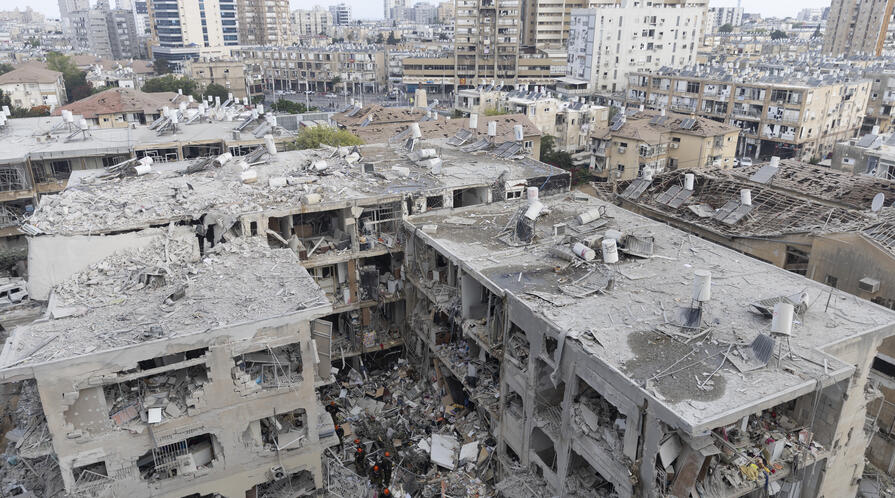
11 killed, hundreds injured. An Iranian ballistic missile struck the city of Beit Shemesh, west of Jerusalem, on Sunday afternoon, killing multiple civilians and injuring dozens more. Additional Israeli casualties came from drone and rocket attacks on northern communities. Israel's Iron Dome and Arrow defense systems intercepted the majority of incoming projectiles, but the volume of attacks tested the country's layered air defense architecture.
US Military Personnel
6 US soldiers killed, 18 injured. The deaths of US service members — confirmed by US Central Command — represent the highest American military casualty count since the conflict began. The six killed include ground-based personnel stationed across Kuwait and Bahrain who were struck by Iranian ballistic missiles and drone attacks. Defense Secretary Pete Hegseth confirmed the figures at a Pentagon briefing and stated that further casualties remained possible as operations continued.
Kuwait
4 killed, 35 injured. Kuwait has been one of the hardest-hit countries outside Iran and Lebanon. Multiple US warplane crashes were reported over Kuwaiti territory — all crews survived those incidents — but ground-level casualties came from debris from intercepted Iranian missiles and direct drone strikes. Kuwait hosts a significant number of US military facilities, making it a primary target for Iranian retaliation.
United Arab Emirates
3 killed, 68 injured. The UAE's casualty figures are among the highest for Gulf states. Debris from intercepted Iranian missiles caused civilian deaths in populated areas. The US Embassy compound in Dubai was also struck — covered in detail in a separate section below. The UAE, which normalized relations with Israel under the 2020 Abraham Accords, has been a specific focus of Iranian targeting doctrine in this phase of the conflict.
Bahrain
1 killed, 4 injured. Bahrain hosts the US Navy's 5th Fleet headquarters, which was struck multiple times by Iranian missiles and drones. The headquarters sustained damage, though US naval operations were not reported as materially disrupted. The single civilian killed was an Asian migrant worker killed by falling debris.
Iraq
2 killed, 5 wounded. Strikes hit the Jurf al-Sakher base south of Baghdad and prompted explosions near the Erbil consulate and airport in the Kurdistan Region. Iraqi officials called for restraint from all parties and requested that foreign forces on Iraqi soil not use Iraq as a base for retaliatory operations.
Oman
1 killed, 5 injured. The port of Duqm and an oil tanker in Omani waters were targeted. Oman — which has historically served as a diplomatic back-channel between the US and Iran — condemned the attacks on its territory, but its position as mediator appears significantly complicated by the strikes.
Jordan
0 killed, 5 injured. Jordan's military successfully intercepted 49 drones and ballistic missiles over its airspace, drawing on the extensive aerial defense cooperation it has maintained with US CENTCOM. No deaths were recorded, though five injuries resulted from debris and shrapnel.
Qatar
0 killed, 16 injured. Al Udeid Air Base — the largest US military installation in the Middle East — was struck, with 65 missiles and 12 drones intercepted before reaching targets. Qatar's air defense systems, reinforced by US Patriot batteries, prevented deaths. Sixteen injuries were reported from blast and debris effects.
Saudi Arabia
0 killed reported. Riyadh and the Eastern Province were targeted, but Saudi Arabia's dense air defense network — integrating Patriot, THAAD, and allied assets — intercepted all incoming projectiles. No confirmed fatalities as of March 4, 2026.
Total Regional Casualties Outside Iran
Across all countries excluding Iran, Al Jazeera's tracker confirms at least 9 people killed (excluding US service members) and over 550 injured. The true toll is almost certainly higher, as several strike zones in Iraq and Lebanon remain inaccessible to independent monitors.
The Minab School Strike: Iran's Deadliest Single Incident
Of all the events compiled in Iran live news this week, none carries the weight of the strike on the Minab elementary girls school in Hormozgan Province, southeastern Iran. The attack killed approximately 180 young children and school staff — making it the single deadliest civilian incident of the entire conflict — according to Iran's Health Ministry official Hossein Kermanpour, as reported by Al Jazeera's March 4 liveblog.
Minab is a mid-size city roughly 100 kilometers east of the Strait of Hormuz, not historically associated with military installations. The timing of the strike — during school hours — and the nature of the target have generated fierce condemnation from human rights organizations and international bodies. Funeral services for victims were held in Minab in the days following the strike.
Iran's government has used the Minab school strike as a central element of its information campaign, broadcasting images of the aftermath across state media and calling for emergency sessions at the UN Human Rights Council. The incident has also dominated discussion threads on Reddit's r/worldnews and r/geopolitics, where users have debated the proportionality and targeting logic of the broader US-Israeli campaign. The top-voted thread on r/worldnews regarding the Minab strike reached over 85,000 upvotes, with thousands of comments calling for independent investigation.
Neither the US nor Israeli military has issued a statement directly addressing the Minab strike. The Pentagon's standard response — that all strikes target military objectives and that civilian casualties are unintended — has been widely criticized given the location and profile of the target.
International law scholars cited by the BBC note that strikes on civilian educational facilities violate the laws of armed conflict under the Geneva Conventions regardless of intent, unless the facility was being used for military purposes — a claim that has not been advanced by either US or Israeli officials in relation to Minab.
Turkiye and NATO: Iranian Missile Destroyed Over Mediterranean
The most geopolitically significant development in Iran live news on March 4, 2026, is Turkiye's confirmation that NATO air and missile defense systems intercepted and destroyed a ballistic missile fired by Iran over the eastern Mediterranean Sea, according to Al Jazeera's liveblog.
The intended target of the missile was not immediately identified. The eastern Mediterranean is a strategically dense airspace shared by Turkey, Greece, Cyprus, Israel, Lebanon, and Syria, and serves as a transit corridor for NATO naval assets including US carrier strike groups operating in support of Operation Epic Fury.
Turkiye's involvement in the interception is particularly notable for several reasons:
- NATO Article 5 threshold: Turkiye's direct interception of an Iranian projectile raises questions about whether a successful strike would have triggered NATO's collective defense clause — a question NATO officials have carefully avoided answering directly.
- Turkiye-Iran diplomatic relationship: The two countries have maintained economic and diplomatic relations throughout the conflict, making Turkiye's decision to engage an Iranian missile a significant pivot. Ankara has simultaneously called for de-escalation while defending its NATO obligations.
- Geographic escalation: An Iranian ballistic missile reaching the eastern Mediterranean — a trajectory of over 1,500 kilometers from most Iranian launch sites — demonstrates a willingness to extend the conflict far beyond the Gulf theater and into European-adjacent airspace.
- NATO's first active engagement: This is the first confirmed instance of NATO air defense assets directly engaging an Iranian ballistic missile outside a test or exercise context. It represents a qualitative shift in the alliance's posture toward Iran.
On Reddit, the Turkiye missile interception story generated intense debate on r/geopolitics and r/europe. One widely-upvoted comment summarized the sentiment: "NATO just shot down an Iranian missile. That's not a footnote — that's a chapter." Military analysts posting in those threads noted that the interception likely used Turkish-operated or US-operated PATRIOT batteries stationed in southeastern Turkiye, the same systems that have previously engaged Syrian and Russian aircraft in adjacent airspace.
No casualties from the Mediterranean missile were reported. The intercept is being assessed by NATO's integrated command structure for implications on force posture in the region.
US Submarine Sinks Iranian Warship Off Sri Lanka
Defense Secretary Pete Hegseth confirmed during a Pentagon briefing that a US submarine sank an Iranian warship with a torpedo in international waters off the coast of Sri Lanka, according to Al Jazeera's March 4 liveblog.
The sinking extends the conflict into the Indian Ocean — thousands of kilometers from the Gulf theater — and has profound implications for global maritime security. The waters off Sri Lanka sit along one of the world's busiest commercial shipping lanes, connecting the Gulf of Aden and Arabian Sea to the Strait of Malacca and the Indo-Pacific.
The Iranian warship's identity and class have not been publicly confirmed by the Pentagon. Iran operates a mix of frigates, corvettes, and submarine vessels under the Islamic Republic of Iran Navy (IRIN) and the IRGC Navy. The presence of an Iranian warship in the Indian Ocean — outside Iran's traditional Gulf and Caspian operating areas — suggests a pre-conflict deployment, possibly intended to threaten commercial shipping or US naval supply lines in the event of hostilities.
Sri Lanka has not issued a formal statement, though Colombo-based maritime authorities confirmed they were monitoring the situation and that no Sri Lankan vessels were in the immediate vicinity at the time of the sinking. International shipping insurers have elevated their conflict-zone premiums for routes transiting the northern Indian Ocean in response.
The US submarine involved has not been identified. The US maintains a continuous undersea presence in the Indian Ocean region, operating from Diego Garcia in the British Indian Ocean Territory and through bilateral access agreements with regional partners.
US Embassy in Dubai Hit
The US Embassy compound in Dubai was struck during the March 4, 2026, wave of Iranian retaliatory attacks, according to Al Jazeera's liveblog. The strike on a diplomatic facility represents one of the most provocative acts in the conflict's escalatory spiral and will likely generate a formal US response under international law governing the protection of diplomatic premises.
The Vienna Convention on Diplomatic Relations, which Iran has ratified, obligates signatory states to treat foreign diplomatic premises as inviolable. An Iranian strike on a US Embassy — regardless of the broader conflict context — constitutes a clear violation of that treaty framework and gives the United States additional legal and political grounds for continued military action.
The UAE government condemned the strike on Dubai in the strongest possible terms. Dubai, which hosts one of the largest US expatriate communities in the world and serves as a regional financial and logistics hub, has sought to remain a neutral commercial zone throughout the conflict — an aspiration that is increasingly untenable given the scale of Iranian targeting in Emirati territory. UAE death toll as of March 4 stands at 3 killed and 68 injured, the majority from debris from intercepted missiles.
The US Embassy's status and the condition of diplomatic personnel following the strike has not been confirmed in available reporting. The State Department issued a statement condemning the attack without providing casualty details.
Iran's Retaliation: Attacks on 27 US Bases Across the Region
Iran's Islamic Revolutionary Guard Corps has claimed responsibility for strikes on 27 military bases where US troops are deployed across the Middle East and Gulf region, according to IRGC statements reported by Al Jazeera's death toll tracker. The scope of the Iranian retaliatory campaign — targeting infrastructure across Bahrain, Iraq, Kuwait, Jordan, Qatar, Saudi Arabia, UAE, and Oman — has transformed what was initially framed as a limited US-Israeli offensive into a genuine regional war.
The IRGC's targeting of 27 US bases simultaneously reflects a doctrine of strategic depth: rather than concentrating retaliation on a single high-value target, Iran has spread its missile and drone arsenal across as many American installations as possible. This approach is designed to overwhelm regional air defense systems through saturation, to demonstrate Iran's reach, and to impose costs on every country that hosts US forces — creating political pressure on host governments to demand American withdrawal.
The results have been mixed. Jordan intercepted 49 of the incoming projectiles. Qatar intercepted 65 missiles and 12 drones targeting Al Udeid. Saudi Arabia's air defense network stopped all incoming attacks. But Bahrain's US Navy 5th Fleet headquarters was hit multiple times, Kuwait sustained significant casualties, and UAE saw its embassy and civilian areas struck. The failures in interception, even with the most advanced American-supplied air defense systems, underscore the challenge of defending against simultaneous, multi-vector Iranian attacks.
Hundreds of drones targeting Kuwait, Iraq, Saudi Arabia, and the UAE represent a particular challenge. Unlike ballistic missiles — which follow predictable trajectories and can be tracked by radar — drones can fly at low altitude, follow terrain-masking routes, and strike from unexpected directions. Iran's investment in a large and diverse drone arsenal has given it an asymmetric capability that conventional air defense systems struggle to address cost-effectively.
Iranian Drone Strikes UK Base in Cyprus
An Iranian drone struck the runway of a UK military base in Cyprus, according to Al Jazeera's liveblog. The UK operates the Akrotiri Sovereign Base Area on Cyprus, which has been used to support air operations in the Middle East including during the 2015 Syria campaign and subsequent operations against Islamic State.
A drone strike on a British sovereign military base is an extraordinary act of aggression against a nuclear-armed NATO member state. The UK government has not issued a formal public response attributing the strike to Iran as of the time of this article's publication, but British defense sources cited by the BBC described the strike as "a major provocation." No UK personnel casualties were reported from the runway strike.
The Akrotiri base's potential use in the current Iran operation has been a subject of public discussion in the UK Parliament, with opposition MPs demanding transparency about what military activities are being conducted from British sovereign territory in Cyprus and whether the UK is a co-belligerent in the US-Israeli operation against Iran.
Israel Drops 1,200+ Munitions; Beit Shemesh Hit by Iranian Missile
Israel's military reported deploying over 1,200 bombs in the first 24 hours of its portion of the operation, codenamed Operation Roaring Lion, targeting Iranian nuclear facilities, air defense sites, IRGC command structures, and government buildings. By March 4 — day five — the total munitions expended by the Israeli Air Force has climbed substantially, with strikes continuing against targets in Tehran, Isfahan, Bushehr, and Bandar Abbas.
On the Israeli side, the most significant incident was the impact of an Iranian ballistic missile on Beit Shemesh, a city of approximately 130,000 people located 25 kilometers west of Jerusalem. One woman was killed by shrapnel on Saturday evening, according to the Al Jazeera death toll tracker. An additional 40+ buildings in Tel Aviv were damaged by blast effects and debris from intercepted projectiles.
Israel's layered air defense — Iron Dome for short-range threats, David's Sling for medium-range, and Arrow 2 and 3 for ballistic missiles — has intercepted the vast majority of Iranian projectiles. However, the sheer volume of simultaneous launches has resulted in sporadic penetrations, as demonstrated by the Beit Shemesh impact.
Congressional Pushback and Political Fallout
Democratic lawmakers in the US Congress have mounted increasingly vocal opposition to President Trump's prosecution of the Iran campaign. Senior Democratic members of the House Armed Services Committee and the Senate Foreign Relations Committee have publicly warned of "potential ground operations" and characterized the current trajectory as an "open-ended engagement with no end in sight," according to reporting compiled from Al Jazeera's March 4 liveblog.
The War Powers Resolution of 1973 requires the President to notify Congress within 48 hours of committing US forces to armed conflict and limits unauthorized military engagements to 60 days without Congressional authorization. Trump notified Congress at the launch of operations, but lawmakers argue that the scope and duration of the campaign — now entering its fifth day with no end in sight — requires formal authorization.
Senate Majority Leader Mitch McConnell has so far declined to schedule a war authorization vote, arguing that the executive branch has inherent authority to respond to threats to US forces and that Congressional interference would "send the wrong message to Tehran." But bipartisan unease is growing: several Republican senators from states with significant military installations — including Kansas, Georgia, and North Carolina — have privately raised concerns about force protection and escalation management.
The political situation is further complicated by the deaths of six US service members. Trump has framed those deaths as justification for continuing and escalating the operation, a framing that has resonated with his political base but that critics argue conflates retaliation with strategy. The war — entering its fifth consecutive day — shows no sign of moving toward the four-week operational window Trump initially suggested.
What Reddit Is Saying
Social media discourse — particularly on Reddit's conflict-tracking communities — provides a real-time barometer of public interpretation of events. The following represents a cross-section of discussions from r/worldnews, r/geopolitics, r/CredibleDefense, and r/europe as of March 4, 2026.
On the death toll reaching 1,045
The top post on r/worldnews about the 1,045 figure accumulated over 90,000 upvotes. The most-upvoted comment read: "Day 5 and we've already crossed 1,000. The speed of this is genuinely shocking." A second highly-voted reply noted the difference between announced objectives and actual battlefield reality: "They said this was about nuclear facilities. But 24 of 31 provinces. That's not a surgical strike — that's a country being dismantled."
On the Turkiye NATO interception
On r/geopolitics, a megathread on the Mediterranean missile interception attracted considerable analytical discussion. Informed users noted that Turkiye's decision to engage the missile rather than let it pass into Israeli-adjacent airspace is a significant statement of NATO solidarity, particularly given Turkiye's complex history with the alliance and its ongoing economic relationship with Iran. Several users with verified military backgrounds raised the question of whether the missile may have been targeting Cyprus — where the UK base was simultaneously struck by an Iranian drone.
On the Minab school strike
Sentiment on Reddit about the Minab strike was overwhelmingly condemnatory across partisan lines. Even threads on typically pro-Israel subreddits featured top comments expressing shock and calling for accountability. r/CredibleDefense threads noted the strategic counterproductiveness of striking civilian schools even in areas proximate to military infrastructure: "Whatever tactical value it had — and I'm not convinced there was any — it has generated more anti-American sentiment in the region than anything that's happened in years."
On the US submarine sinking an Iranian warship off Sri Lanka
On r/CredibleDefense, the submarine incident was met with a mix of alarm and dark humor. One comment that gained significant traction: "The war just touched the Indian Ocean. The Indian Ocean. Let that sink in." Users in the thread debated whether the Iranian warship had been conducting pre-positioned deterrence operations or was part of a broader Iranian strategy to threaten commercial shipping routes from the Strait of Hormuz through to the Malacca Strait.
What's Next
Five days into the conflict, the trajectory points toward continued escalation rather than early resolution. The following scenarios are being tracked by conflict analysts:
- Iranian nuclear escalation: Iran has not yet publicly activated its nuclear deterrence posture, but IAEA access to remaining enrichment facilities has been suspended since the start of hostilities. There is concern that Iran — under existential pressure — may attempt to reconstitute enrichment capacity at undisclosed sites or make an explicit nuclear declaration to deter further strikes.
- Strait of Hormuz closure: Iran has threatened to close the Strait of Hormuz, through which approximately 20% of the world's oil supply flows. Actual closure would require sustained naval operations that Iran's degraded fleet — now including one fewer warship after the Sri Lanka sinking — would struggle to maintain against US naval power. But even the threat has moved energy markets significantly.
- NATO/Turkiye escalation: The Mediterranean missile interception creates a potential trigger for broader NATO involvement if Iran were to deliberately target a NATO member state's territory. Turkiye's government is navigating a narrow path between its NATO obligations and its economic relationships with Iran.
- Congressional authorization vote: A war powers vote could come within the next week. If Congress votes to withhold authorization, Trump would face a constitutional confrontation with significant implications for operational continuity.
- Diplomatic opening: Oman has historically served as a back-channel between the US and Iran. Qatar and Switzerland also maintain communication links with Tehran. Any ceasefire negotiation would require Iran's new provisional leadership — a three-member council following the death of Supreme Leader Khamenei on the first day of strikes — to agree to talks while under active bombardment, a condition that previous Iranian administrations have refused.
- Ground operation risk: Democratic lawmakers' warnings about ground operations are not hypothetical. US special operations forces have a pre-existing operational footprint across the Gulf, and the Pentagon's stated objective of eliminating Iran's nuclear program cannot be achieved through airstrikes alone if hardened underground facilities survive the current campaign.
Why It Matters
The crossing of 1,045 Iranian dead is not just a number — it is a marker in the escalatory logic of the conflict. Each new threshold crossed makes de-escalation politically harder for both sides. Iran cannot appear to accept military punishment at this scale without response; the US cannot disengage without something it can present as an objective achieved. That structural trap has historically been the mechanism by which limited military operations become prolonged wars.
Turkiye's decision to intercept an Iranian ballistic missile over the Mediterranean is a geopolitical inflection point. It signals that NATO — even the alliance's most ambivalent member — is not neutral in this conflict. It extends the deterrence umbrella of Article 5 into a theater where it has never previously been invoked. And it puts Iran on notice that striking beyond the Middle East will produce a NATO, not just an American, response.
The Minab school strike will shape the moral and legal debate about this conflict for years. Regardless of how the military campaign concludes, the image of 180 children killed in their classroom will define how this war is remembered, how it is taught, and how it is judged by international tribunals and future historians. It is the kind of event that changes the political calculus of allied governments, pressuring them to distance themselves from the US-Israeli campaign even if they had previously given it tacit support.
The Indian Ocean dimension — introduced by the US submarine sinking an Iranian warship off Sri Lanka — expands the geographic scope of the conflict to a scale not seen in any US military action since World War II. It demonstrates that Iran's naval assets are targets wherever they are found, and it signals to China and India — whose own Indian Ocean interests are enormous — that this war is no longer contained to the Middle East.
All of this is happening in real time, compressed into five days. The speed of escalation has outpaced the diplomatic infrastructure available to manage it. That is the most dangerous feature of Iran live news on March 4, 2026: not any single incident, but the cumulative velocity of events.
Related Coverage
- US, Israel Attack Iran Live: Trump Vows to Continue Attacks, Avenge Troops
- Trump Promises More Strikes on Iran as US Adds Forces to Mideast
- US Military Begins Major Combat Operations in Iran, Trump Says
- Iran Civilian Casualties and the Growing Humanitarian Crisis
- What We Know So Far: Iran Strikes of February 28
- Gulf States Response to Iranian Attacks: Bahrain, Kuwait, UAE, Qatar
- Strait of Hormuz Shipping Risk Scenarios
- Regional Missile Defense Systems: Middle East Explainer
Research Hubs
- Iran-Israel-Dubai War Guide
- Iran Nuclear and Military Briefing
- Israel Security and Escalation Briefing
- Dubai and UAE Risk Briefing
- Source Center: Primary References
Sources
- Al Jazeera, "Iran Live News: US Embassy in Dubai Hit; Israel Pounds Tehran, Beirut" (March 4, 2026). aljazeera.com
- Al Jazeera, "US-Israel Attacks on Iran: Death Toll and Injuries Live Tracker" (March 1–4, 2026). aljazeera.com
- BBC News, "Iran War: Latest Updates" (March 4, 2026). bbc.com
- USA Today, "Iran-US-Israel War Live Updates" (March 4, 2026). usatoday.com
- US Central Command (CENTCOM), official casualty statements (March 1–4, 2026). centcom.mil
- Geneva Conventions and Additional Protocols — International Committee of the Red Cross. icrc.org
- Vienna Convention on Diplomatic Relations (1961) — United Nations Treaty Collection. legal.un.org
- NATO Official Statements on Iran Conflict (March 4, 2026). nato.int
Last updated: March 4, 2026. This article is revised when new evidence materially changes what can be stated with confidence.