Overview: Is Iran Going to Attack the US Today?
By March 1, 2026, the question "is Iran going to attack the US today?" had shifted from prediction to active risk tracking. Named reporting said Iran had already retaliated against U.S.-linked positions in the region and that the more important question was whether the next round would widen geographically or intensify at already-targeted sites.
The strongest public record supports three points: the U.S.-Israeli strikes on Iran triggered retaliation quickly; U.S. casualties were reported; and the regional security environment deteriorated sharply. It is less clear, however, that every reported target or casualty figure carried the same evidentiary weight in real time. This revision therefore leans harder on named reporting and less on the most dramatic early summaries.
What Happened: The US-Israeli Strikes on Iran (February 28)
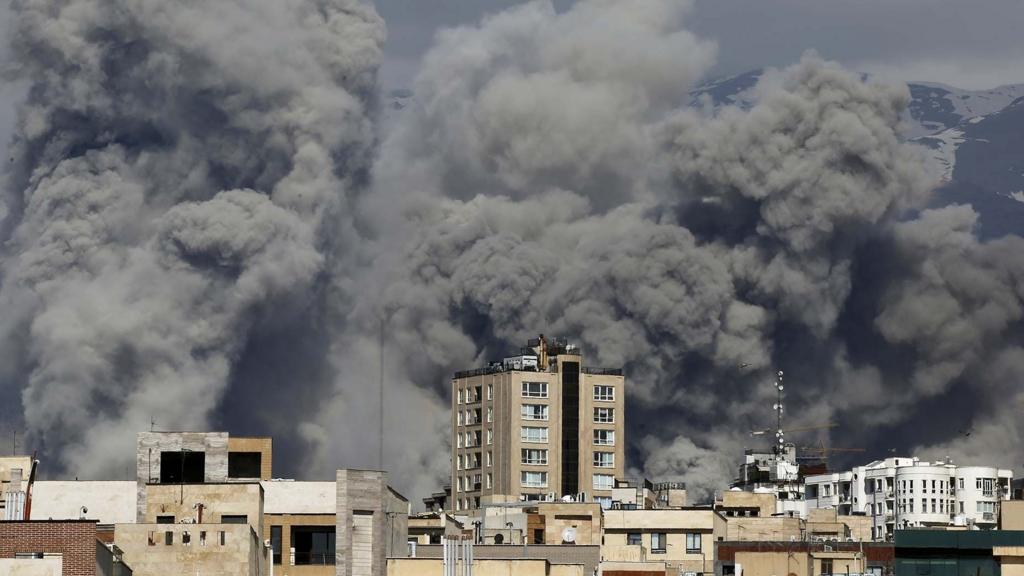
On Saturday morning, February 28, 2026, the United States and Israel launched a coordinated aerial assault on Iran. Named reporting consistently described it as a very large operation against nuclear, military, and leadership-linked targets, though some of the more dramatic historical comparisons and scale claims varied across outlets.
Operation Epic Fury and Operation Roaring Lion
The Pentagon designated the US component "Operation Epic Fury," while Israel's military codenamed its operation "Roaring Lion." According to NBC News, the sweeping airstrikes began early Saturday morning following months of heated rhetoric and warnings from the Trump administration. Public reporting described a very large initial wave, but exact aircraft totals and exact target counts were not equally settled across the public record.
Targets and Scope
Public reporting described a geographically broad targeting pattern across multiple provinces and cities. According to Al Jazeera, the main target categories included:
- Islamic Revolutionary Guard Corps (IRGC) command and control facilities
- Iranian air defense capabilities, including radar and SAM installations
- Ballistic missile and drone launch sites
- Military airfields across multiple provinces
- Senior leadership compounds in Tehran
Tehran, Isfahan, Qom, Karaj, and Kermanshah all appeared repeatedly in named reporting, but exact neighborhood-level descriptions and exact counts of impacts are better treated as reported rather than fully settled.
Killing of Supreme Leader Khamenei
The most consequential strike targeted the compound of Supreme Leader Ayatollah Ali Khamenei. Iranian state media later confirmed that Khamenei was killed in the attack. Public reporting also said multiple senior Iranian officials were killed, but the full casualty picture around the leadership compound and other meetings remained less settled than the fact of Khamenei's death itself. (NPR)
Military Buildup Before the Strikes
The strikes did not come without warning. According to PBS NewsHour, the U.S. had deployed a major military presence into the region before the operation. The practical point is clear even if exact percentages and platform counts vary across analysts: diplomacy and force posture were moving toward confrontation before the first bombs fell.
Iran's Retaliation: Targets, Damage, and Casualties (March 1)
Iran's retaliatory response came quickly. Named reporting described ballistic missiles, drones, and wider regional targeting across Israel and multiple Gulf states, with U.S.-linked military positions among the main reported targets.
Strikes on US Military Installations
Iran's primary reported targets included U.S. military bases and assets stationed across the Persian Gulf:
- Kuwait: named reporting described U.S. casualties after a strike on a U.S. military position.
- Bahrain: public reporting said the U.S. Fifth Fleet headquarters area was among the reported targets.
- Qatar: Al Udeid Air Base was repeatedly cited as a key potential or actual target of retaliation.
- UAE: reporting described strikes or attempted strikes tied to Al-Dhafra and heavy interception activity, while exact missile and drone tallies varied across outlets.
- Jordan: named reporting described interception activity over Jordanian airspace.
Strikes on Israel
Iran also targeted Israeli territory with ballistic missiles. Named reporting described civilian alarm, air raid warnings, and casualties, but the exact casualty and damage picture remained part of a fast-moving public record rather than a settled final account.
Scope of Iran's Response
The strongest strategic takeaway is that retaliation was no longer hypothetical. What remained less certain was the exact strike ledger, exact interception rates, and how quickly the next wave would widen further.
US Military Casualties
The human cost of Iran's retaliation became clear on March 1 when named reporting described the first American combat deaths of the conflict. NPR reported that three U.S. service members were killed and five seriously wounded after a strike on a U.S. military base in Kuwait, though the broader country-by-country casualty picture remained part of a fast-moving public record. (NPR)
The broader meaning was straightforward even where exact counts remained fluid: U.S. personnel had already paid a blood cost, which sharply raised the risk of further escalation and reduced the political space for a simple reset.
Failed Diplomacy: The Geneva Collapse
The military escalation followed the dramatic collapse of nuclear negotiations between the United States and Iran in Geneva on Thursday, February 27, 2026. The talks - which had been brokered by Oman's Foreign Minister Badr bin Hamad Al Busaidi - fell apart over fundamental disagreements about Iran's uranium enrichment program.
According to PBS NewsHour, Iran had reportedly agreed to several significant concessions: zero nuclear fuel accumulation and stockpiling, full verification measures, and for the first time, the acceptance of American inspectors to verify its nuclear program. However, President Trump demanded that Iran explicitly state "we're not going to have a nuclear weapon" and insisted on a complete halt to uranium enrichment - a red line Tehran refused to cross.
Omani Foreign Minister Al Busaidi, who had met with Vice President J.D. Vance, urged the Trump administration to give negotiators "enough room and enough space" to reach a deal. He described the talks as progressing, with technical discussions scheduled for the following Monday. But the window for diplomacy had already closed. As PBS reported, the largest US military buildup in the Middle East in over two decades was already in position, and Admiral Brad Cooper had briefed Trump on strike options.
The Geneva breakdown was preceded by an alarming signal: the US Embassy in Israel advised staff to consider immediate departure. Ambassador Mike Huckabee sent an email stating that authorized personnel should leave "TODAY" - in all capitals in the original message. Within 24 hours of the Geneva collapse, Operation Epic Fury was underway.
The Core Disagreement
At the heart of the diplomatic failure was an irreconcilable gap. Trump demanded that Iran could not enrich nuclear fuel at any level, framing enrichment capability itself as an unacceptable threat. Iran insisted that as a signatory to the Non-Proliferation Treaty and a nation with vast oil reserves, it had the right to civilian nuclear technology - including enrichment. From Tehran's perspective, Washington's demands constituted what ACLED characterized as "near-total capitulation," making meaningful concessions politically impossible for any Iranian leader.
Trump's Statements and Demands
President Trump's public statements before, during, and after the strikes revealed the administration's maximalist objectives. In the hours following the initial strikes, Trump addressed the Iranian people directly with a message that went far beyond military objectives.
"When we are finished, take over your government. It will be yours to take," Trump stated, as reported by NBC News. He demanded that the Revolutionary Guard Corps surrender or "face certain death," and declared that the bombing "will continue throughout the week or as long as necessary."
Trump also claimed - without independent verification at the time - that Khamenei had been killed, stating "We feel that that is a correct story" and that "most" of Iran's senior leadership was "gone." He further claimed that Iran's military operations were "ahead of schedule," as reported by CNBC.
When Iran launched retaliatory strikes, Trump responded on social media in characteristic fashion: "THEY BETTER NOT DO THAT. IF THEY DO, WE WILL HIT THEM WITH A FORCE THAT HAS NEVER BEEN SEEN BEFORE!" - escalatory rhetoric that raised concerns among international observers about the potential for a spiraling cycle of retaliation.
Congressional Authorization Controversy
The strikes were launched without congressional authorization, a decision that divided US lawmakers along both partisan and institutional lines. Several members of Congress demanded votes on a war powers resolution to limit the president's authority to continue military operations in Iran. The debate echoed earlier confrontations over executive war-making authority in Syria, Libya, and Yemen - but with far higher stakes given the scale of the Iran operation and the killing of a head of state.
Civilian Toll and Humanitarian Impact
The humanitarian consequences of the U.S.-Israeli strikes on Iran were severe. Named reporting described a high and rising civilian toll, but exact totals were still moving as hospitals, provincial authorities, and aid organizations updated the picture. (Al Jazeera)
The Minab School Strike
The single deadliest incident publicly described in early reporting involved a strike on a girls' school in Minab, a city in Iran's Hormozgan province in the south. Named reporting treated it as a major civilian-casualty event, but the exact subcount should be handled cautiously because different public figures circulated in the first reporting wave. The Pentagon did not publicly resolve that discrepancy.
Infrastructure and Civilian Impact
Beyond direct casualties, named reporting also described severe disruption to aviation, communications, and civilian life. The broad conclusion is stronger than any one exact number: the strikes had major humanitarian and civilian-system consequences well beyond military facilities alone.
International Response
The international community's response reflected deep divisions over the legality and proportionality of the US-Israeli operation.
United Nations
UN Secretary-General António Guterres condemned both the US-Israeli strikes and Iran's retaliatory attacks, warning that the escalation "carries the risk of igniting a chain of events that no one can control," as reported by NPR. He called for an immediate cessation of hostilities and a return to negotiations.
Russia and China
Russia condemned the strikes outright, while China expressed "serious concern" over the escalation. Both nations have strategic interests in Tehran and maintain defense cooperation with Iran. CNBC reported that the strikes threatened to realign geopolitical alliances, with Iran potentially drawing closer to Moscow and Beijing in the aftermath.
Gulf States
The Gulf Arab states found themselves in an unenviable position - hosting US military bases that became targets for Iranian retaliation. The UAE, which intercepted over 100 ballistic missiles, called for restraint from all parties. Oman - the sole Gulf state excluded from Iranian retaliation - continued to position itself as a diplomatic mediator, reflecting its historical role as a back channel between Washington and Tehran.
Iran's De-escalation Signal
Despite the ferocity of its retaliation, Iran sent mixed signals about its intentions. Iranian Foreign Minister Abbas Araghchi stated that Tehran targeted military facilities, not civilians, and expressed interest in de-escalation - but only once the joint US-Israeli strikes ended. However, ACLED analysts cautioned that "the type of de-escalatory responses that we have become accustomed to in previous conflicts, including last summer's twelve-day war, are at least for now off the table."
What Can Be Verified So Far
This page is strongest when it separates direct reporting from inference.
- Directly supported: Iran retaliated after the U.S.-Israeli strikes, retaliation risk to U.S. assets remained elevated, and named reporting described casualties and regional impacts. (NPR; NBC News)
- Supported but still fluid: exact casualty totals across every country, exact interception figures, and exact military significance of each reported target.
- More interpretive than proven: claims that every reported retaliation event fundamentally changed the regional balance or that the next phase was fully predictable from the first 24 hours.
What's Next
The situation remains extremely fluid and dangerous. Several key indicators will determine whether the conflict escalates further or moves toward de-escalation:
Further Iranian Strikes
Iran's IRGC has vowed continued military operations. Foreign Affairs warned that Iran will escalate, arguing that the strikes represent an existential threat to the regime. Iran retains significant asymmetric capabilities despite the damage to its conventional forces - including ballistic missiles in hardened underground silos, cyber warfare capabilities, and regional proxy networks.
Strait of Hormuz
One of the most dangerous scenarios involves Iranian action to disrupt shipping through the Strait of Hormuz, through which approximately 20% of the world's oil supply flows daily. ACLED noted that severe actions like blockading the strait would trigger an "expansive US response," but Iran may calculate that even partial disruption could inflict enormous economic damage on the global economy. Oil prices have already surged 15% in overnight trading.
Proxy Network Activation
Iran's network of regional proxies and allies - including militias in Iraq, Houthi forces in Yemen, and what remains of Hezbollah's operational capacity in Lebanon - could open additional fronts. While ACLED noted that Hezbollah's capacity has been "depleted" following the 2025 twelve-day war, other elements of Iran's proxy network remain operational and may conduct independent attacks on US personnel and interests.
Ceasefire Prospects
Despite the rhetoric, both sides have signaled some openness to a cessation of hostilities. Iran's stated interest in de-escalation - conditional on the US-Israeli strikes ending - provides a potential off-ramp. Oman's continued mediation role offers a diplomatic channel. However, Trump's stated objective of continuing strikes "throughout the week or as long as necessary" and his call for Iranians to "take over your government" suggest the administration's goals extend beyond any achievable near-term negotiated outcome.
Why It Matters
The killing of Supreme Leader Khamenei represents the first targeted assassination of a sitting head of state by the US military since the 1943 downing of Japanese Admiral Isoroku Yamamoto's aircraft during World War II - and arguably the first deliberate killing of a nation's supreme political leader by US forces in modern history. This act alone has fundamentally altered the geopolitical landscape.
The broader implications are staggering. Iran's nuclear program - the ostensible reason for the strikes - may now accelerate rather than halt, as hardliners within what remains of the regime could argue that only nuclear weapons can deter future attacks. The Conversation assessed that despite the massive US attack and the death of the ayatollah, regime change in Iran remains unlikely, as the institutional structures of the Islamic Republic - the Guardian Council, the Assembly of Experts, the IRGC - are designed to survive the loss of any single leader.
For the United States, the conflict carries enormous risks: the potential for a prolonged military engagement in a country of 88 million people with difficult terrain and motivated defenders, the economic shock of disrupted oil supplies, the strain on military resources already stretched by commitments in Europe and the Pacific, and the diplomatic fallout of a unilateral attack that divided the international community. As ACLED bluntly concluded: "Even if war is avoided, structural crises persist" - economic mismanagement, sanctions squeeze, and fractured social contracts mean that the region faces years of instability regardless of how the immediate military conflict resolves.
Frequently Asked Questions
Is Iran going to attack the US today?
Named reporting said Iran had already retaliated against U.S.-linked positions by March 1, 2026, and that further attacks remained a real risk. The strongest answer is that retaliation was already underway; what remained uncertain was the exact scale and next target set.
Did Iran attack US soldiers?
Yes. Named reporting described U.S. casualties after Iranian retaliation, including reports of three U.S. service members killed and five seriously wounded in Kuwait. Other reported targets included Bahrain and Qatar, though exact base-by-base details remained less settled than the existence of retaliation itself.
What countries did Iran attack in retaliation?
Named reporting described retaliation affecting Israel and multiple Gulf states, including the UAE, Qatar, Kuwait, Bahrain, Jordan, and Saudi Arabia. Exact interception totals, casualty counts, and country-by-country damage figures varied across outlets and should be treated as reported rather than final.
Was Supreme Leader Khamenei killed in the US strikes on Iran?
Yes. Iranian state media confirmed that Supreme Leader Ayatollah Ali Khamenei was killed in the February 28, 2026 strike wave. Public reporting also described additional senior Iranian leadership casualties, but the full family and meeting-by-meeting casualty picture was less consistently documented across named sources.
What was Operation Epic Fury?
Operation Epic Fury was the Pentagon's codename for the U.S. component of joint U.S.-Israeli strikes on Iran launched on February 28, 2026. Israel called its parallel operation "Roaring Lion." Public reporting described a very large opening wave, but exact aircraft totals and exact target counts varied across the public record.
Related Coverage
- Iran Retaliates Against US Bases: Which Military Facilities Were Targeted and What We Know
- Iran vs US Military Comparison: Forces, Technology, and Capability Gap
- Operation Epic Fury Explained: What It Is, What's Being Targeted, and What Comes Next
- Iran Strikes Back: Where Iran Retaliated, What Was Hit, and Damage Reports
- Can Iran Hit the US Mainland? ICBM Range, Missile Capabilities, and What Intelligence Says
Research Hubs
- Iran-Israel-Dubai War Guide
- Iran Nuclear and Military Briefing
- Israel Security and Escalation Briefing
- Dubai and UAE Risk Briefing
- Source Center: Primary References
Sources
- CNN. "February 28, 2026 - US-Israeli strikes on Iran." cnn.com
- Al Jazeera. "Live: Israel launches attacks on Iran, multiple explosions heard in Tehran." aljazeera.com
- PBS NewsHour. "With U.S. on brink of Iran attack, mediator asks for enough space to reach deal." pbs.org
- BBC News. "Live updates: Israel-Iran conflict." bbc.com
- NBC News. "U.S. and Israel attack Iran as Trump urges Iranians to 'take over' the government." nbcnews.com
- NPR. "Iran's supreme leader, Ayatollah Ali Khamenei, has been killed." npr.org
- NPR. "Three American soldiers killed as U.S.-Israeli strikes in Iran continue into 2nd day." npr.org
- CNBC. "Live updates: Trump tells CNBC that Iran military operations are 'ahead of schedule'." cnbc.com
- Atlantic Council. "Experts react: The US and Israel just unleashed a major attack on Iran. What's next?" atlanticcouncil.org
- ACLED. "Q&A: Iran and the US are back on the edge of war. What's coming?" acleddata.com
- CSIS. "How Would Iran Respond to a U.S. Attack?" csis.org
- Foreign Affairs. "Why Iran Will Escalate: U.S. Military Strikes and the Risk of a Quagmire." foreignaffairs.com
- The Conversation. "Despite massive US attack and death of ayatollah, regime change in Iran is unlikely." theconversation.com