Overview
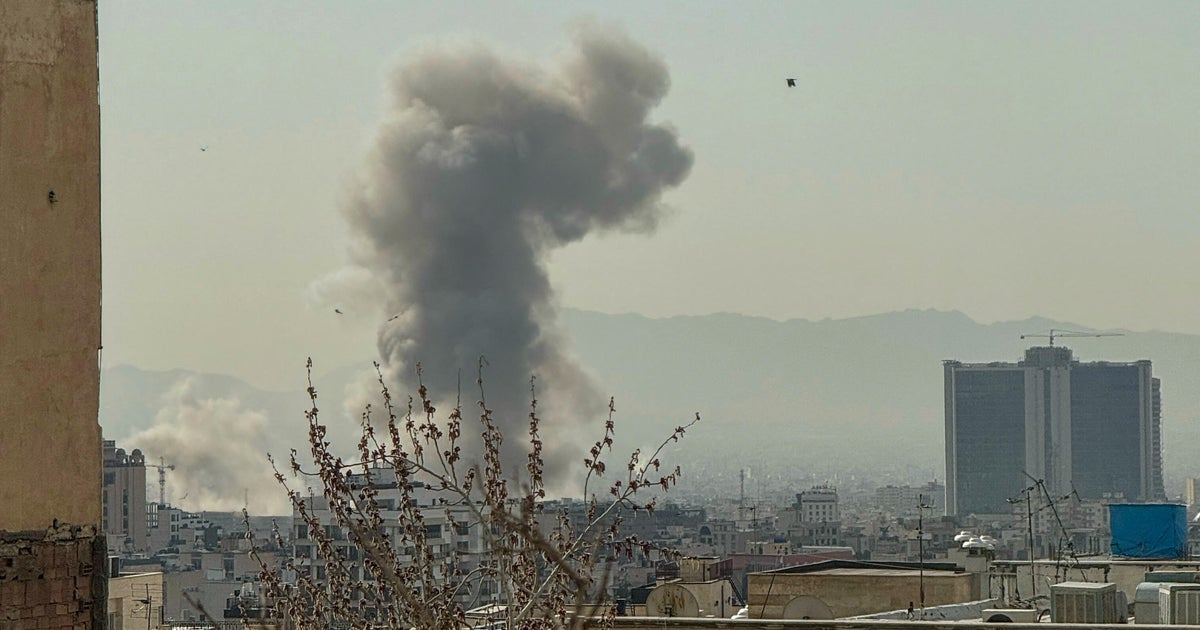
Iranian state media later confirmed that Ali Khamenei had been killed after the U.S.-Israeli attack on Tehran on February 28, 2026. Named reporting from Axios, Reuters, NPR, and others treated that confirmation as the central fact, while many additional details about who else was killed, the exact internal damage to the compound, and the full death toll across Iran remained more unevenly sourced.
The most defensible way to read the event is therefore narrower than some of the first-day coverage: Khamenei's death was publicly confirmed, the strike was politically and militarily consequential, and Iran immediately faced a succession question under wartime conditions. Beyond that, the public record still contains layers of uncertainty and competing emphasis.
What We Know: Official Confirmations and Timeline
The Initial Public Reporting
Axios reported that Israeli and American officials said Khamenei had been killed in the operation, and later reported that Iranian state media confirmed the death and announced 40 days of public mourning. That sequence — foreign official claims first, Iranian state confirmation later — is the strongest public chronology available in the source set used here. (Axios)
State Media Confirmation
Iranian state and semi-official outlets described Khamenei as having been "martyred" in the strike, a wording that underscored how the state intended to frame the event politically as well as factually. Reuters and Axios both treated that state-media confirmation as the critical threshold that moved the story from external claim to official acknowledgment. (Reuters; Axios)
What Stayed Unclear
Some of the earliest reports made much more specific claims about additional family deaths, the number of senior leaders killed, and the exact sequence inside the compound. Those details were not equally supported across named reporting. This revision therefore keeps the state-media confirmation, mourning declaration, and broad succession implications, while dropping or softening the weakest granular claims.
Timeline of Events
Early February 28: U.S. and Israeli strikes on Iran begin, with Tehran among the central targets. (Reuters)
Later the same day: Israeli and American officials tell media that Khamenei was killed in the operation. (Axios)
Hours later: Iranian state media confirms Khamenei's death and the government declares 40 days of mourning. (Axios)
Who Was Ayatollah Ali Khamenei?
Ayatollah Sayyid Ali Hosseini Khamenei was born on April 19, 1939, in the city of Mashhad in eastern Iran. He rose through the ranks of the Islamist revolutionary movement that overthrew Shah Mohammad Reza Pahlavi in the 1979 Iranian Revolution. A close associate of the revolution's founder, Ayatollah Ruhollah Khomeini, Khamenei served as president of Iran from 1981 to 1989 before being elevated to the position of supreme leader following Khomeini's death.
His 36-year tenure as supreme leader made him the longest-serving contemporary autocrat in Iranian history. According to NPR, Khamenei survived a 1981 assassination attempt that cost him the use of his right arm — an injury that became part of his revolutionary mythology.
Alex Vatanka of the Middle East Institute told NPR that Khamenei initially lacked the credentials expected of a supreme leader: "He didn't have the prestige, the gravitas to be the successor to the founder of the Islamic Republic." Yet over three decades, he consolidated absolute control over Iran's political, military, and religious institutions.
Ali Vaez of the International Crisis Group described him as "a man with strategic patience and able to calculate steps ahead," while Sanam Vakil of Chatham House observed that "Khamenei always assumed he could play for time; the world had tired of Iranian foot-dragging."
Under Khamenei's leadership, Iran developed one of the Middle East's most powerful ballistic missile programs, built a vast network of proxy militias across the region — including Hamas in Gaza, Hezbollah in Lebanon, and the Houthis in Yemen — and pursued a nuclear program that repeatedly brought the country to the brink of international confrontation.
The Strike: How It Happened
The military operation that killed Khamenei was a joint US-Israeli undertaking of unprecedented scale. According to Reuters, a US official confirmed that attacks were being carried out by both air and sea. Israel's defence ministry announced the operation as a "preemptive strike" as air raid sirens sounded across Jerusalem and Israelis received emergency phone alerts warning of an "extremely serious" threat.
The operation's scope was staggering. According to Al Jazeera, Saturday's strikes targeted locations across 24 of Iran's 31 provinces. The first wave, designated "Operation Roaring Lion" by the Israeli military, specifically targeted Khamenei's Beit Rahbari compound in Tehran — the fortified complex that served as both his residence and the nerve center of the supreme leader's office.
Satellite images obtained by multiple news organizations showed devastating damage to the compound. According to CNN, the imagery revealed heavy destruction to buildings believed to house Khamenei's home and the so-called House of Leadership. Parts of the complex appeared reduced to rubble.
Senior Officials Killed
Khamenei was not the only high-ranking casualty. Israeli Prime Minister Benjamin Netanyahu claimed that many "senior figures" had been "eliminated," including "commanders in the Revolutionary Guard." According to reporting compiled from NBC News and other outlets, the dead included:
- General Mohammad Pakpour — Head of Iran's Islamic Revolutionary Guard Corps (IRGC)
- Ali Shamkhani — Khamenei's senior advisor and former secretary of the Supreme National Security Council
- Aziz Nasirzadeh — Iran's Defence Minister
CBS News reported that sources indicated up to 40 Iranian leaders were killed across the multi-wave operation. President Trump stated the strikes were aimed at toppling the Iranian government entirely.
Civilian Casualties
The strikes exacted a heavy civilian toll. The Iranian Red Crescent Society reported that more than 201 people were killed in strikes across the country, according to Al Jazeera. In one of the most devastating incidents, an Israeli strike hit the Shajareh Tayyebeh girls' elementary school in the city of Minab, in the Hormozgan province of southern Iran, killing at least 108 people. A second school east of Tehran was also struck.
Iran's Retaliation
Iran responded to the strikes with an unprecedented wave of retaliatory attacks across the Middle East. The Islamic Revolutionary Guard Corps fired missiles at Israel as well as at US military bases in the United Arab Emirates, Qatar, Kuwait, Bahrain, and Jordan, according to The Washington Post.
The IRGC announced by Saturday evening that the third and fourth waves of "retaliatory" strikes on US and Israeli positions were ongoing, indicating this was not a one-off response but a sustained military campaign.
In Israel, the retaliatory strikes killed one woman in her fifties and injured 121 others, according to initial casualty reports. The strikes represented the most direct and widespread Iranian military action against targets outside its borders in the Islamic Republic's history, hitting multiple countries simultaneously.
Khamenei's Legacy of Repression
Khamenei's long rule was marked by repeated waves of repression against protest movements, dissidents, journalists, and political opponents. That broader record is better established through human-rights documentation than through the more sensational first-day commentary that initially circulated after his death.
2009: The Green Movement
After the disputed 2009 election, Iranian authorities suppressed mass protests with arrests, violence, and intimidation. Human Rights Watch and other rights groups have long treated that crackdown as one of the key modern precedents for how the state responds when its legitimacy is challenged.
2022: Woman, Life, Freedom
Human Rights Watch says the deadly crackdown following Mahsa Amini's death involved serious human rights violations and crimes under international law, including murder, torture, and rape, according to the U.N. Fact-Finding Mission's conclusions. That reporting provides a stronger foundation for discussing Khamenei's legacy than personality-based commentary. (Human Rights Watch)
Executions and State Violence
Amnesty International reported that Iran executed more than 1,000 people in 2025, the highest total it had recorded in at least 15 years, and documented 853 executions in 2024. That execution record is one of the clearest measurable indicators of how coercive the Iranian state became under Khamenei's later rule. (Amnesty 2025; Amnesty 2024)
Late 2025 and Early 2026
Human Rights Watch and Amnesty said Iranian authorities unleashed another deadly crackdown from late December 2025 into January 2026. Those organizations described unlawful killings, mass arrests, and efforts to conceal abuses, but they did not support some of the more extreme numerical claims that appeared in first-day commentary elsewhere. (HRW and Amnesty joint statement; HRW blackout report)
Succession Crisis: What Happens Next
Khamenei's death triggered an immediate succession question, but Iran's constitution is designed to prevent an instant vacuum. Article 111 says that in the event of the leader's death, resignation, or dismissal, a temporary council consisting of the president, the head of the judiciary, and a faqih from the Guardian Council assumes the leader's duties until a new leader is appointed. (Iran Constitution, Article 111)
That constitutional mechanism does not make the transition easy. It does mean the first question is institutional continuity, not simply whether the regime collapses overnight. Foreign Policy made a similar point, arguing that the Islamic Republic was built with overlapping institutions that can absorb leadership shocks more effectively than personality-driven regimes elsewhere. (Foreign Policy)
The more difficult public question is not whether there is a formal process, but whether wartime losses, internal factionalism, and external pressure make that process harder to execute smoothly than the constitution assumes.
International Reaction
United States
President Trump was unequivocal in his response. According to the Times of Israel, Trump hailed the death of "evil" Khamenei and stated that strikes on Iran would continue "uninterrupted" until peace was secured. He explicitly called for regime change, saying the operation represented "the single greatest chance for the Iranian people to take back their Country."
Israel
Prime Minister Netanyahu stated there were "growing signs" Khamenei had been killed and confirmed that many "senior figures" were "eliminated," including "commanders in the Revolutionary Guard."
United Nations
UN Secretary-General Antonio Guterres expressed "deep regret" that diplomatic opportunities had been "squandered," warning that military action risked "igniting uncontrollable chain reactions," according to Al Jazeera.
Iran
Iran's ambassador to the United Nations called the strikes "a war crime, and a crime against humanity."
Russia and China
Russia condemned the strikes outright. China expressed "serious concern" over the escalation, reflecting the potential threat to both nations' strategic interests in the region and their relationships with Tehran.
What Can Be Verified So Far
This page is strongest when it separates direct confirmation from higher-risk inference.
- Directly supported: Iranian state media confirmed Khamenei's death; mourning was declared; and the strike triggered an immediate succession question. (Axios)
- Supported but still fluid: the wider casualty picture, the precise number of senior leaders killed, and the full extent of damage across Tehran and other provinces.
- More interpretive than proven: claims that the regime was on the brink of collapse, that succession was impossible, or that one strike had fully destroyed Iran's governing capacity.
Analysis
The killing of Khamenei represents the most significant targeted assassination of a head of state by a foreign power since the US killing of Qasem Soleimani in January 2020 — though the scale and implications are orders of magnitude greater. The operation reflects a deliberate "decapitation strategy" aimed at not just killing Iran's supreme leader but dismantling the regime's entire senior command structure.
The simultaneous killing of the IRGC commander, the defence minister, and Khamenei's senior advisor suggests the operation was designed to maximize institutional chaos. However, as the Foreign Policy analysis noted, Iran's institutional architecture was specifically designed to survive such events. The question is whether that architecture can function when so many of its key operators have been killed simultaneously.
The comparison to Libya after Qaddafi and Syria after Assad is instructive but potentially misleading. Both of those regimes were built around a single personality and collapsed when that personality was removed. Iran's Islamic Republic, by contrast, features multiple overlapping institutions with constitutional succession mechanisms. Whether those mechanisms can withstand the current level of disruption remains to be seen.
The civilian toll — including the strikes on schools — will shape international opinion and potentially limit the diplomatic space available to the US and Israel. The Minab girls' school strike, which killed over 108 people, has already drawn widespread condemnation and may prove to be a defining image of the conflict.
What's Next
The immediate outlook is deeply uncertain. Several key developments will determine the trajectory of this crisis:
- Succession dynamics: Whether Iran's constitutional succession mechanism can function under wartime conditions, with multiple senior officials dead, will shape the country's political future. The Assembly of Experts faces the monumental task of selecting a new supreme leader amid active military operations.
- Escalation trajectory: Iran's retaliatory strikes on Israel and US bases across the region have opened multiple new fronts. The IRGC's announcement of ongoing third and fourth waves of strikes suggests this is a sustained campaign, not a one-off response. How the US and Israel respond to these retaliatory strikes will determine whether the conflict escalates further.
- Nuclear program: Iran's nuclear facilities were reportedly among the targets. The status of Iran's enrichment capabilities and nuclear infrastructure after the strikes remains unclear and will be a critical factor in the weeks ahead.
- Regional spillover: With Iranian missiles hitting targets in the UAE, Bahrain, Qatar, Kuwait, and Jordan, the conflict has already expanded well beyond a bilateral US/Israel-Iran confrontation. How these nations respond — and whether their own populations face further attacks — will shape the regional dynamics.
- Domestic unrest: Iran was already experiencing massive anti-government protests in the weeks before the strikes. Whether the population rallies around the flag in response to foreign attack or seizes the moment to push for regime change is one of the most consequential unknowns.
Why It Matters
The killing of Ayatollah Ali Khamenei is a watershed moment in Middle Eastern history. For 36 years, Khamenei sat at the center of a web of power that stretched from Tehran to Beirut, Baghdad, Sana'a, and Gaza City. His death does not merely remove a leader — it removes the singular figure who held together a complex and often fractious coalition of state institutions, military forces, and regional proxy groups.
The implications extend far beyond Iran's borders. The Strait of Hormuz, through which roughly 20% of the world's oil passes, is now bordered by an active war zone. Global energy markets have already been thrown into turmoil. The strikes on US military bases across the Gulf could draw additional nations into the conflict. And the nuclear question — whether Iran's nuclear infrastructure has been effectively neutralized or merely damaged — will dominate international security discussions for months to come.
For the Iranian people, the moment is fraught with both danger and possibility. As Trump himself acknowledged, this may represent "the single greatest chance for the Iranian people to take back their Country." Whether that aspiration is realized will depend on the choices made in the coming days and weeks by Iran's surviving leaders, the international community, and the Iranian public itself.
Related Coverage
- Iran's 'Potential New Leadership' Open to US Talks, Trump Is 'Eventually' Willing, AP Source Says
- US Strikes Iran: Full Timeline, Targets, and Global Impact in Operation Shield of Judah
- Dubai's Burj Khalifa Hit By Iran Missile? Explosion Near The World's Tallest Building
- Iran Government Structure Explained: Who Really Controls the Country
- Iran Retaliates: US Military Bases Targeted Across the Middle East
- What We Know So Far: Iran Strikes February 28
Research Hubs
- Iran-Israel-Dubai War Guide
- Iran Nuclear and Military Briefing
- Israel Security and Escalation Briefing
- Dubai and UAE Risk Briefing
- Source Center: Primary References
Sources
- Reuters, "Iran crisis live: Explosions in Tehran as Israel announces strike." reuters.com
- Axios, "Iranian state media confirms Supreme Leader Khamenei is dead." axios.com
- Axios, "Israel targets Khamenei, top leaders in bid to bring down Iran's regime." axios.com
- NPR, "Iran's Ayatollah Ali Khamenei is killed in Israeli strike, ending 36-year rule." npr.org
- Foreign Policy, "Iran Is Built to Withstand the Assassination of Ayatollah Khamenei." foreignpolicy.com
- Iran (Islamic Republic of) 1979 (rev. 1989) Constitution, Article 111. constituteproject.org
- Human Rights Watch, "Iran: Impunity Reigns 3 Years After Crackdown on Protests." hrw.org
- Human Rights Watch, "Iran: Authorities' Renewed Cycle of Protest Bloodshed." hrw.org
- Human Rights Watch, "Iran's Internet Blackout Concealing Atrocities." hrw.org
- Amnesty International, "Iran: Over 1,000 people executed as authorities step up horrifying assault on right to life." amnesty.org
- Amnesty International, "Iran executes 853 people in eight-year high amid repression, 'war on drugs'." amnesty.org