Overview
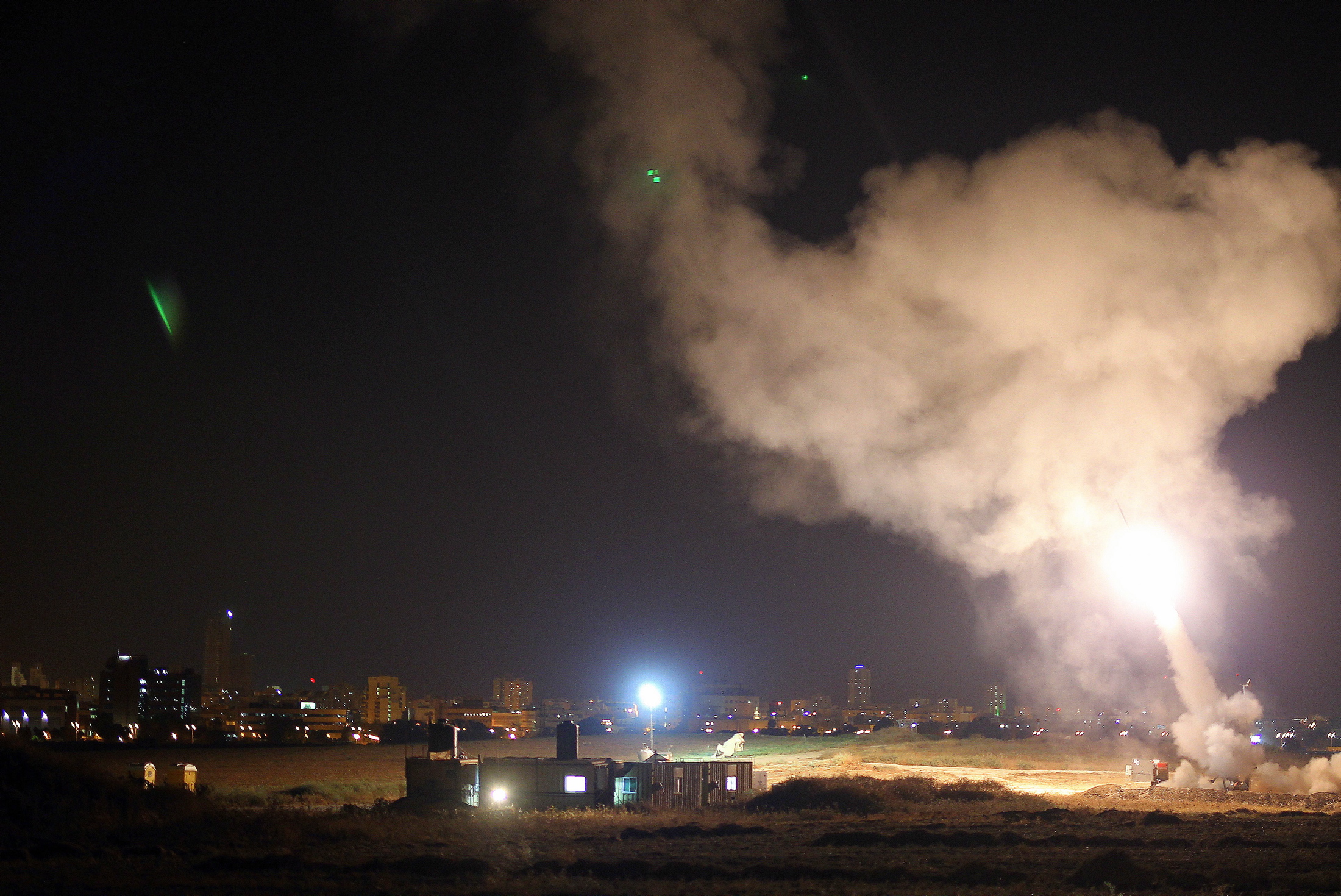
The question of Iran vs Israel military power has moved from abstract regional security analysis to immediate strategic reality following the February 2026 US-Israeli strikes on Iran and Iran's retaliatory operations across multiple theaters. As the two nations find themselves in direct military confrontation for the first time in modern history, understanding the balance of forces between them is no longer an academic exercise — it is central to predicting how this conflict unfolds.
The two militaries are close only if the comparison is flattened into a generic "power" label. In practice, they represent different models of force: Iran emphasizes manpower, missiles, strategic depth, and proxy warfare; Israel emphasizes advanced aircraft, intelligence integration, precision strike capacity, and missile defense backed by close U.S. support. That difference in composition matters far more than any headline ranking.
This article focuses on those real asymmetries — the parts of the military balance that affect how the two states would actually fight — rather than reducing the comparison to a single index score.
Global Military Ranking: How They Compare
A headline ranking is less useful than looking at the categories that actually shape a war between Iran and Israel. On raw scale, Iran is larger in territory, manpower pool, and missile volume. On qualitative categories, Israel is stronger in air power, intelligence integration, and layered missile defense. That is why analysts often describe the balance as asymmetric rather than simply superior or inferior.
| Category | Iran | Israel | Advantage |
|---|---|---|---|
| Power Index | 0.3199 (Rank 16) | 0.2707 (Rank 15) | Israel |
| Total Population | 88,386,937 | 9,402,617 | Iran |
| Available Manpower | 49,496,685 | 3,949,099 | Iran |
| Active Personnel | 610,000 | 169,500 | Iran |
| Reserve Personnel | 350,000 | 465,000 | Israel |
| Paramilitary | 220,000 | 35,000 | Iran |
| Defense Budget | $9.23B | $34.6B | Israel |
| Purchasing Power | $1.486T | $472.2B | Iran |
The paradox embedded in these numbers is still revealing even without a ranking score: Iran leads in many raw quantitative categories, but Israel's edge appears in the categories that modern regional wars often reward most — air superiority, intelligence, precision, and missile defense.
That is the real shape of the balance: Iran holds more scale and endurance variables; Israel holds more of the high-end qualitative variables and external support advantages.
Defense Budget and Military Spending
The defense budget gap between Iran and Israel is perhaps the single most significant factor in explaining Israel's qualitative superiority. SIPRI estimated Israel's 2024 military expenditure at $46.5 billion, while the page's lower estimate for Iran reflects a much smaller official defense budget even before accounting for opacity around IRGC-related spending. The practical point is not the exact ratio; it is that Israel can devote much more money per service member and per high-end platform than Iran can. (SIPRI)
This spending gap has widened dramatically in recent years. According to the Times of Israel, Israel's military expenditure surged by 65 percent to $46.5 billion in 2024 — the steepest annual increase since the Six Day War in 1967 — driven by operations in Gaza and escalating tensions with Iran. While the figure has since moderated, the 2024 surge funded significant acquisitions and operational deployments that have lasting impact.
A critical multiplier for Israel's budget effectiveness is American military aid. The United States has provided Israel with approximately $263 billion in foreign aid since 1946, according to Al Jazeera's analysis of Congressional Research Service data. The current Memorandum of Understanding provides $3.8 billion annually in military assistance, enabling Israel to purchase advanced US-manufactured weapons systems including F-35 stealth fighters, precision-guided munitions, and missile defense components at favorable terms.
This aid relationship underpins what US defense policy calls Israel's Qualitative Military Edge (QME) — a legal commitment under the 2008 Naval Vessel Transfer Act requiring that US arms sales to the Middle East preserve Israel's ability to defeat any combination of regional adversaries. Iran, by contrast, has been subject to decades of international sanctions that have severely restricted its ability to import modern military equipment, forcing reliance on domestically produced systems and limited purchases from Russia and China.
However, Iran's purchasing power parity of $1.486 trillion (more than three times Israel's $472.2 billion) partially offsets the raw budget gap. Iran produces the majority of its weapons domestically at local costs, meaning its defense budget buys more capability in real terms than the dollar figure alone suggests.
Manpower and Ground Forces
Iran holds a commanding numerical advantage in every manpower category except reserves. With a total population of nearly 88.4 million compared to Israel's 9.4 million, Iran draws from an available manpower pool of nearly 50 million — more than 12 times Israel's 3.9 million.
| Category | Iran | Israel | Advantage |
|---|---|---|---|
| Active Personnel | 610,000 | 169,500 | Iran (+440,500) |
| Reserve Personnel | 350,000 | 465,000 | Israel (+115,000) |
| Paramilitary | 220,000 | 35,000 | Iran (+185,000) |
| Total Military | ~1,180,000 | ~669,500 | Iran (+510,500) |
| Tanks | 2,675 | 1,300 | Iran (+1,375) |
| Armored Vehicles | 75,939 | 62,380 | Iran (+13,559) |
| Self-Propelled Artillery | 424 | 323 | Iran (+101) |
| Towed Artillery | 1,803 | 171 | Iran (+1,632) |
| Rocket Systems | 1,550 | 228 | Iran (+1,322) |
Iran's ground forces are organized under a unique dual military structure. The regular military (Artesh) handles conventional defense, while the Islamic Revolutionary Guard Corps (IRGC) operates as a parallel military force with its own ground, naval, air, and special operations branches. The IRGC's Basij militia — a volunteer paramilitary force numbering an estimated 220,000 active members — provides an additional layer of mobilizable manpower, particularly for internal security and asymmetric warfare roles.
Israel's ground forces, while smaller, are built for rapid mobilization. The Israel Defense Forces (IDF) can call up its 465,000 reservists within 24-48 hours — a mobilization speed considered among the fastest in the world. Israel's Merkava Mark 4 main battle tank is one of the most advanced in service anywhere, featuring the Trophy active protection system capable of intercepting incoming anti-tank missiles and RPGs. Iran's tank fleet, by contrast, consists primarily of older T-72S models and domestically produced Karrar tanks — functional but a generation behind in fire control, armor protection, and battlefield networking.
The raw numbers, however, are somewhat misleading in this matchup. As CBC News reports, the 1,000+ kilometers separating the two nations makes a conventional ground war between Iran and Israel practically impossible. Neither country shares a border, and any land invasion would require traversing multiple sovereign nations. The ground force comparison is therefore more relevant to each nation's ability to sustain operations against proxies and in secondary theaters than to a direct Iran-Israel engagement.
Air Power: Israel's Decisive Edge
Air power is where the Iran vs Israel military power balance tilts most decisively in Israel's favor. Even if total aircraft counts can look closer than readers might expect, the qualitative gap is staggering: Israel fields far more advanced fighters, better training and integration, and stronger backing from the United States.
| Category | Iran | Israel | Advantage |
|---|---|---|---|
| Total Aircraft | 551 | 597 | Israel (+46) |
| Fighter/Interceptor | 188 | 239 | Israel (+51) |
| Attack Aircraft | 21 | 45 | Israel (+24) |
| Transport Aircraft | 86 | 14 | Iran (+72) |
| Trainer Aircraft | 103 | 148 | Israel (+45) |
| Helicopters | 129 | 127 | Comparable |
| Attack Helicopters | 13 | 48 | Israel (+35) |
| Aerial Tankers | 6 | 13 | Israel (+7) |
Israel operates the F-35I Adir — a customized variant of the Lockheed Martin F-35 Lightning II with Israeli-developed avionics and electronic warfare systems. It is the most advanced combat aircraft in the Middle East, capable of penetrating sophisticated air defense networks undetected. Israel also fields large fleets of F-15 Eagle and F-16 Fighting Falcon multirole fighters, all equipped with precision-guided munitions and advanced targeting pods.
Iran's air force, by stark contrast, relies on an aging fleet constrained by decades of sanctions, limited access to newer platforms, and a much weaker qualitative position than Israel's. The practical point is not the exact count of working aircraft on a given day; it is that Iran enters any direct air contest from a materially weaker starting point.
Shaan Shaikh of the Center for Strategic and International Studies (CSIS) summarized the gap bluntly in an analysis cited by CBC News: "Israel certainly has more sophisticated military technology than Iran" — and nowhere is this more evident than in the air domain.
Iran has partially offset its manned aircraft deficit through a significant investment in unmanned aerial vehicles (UAVs). The Shahed-136 loitering munition and Mohajer-6 reconnaissance/strike drone have proven effective in regional conflicts and gained international notoriety through their use by Russia in Ukraine. However, these systems, while cost-effective for attrition warfare, cannot perform the complex air superiority, deep strike, and electronic warfare missions that Israel's manned combat fleet executes.
Naval Forces
Both Iran and Israel maintain naval forces designed primarily for regional operations rather than blue-water power projection. Iran holds a numerical advantage at sea, but both nations' navies reflect their specific geographic and strategic requirements.
| Category | Iran | Israel | Advantage |
|---|---|---|---|
| Total Fleet | 109 | 82 | Iran (+27) |
| Submarines | 25 | 6 | Iran (+19) |
| Frigates | 7 | 0 | Iran (+7) |
| Corvettes | 3 | 7 | Israel (+4) |
| Patrol Vessels | 21 | 66 | Israel (+45) |
| Mine Warfare | 1 | 0 | Iran (+1) |
Iran's naval forces are split between the regular Islamic Republic of Iran Navy (IRIN) and the IRGC Navy (IRGCN). The IRGCN specializes in asymmetric naval warfare — fast attack craft armed with anti-ship missiles, swarm tactics designed to overwhelm larger vessels, and mine warfare capabilities concentrated around the strategically critical Strait of Hormuz. Iran's submarine fleet includes 25 boats ranging from Kilo-class diesel-electric submarines (acquired from Russia) to smaller Ghadir and Fateh-class coastal submarines suited for mine-laying and special operations.
Israel's navy, while numerically smaller, operates some of the most capable surface combatants in the region. The Sa'ar 6-class corvettes, equipped with the Barak-8 air defense system and advanced electronic warfare suites, form the backbone of Israel's surface fleet. Most strategically significant are Israel's Dolphin-class submarines — German-built diesel-electric boats widely reported to be capable of launching nuclear-armed cruise missiles, providing Israel with a sea-based second-strike nuclear deterrent.
A direct naval confrontation between Iran and Israel is unlikely given the 1,000+ km separation and the absence of a shared maritime boundary. The naval dimension of any Iran-Israel conflict would more likely manifest through Iran's ability to disrupt shipping in the Strait of Hormuz and the Houthis' ongoing anti-ship operations in the Red Sea — both of which threaten Israel's maritime supply lines without requiring Iran's navy to engage the Israeli fleet directly.
Missiles and Air Defense Systems
The missile and air defense domain is the most consequential dimension of the Iran vs Israel military power balance. It is the arena where any direct confrontation between these two nations would actually be fought — and where both sides have made their most significant investments.
Iran's Missile Arsenal
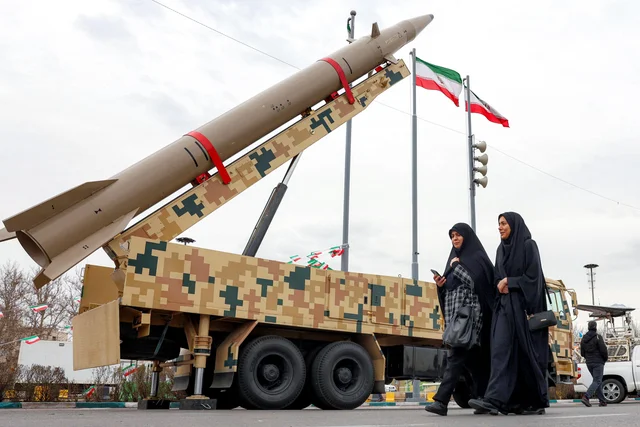
Iran possesses the largest and most diverse missile arsenal in the Middle East, with an estimated 3,000+ ballistic and cruise missiles, according to CBC News and CSIS assessments. The arsenal includes:
- Shahab-3: Medium-range ballistic missile, range ~1,300 km, capable of reaching Israel from western Iranian launch sites
- Emad: Improved Shahab-3 variant with maneuverable reentry vehicle, range ~1,700 km, improved accuracy
- Sejjil-2: Solid-fuel medium-range ballistic missile, range ~2,000 km, rapid launch capability (harder to detect and intercept than liquid-fueled missiles)
- Khorramshahr (Kheibarshekan): Medium-range ballistic missile, range ~2,000 km, capable of carrying multiple warheads
- Fateh-110 / Zolfaghar: Short-to-medium range precision-guided missiles, range 300-700 km, used primarily against regional targets
- Cruise missiles: Including the Soumar (range ~2,500 km) and various anti-ship variants
Iran's missile program is its primary strategic deterrent. As Afshon Ostovar of the Naval Postgraduate School told CBC News, while Iranian missiles "can destroy stuff," Iran "can't win" through missile attacks alone. The strategic question is whether Iran can launch enough missiles simultaneously to saturate and overwhelm Israel's defenses — a scenario that came closest to testing in October 2024, when Iran fired approximately 180 ballistic missiles at Israel.
Israel's Air Defense Architecture
Israel counters Iran's missile threat with the most sophisticated multi-layered air defense system in the world — a three-tier architecture designed to engage threats at every altitude and range:
- Iron Dome: Short-range interceptor (4-70 km), designed to shoot down rockets, artillery, and mortars. Boasts a reported intercept rate above 90%. Deployed in batteries across Israel to protect population centers and critical infrastructure.
- David's Sling: Medium-range system (40-300 km), designed to intercept tactical ballistic missiles, medium-range rockets, and cruise missiles. Fills the gap between Iron Dome's short-range coverage and Arrow's long-range interception.
- Arrow-2 and Arrow-3: Long-range ballistic missile defense systems. Arrow-3 is capable of exo-atmospheric interception — destroying incoming ballistic missiles in space before reentry — making it one of the most advanced BMD systems operational anywhere in the world.
Iran's own air defenses are far less capable. Iran operates the Russian-supplied S-300PMU-2, along with domestically produced systems like the Bavar-373 (often described as Iran's answer to the S-300). While these systems provide meaningful point defense around strategic sites like nuclear facilities and major military installations, they do not approach the layered, networked, nationwide coverage that Israel maintains. As the International Institute for Strategic Studies (IISS) has noted, Iran's air defenses "struggle with an increasingly obsolescent equipment inventory."
The Technology Gap: Israel's Qualitative Military Edge
The technology gap between Iran and Israel is the defining asymmetry in this military comparison. While Iran compensates with mass and geographic depth, Israel's technological superiority — enabled by US partnership and a world-class domestic defense industry — provides capabilities Iran simply cannot match.
Shaan Shaikh of CSIS observed that "Israel certainly has more sophisticated military technology than Iran" and emphasized that "Israel also has powerful partners, namely the United States" (CBC News).
Israel's domestic defense industry — led by companies like Rafael Advanced Defense Systems, Elbit Systems, and Israel Aerospace Industries (IAI) — is among the most innovative in the world. Rafael developed the Iron Dome and Trophy active protection system. Elbit produces advanced electronic warfare systems and UAVs. IAI develops satellite systems, missile defense components, and the Heron family of UAVs. Israel also modifies US-supplied platforms — the F-35I Adir variant includes Israeli-developed electronic warfare and communications systems not available on standard F-35 models.
Iran's technology disadvantage stems directly from decades of international sanctions that have cut off access to Western military equipment since 1979 and restricted Russian and Chinese sales through UN Security Council resolutions. The IISS has characterized Iran's conventional forces as struggling with "an increasingly obsolescent equipment inventory."
However, Iran has channeled this isolation into impressive indigenous capabilities in specific areas. Iran's ballistic missile and drone programs are largely domestically developed and have proven combat-effective. The Shahed-136 drone, while technologically simple, has changed battlefield economics — at a reported cost of $20,000-$50,000 per unit, it forces adversaries to expend interceptors costing millions of dollars each. Iran also maintains a significant cyber warfare capability and is investing in electronic warfare systems, though these remain less mature than Israel's offerings.
Proxy Warfare: Iran's Force Multiplier
If technology is Israel's primary asymmetric advantage, proxy warfare is Iran's. Over four decades, Iran has built and sustained the most extensive network of allied non-state armed groups in the world — the so-called "Axis of Resistance" — and this network has been Iran's primary tool for projecting power without directly engaging enemies in conventional warfare.
The key components of Iran's proxy network include:
- Hezbollah (Lebanon): The most capable of Iran's proxies, with an estimated 150,000+ rockets and missiles, a trained fighting force of 20,000-25,000 fighters, and extensive tunnel infrastructure along Israel's northern border. Hezbollah's arsenal includes precision-guided munitions capable of striking specific targets within Israel.
- Hamas (Gaza): Significantly degraded by the 2023-2025 conflict but historically a key pressure point against Israel, capable of rocket attacks from 65 km south of Tel Aviv.
- Houthis (Yemen): Have demonstrated the ability to strike with ballistic missiles and drones at ranges exceeding 2,000 km, including attacks on Israeli territory and persistent anti-ship operations in the Red Sea disrupting global maritime traffic.
- Iraqi Shia Militias: Including Kata'ib Hezbollah and Harakat al-Nujaba, with rocket and drone capabilities threatening US bases in Iraq and Syria — thereby indirectly constraining Israel's most important ally.
- IRGC Quds Force: Iran's external operations branch responsible for coordinating, training, arming, and funding proxy forces across the region.
Iran's proxy network has historically allowed it to threaten Israel and its partners indirectly, impose costs across multiple theaters, and avoid some of the exposure that comes with direct conventional confrontation. That regional reach matters even as recent fighting has degraded parts of the network.
Israel has no equivalent proxy network. Israel's strategic depth comes not from non-state allies but from its alliance with the United States — which provides diplomatic cover, intelligence sharing, and, in the current conflict, direct military participation. The February 2026 strikes demonstrated this dynamic clearly: Israel struck Iran directly, with US support, rather than through intermediary forces.
The 2025-2026 conflict has significantly degraded Iran's proxy capabilities. Hamas has been substantially weakened, Hezbollah's leadership has been decimated and its arsenal partially destroyed, and the Houthis have sustained significant damage from US and allied strikes. Whether Iran can rebuild this network remains one of the most important open questions of the post-conflict period.
The Nuclear Factor
No analysis of Iran vs Israel military power is complete without addressing the nuclear dimension — the ultimate asymmetry between the two nations.
Israel maintains a policy of deliberate nuclear ambiguity, neither confirming nor denying its nuclear arsenal. However, it is widely assessed by organizations including the Stockholm International Peace Research Institute (SIPRI) and the Federation of American Scientists to possess approximately 90 nuclear warheads, deliverable via aircraft (F-15I, F-35I), Jericho III intercontinental ballistic missiles, and submarine-launched cruise missiles fired from Dolphin-class submarines. This triad provides Israel with a credible second-strike capability — meaning even a devastating first strike on Israel could not prevent nuclear retaliation.
Iran, by contrast, does not possess nuclear weapons. However, prior to the February 2026 strikes, Iran had enriched uranium to 60% purity and was assessed to be within 1-2 weeks of weapons-grade enrichment (90%) breakout capability. The US-Israeli strikes targeted enrichment facilities at Natanz and Fordow specifically to extend this breakout timeline. For a complete analysis of Iran's nuclear status, see our dedicated explainer.
This nuclear imbalance is the single most significant strategic asymmetry in the Iran-Israel relationship. Israel's nuclear capability serves as the ultimate deterrent against existential threats — no rational actor would pursue the complete destruction of a nuclear-armed state. For Iran, the lack of a nuclear deterrent has been repeatedly demonstrated as a strategic vulnerability: it is precisely because Iran does not possess nuclear weapons that it was subjected to direct military strikes targeting its critical infrastructure.
Geographic and Strategic Considerations
Geography fundamentally shapes how the Iran vs Israel military power balance translates into actual conflict. The physical realities of distance, terrain, and national size create both advantages and vulnerabilities for each side.
| Category | Iran | Israel |
|---|---|---|
| Land Area | 1,648,195 km² | 21,937 km² |
| Relative Size | Iran is 74x larger than Israel | |
| Distance Between | ~1,000-1,500 km (no shared border) | |
| Coastline | 2,440 km | 273 km |
| Oil Reserves | 208.6B barrels | 12.73M barrels |
| Natural Gas | 34T cubic meters | 176B cubic meters |
| Airports | 177 | 40 |
| Roadways | 223,485 km | 20,391 km |
Iran's sheer size provides strategic depth that Israel simply cannot match. Iran's military infrastructure, industrial capacity, and population centers are distributed across a landmass roughly the size of Alaska. Destroying Iranian military capability requires striking hundreds of targets spread across 1.6 million square kilometers of varied terrain — including the Zagros mountain range, which provides natural hardening for underground facilities. Israel, by contrast, is roughly the size of New Jersey. Its entire territory falls within the range of Iranian ballistic missiles, and a few successful strikes on key infrastructure nodes — power grid, water systems, Tel Aviv metropolitan area — could cause disproportionate damage.
As CBC News notes, the 1,000+ km separating the two nations means any direct conflict would be fought primarily through air and missile power rather than ground forces. This geographic reality plays to Israel's strengths in air superiority and missile defense while limiting the relevance of Iran's numerical advantages in ground forces and armor.
Iran's vast oil and natural gas reserves (208.6 billion barrels of proven oil, the fourth-largest in the world) provide significant economic resilience and strategic leverage. The Strait of Hormuz, through which approximately 20% of global oil passes, gives Iran the ability to disrupt the world economy as a deterrent against sustained attack — a capability Israel has no equivalent to.
What Can Be Verified So Far
This page is strongest when it separates direct reporting from inference.
- Directly supported: Iran holds more scale in territory, manpower pool, and missile volume, while Israel holds a stronger edge in advanced air power, missile defense, intelligence integration, and U.S.-linked support.
- Supported but still scenario-dependent: how those advantages would translate in a specific war, especially once proxies, endurance, geography, and outside intervention are added.
- More interpretive than proven: any claim that one side is simply "more powerful" in every category or that one clean ranking can settle the military balance without reference to the kind of conflict being fought.
Expert Analysis and Assessment
Expert assessments of the Iran vs Israel military power balance converge on a consistent conclusion: Israel holds decisive advantages in conventional military capability, but Iran's strategy is specifically designed to avoid fighting on Israel's terms.
The Foundation for Defense of Democracies (FDD) assessed in mid-2025 that following the degradation of Iran's nuclear program and the weakening of its proxy network, "Israel is now the dominant military power in the Middle East" — a position further cemented by the February 2026 strikes. NPR's analysis similarly concluded that Israel's military has "reshaped the Mideast" through a series of operations against Iran and its proxies.
The International Institute for Strategic Studies (IISS), publisher of the authoritative annual Military Balance, has characterized Iran's conventional forces as struggling with "an increasingly obsolescent equipment inventory" — a judgment that explains why Iran has invested so heavily in missiles, drones, and proxy forces rather than attempting to modernize its conventional fleet.
Expert sources converge on the same broad conclusion even when they use different language: Israel has the sharper conventional military edge, while Iran retains the larger endurance variables of geography, missile volume, and regional reach. That is why the balance is best understood as asymmetric rather than reducible to a single rank order.
CSIS analyst Shaan Shaikh provided perhaps the most operationally relevant perspective: while Israel has more sophisticated military technology and powerful partners, Iran has built its strategy around capabilities — missiles, proxies, geographic depth — that are specifically designed to offset those advantages. The question is not simply "who has more firepower" but "whose strategy is better suited to the type of conflict being fought."
Who Would Win: Iran vs Israel
The "who would win" question is the most frequently searched aspect of the Iran vs Israel military power comparison — and also the most misleading. The answer depends entirely on how victory is defined and what scenario is being considered.
Scenario 1: Air and Missile Exchange
In a direct air and missile exchange — the most likely form of Iran-Israel conflict — Israel holds the advantage. Israel's three-tier missile defense system (Iron Dome, David's Sling, Arrow-2/Arrow-3) can intercept the majority of incoming Iranian missiles, while Israel's air force can strike Iranian targets with precision that Iran cannot match in reverse. However, Iran's ability to launch hundreds of ballistic missiles simultaneously creates the possibility of saturation — overwhelming Israel's interceptor inventory through sheer volume. Even a 90% intercept rate means dozens of missiles reaching their targets in a large-scale barrage. Israel wins this exchange but sustains meaningful damage.
Scenario 2: Sustained Conflict Without US Involvement
In a prolonged conflict where Israel fights alone, Iran's advantages in strategic depth, manpower, and proxy forces become increasingly relevant. Iran can absorb strikes across its vast territory while maintaining missile production capability and proxy pressure from Lebanon, Yemen, Iraq, and Syria. Israel, with its compact geography and smaller economy, faces disproportionate economic and social costs from sustained conflict. Neither side can achieve decisive victory: Israel can damage Iran's military infrastructure but cannot occupy or conquer a nation of 88 million across 1.6 million square kilometers. Iran can impose costs on Israel but cannot destroy its military or overwhelm its defenses.
Scenario 3: With Full US Backing
The February 2026 strikes demonstrated this scenario in practice. When the United States commits its military to the fight alongside Israel, the balance shifts overwhelmingly. The combined US-Israeli air power, intelligence capability, precision strike capacity, and logistical depth dwarfs anything Iran can field. Iran's air defenses, conventional forces, and even its missile arsenal become vulnerable to systematic degradation. This is the scenario Iran's military planners have most feared — and the scenario that Iran's proxy strategy and nuclear ambitions were specifically designed to deter.
The Real Answer
The Iran vs Israel military power balance produces a strategic equilibrium, not a clear winner. Israel can strike Iran and degrade its capabilities — as the current conflict demonstrates — but cannot force Iran's surrender or impose regime change through military means alone. Iran can threaten Israel and impose costs through missiles and proxies but cannot destroy it or overcome its defenses. Both sides possess deterrent capabilities that make full-scale war mutually costly. The real winner of any Iran-Israel military confrontation is determined not on the battlefield but in the diplomatic and political aftermath.
Frequently Asked Questions
How does Iran's military compare to Israel's military?
Iran fields a much larger pool of active and paramilitary personnel and holds the Middle East's largest ballistic missile arsenal. Israel, however, pairs a much higher-quality air force with a stronger budget base, denser reserve mobilization, and far more sophisticated missile defense. Those asymmetries matter more than any adjacent placement on a ranking table.
Who would win in a war between Iran and Israel?
In a direct conventional engagement, Israel holds decisive advantages in air power, technology, and precision strike capability. However, Iran's strategy relies on ballistic missile saturation, proxy warfare through Hezbollah and the Houthis, and geographic depth across 1.6 million square kilometers. Experts assess that Israel can damage Iran's military infrastructure but cannot occupy or conquer it, while Iran can threaten Israel through missile salvos but cannot destroy its US-backed defense systems (CBC News).
Does Iran have more military power than Israel?
Iran has more total military personnel, more tanks, and the larger missile arsenal. Israel has a superior air force, a higher defense budget, and dramatically more sophisticated technology including F-35 stealth fighters and a three-tier missile defense system. The meaningful contrast is not a rank order but the clash between Iran's scale and Israel's qualitative edge.
What is Iran's biggest military advantage over Israel?
Iran's biggest advantages are its ballistic missile arsenal, its proxy network, its geographic size, and the strategic depth that comes with a much larger territory and manpower pool. Those factors do not erase Israel's conventional edge, but they do help explain why a longer war would not look like a simple one-sided contest.
Can Iran's missiles reach Israel?
Yes. Iran's Shahab-3 and Emad missiles have ranges of 1,300-1,700 km, and the Sejjil-2 solid-fuel missile can reach approximately 2,000 km. The distance from western Iran to Tel Aviv is approximately 1,500 km, well within range of Iran's medium-range ballistic missiles. Israel's Arrow-2 and Arrow-3 systems are specifically designed to intercept these threats. For a detailed analysis, see our Iran Missile Range Map article.
Related Coverage
- Iran vs US Military Comparison 2026: Strength, Numbers, Technology, and Key Asymmetries
- Why Did Israel Attack Iran: Nuclear Threats, Failed Diplomacy, and the Path to War
- Iran's Air Defense Systems: Can Iran Shoot Down US Jets?
- Iran Missile Range Map: What the Ranges Mean for US Bases
- Hezbollah, Houthis, and Iran's Proxy Network Explained
- Regional Missile Defense Systems: Middle East Explainer
- Does Iran Have Nuclear Weapons? A Complete Analysis
Research Hubs
- Iran-Israel-Dubai War Guide
- Iran Nuclear and Military Briefing
- Israel Security and Escalation Briefing
- Dubai and UAE Risk Briefing
- Source Center: Primary References
Sources
- CBC News, "Israel vs. Iran: Who has the stronger military?" updated 2026. cbc.ca
- International Institute for Strategic Studies (IISS), The Military Balance 2026, Chapter 7: Middle East and North Africa. iiss.org
- Center for Strategic and International Studies (CSIS), Shaan Shaikh analysis on Iran-Israel military capabilities. csis.org
- Foundation for Defense of Democracies (FDD), "Israel: Now the Dominant Military Power in the Middle East?" June 2025. fdd.org
- Stockholm International Peace Research Institute (SIPRI), Military Expenditure Database 2025. sipri.org
- Times of Israel, "Israel leads global surge in military spending, with steepest increase since 1967," February 2025. timesofisrael.com
- NPR, "With a series of powerful blows, Israel's military reshapes the Mideast," June 2025. npr.org
- Al Jazeera, "How big is Israel's military and how much funding does it get from the US?" October 2023. aljazeera.com