Trump Declares 'Too Late' for Diplomacy with Iran
Trump says it's 'too late' for talks with Iran as Israel strikes Tehran — that was the message delivered by the U.S. president on March 3, 2026, as the joint American-Israeli military campaign against the Islamic Republic entered its fourth day. In a dramatic reversal from just 48 hours earlier, President Donald Trump declared that diplomatic negotiations with Tehran are no longer on the table, even as explosions tore through Iran's capital and financial markets around the world tumbled at the prospect of a prolonged war. (RTE)
The declaration marks a sharp pivot from Trump's position on March 1, when a senior White House official told the Associated Press that the U.S. had accepted an Iranian proposal to engage in further negotiations. Trump himself confirmed to The Atlantic that he had "agreed to talk" while military operations continued. But by March 3, the diplomatic window had slammed shut — and Trump made clear he intended to keep it that way. (Times of Israel)
The shift appears to have been prompted by multiple factors. Ali Larijani, a powerful Iranian political figure, publicly ruled out talks after the March 1 opening, undermining the negotiation track. Meanwhile, Israeli forces accelerated their strikes — reportedly out of concern that the White House might negotiate a ceasefire before Israel's military objectives were achieved. An Israeli source told reporters that the two-week operation was progressing faster than planned. (RTE)
What Trump Said on Truth Social
Trump's message was delivered via Truth Social and left no ambiguity about his position. The president wrote:
"Their air defense, Air Force, Navy, and Leadership is gone. They want to talk. I said 'Too Late!'"
The statement was both a declaration of military dominance and a rejection of diplomacy. Trump framed Iran's desire to negotiate as a sign of weakness, suggesting that the campaign had already achieved a decisive strategic advantage. (WION)
In a separate statement, Trump elaborated on the justification for continued military action, citing Iran's ballistic missile program as the primary threat. He claimed:
- Iran's missile capabilities were "growing rapidly and dramatically" and posed a direct threat to Europe and U.S. bases worldwide
- The missile program was designed to conceal nuclear weapons development
- An Iranian regime with long-range missiles and nuclear weapons would represent an "intolerable threat" to global security
- He was "very proud to have knocked out the Iran nuclear deal by President Obama" and would not allow Iran to develop nuclear weapons
Trump also directed a message to the Iranian people, claiming their "hour of freedom is at hand" — language consistent with the regime-change objectives that U.S. and Israeli officials have outlined for the operation. (India TV News)
U.S. Secretary of State Marco Rubio reinforced the administration's position, stating that the U.S. had conducted preemptive strikes to prevent higher American casualties and expressing hope that the Iranian people would overthrow their government. (Al Jazeera)
Israel Strikes Tehran and Beirut Simultaneously
As Trump says it's 'too late' for talks with Iran, Israel launched what it described as "simultaneous strikes in Tehran and Beirut," targeting both Iranian military sites and the Iran-backed group Hezbollah in Lebanon. The dual-front operation underscored the breadth of the campaign, which now spans at least two countries and multiple theaters. (Al Jazeera)
Targets Hit in Tehran on March 3
Israeli and U.S. forces struck several high-profile locations in and around the Iranian capital:
- IRIB Headquarters — The Iranian state broadcaster's main building was targeted, briefly knocking Iranian state television off the air before it resumed transmission on backup systems
- Presidential Office — The official workplace of the Iranian president was struck by precision-guided munitions
- National Security Council — The building housing Iran's top security decision-making body was hit
- Assembly of Experts — Israel struck the building as Iranian clerics reportedly gathered to elect a new supreme leader following the killing of Ayatollah Ali Khamenei on Day 1 of the operation
- Natanz Nuclear Site — The uranium enrichment facility, previously targeted in the June 2025 strikes, was struck again
The strike on the Assembly of Experts was particularly significant. The body of 88 elected clerics is constitutionally responsible for selecting Iran's Supreme Leader. With Khamenei confirmed dead since February 28, the Assembly had been moving to convene an emergency session to choose his successor. The Israeli strike appears to have been timed to disrupt this process. (Times of Israel)
Lebanon Ground Incursion
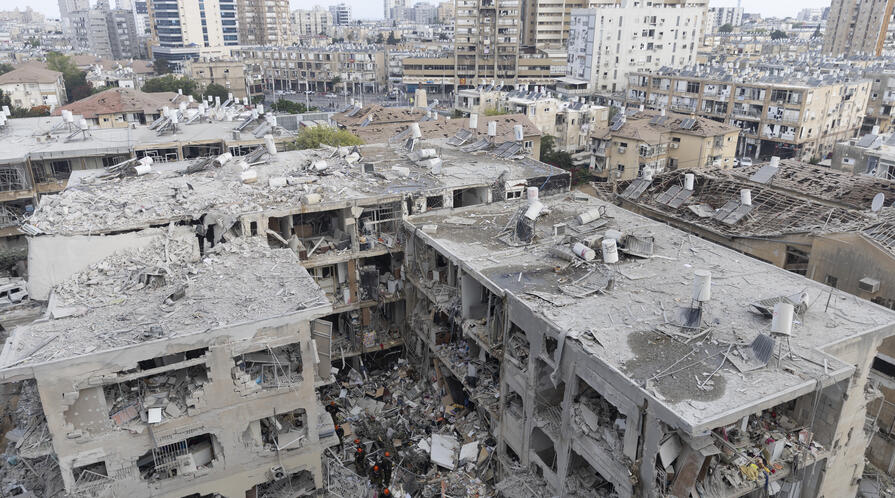
In Lebanon, Israel intensified operations against Hezbollah with a new ground incursion in the south. Israeli troops staged advances into southern Lebanese territory while air strikes continued against Beirut, targeting Hezbollah command infrastructure and weapons storage facilities. Over 30,000 people have fled Lebanon amid the escalating hostilities. (Al Jazeera)
Day 4 of Operation Epic Fury: What We Know
Operation Epic Fury — the U.S. military codename for the joint campaign (Israel's codename is Operation Roaring Lion) — entered its fourth day on March 3, 2026, with operations described by Trump as "substantially ahead of time projections." Here is a summary of what is known about the scale and scope of the campaign so far:
By the Numbers
- 1,000+ targets struck inside Iran, using more than 20 different weapons systems across air, sea, and land, according to U.S. Central Command (CSIS)
- 900 strikes in the first 12 hours by U.S. forces alone, per a senior U.S. official
- 200 Israeli jets struck nearly 500 targets on the first day of the operation
- At least 9 Iranian cities targeted: Tehran, Isfahan, Qom, Karaj, Kermanshah, Tabriz, Hamedan, Bushehr, and Qeshm Island
- 6 U.S. service members killed and 18 seriously wounded since operations began (Military Times)
Key Developments by Day
Day 1 (February 28): Joint US-Israeli strikes launched against nuclear facilities, military installations, and government buildings. Supreme Leader Ayatollah Ali Khamenei confirmed killed when his compound was destroyed. Ali Shamkhani, former head of Iran's Supreme National Security Council, also killed. Trump announced "major combat operations" in a video posted to Truth Social. (NBC News)
Day 2 (March 1): Iran launched retaliatory strikes with dozens of drones and ballistic missiles targeting Israel (Tel Aviv, West Jerusalem, Eilat), U.S. military bases in Jordan, Kuwait, Bahrain, Qatar, Iraq, Saudi Arabia, and the UAE. Three U.S. service members killed, five seriously wounded. Trump indicated willingness to engage in talks. (Fox News)
Day 3 (March 2): U.S. casualty toll rose to six killed. Trump promised more strikes and warned that more American deaths "are likely." Additional U.S. forces deployed to the Middle East, including two carrier strike groups, 120+ aircraft, and B-2 bombers. Iran struck Gulf energy infrastructure and a Saudi oil refinery. (CNBC)
Day 4 (March 3): Trump declares diplomacy "too late." Israel strikes Tehran and Beirut simultaneously. Iran closes the Strait of Hormuz. Drones hit the U.S. Embassy in Riyadh. U.S. shuts embassies in Saudi Arabia and Kuwait. Death toll reaches 787.
Military Logistics Under Strain: Tankers and Airlift
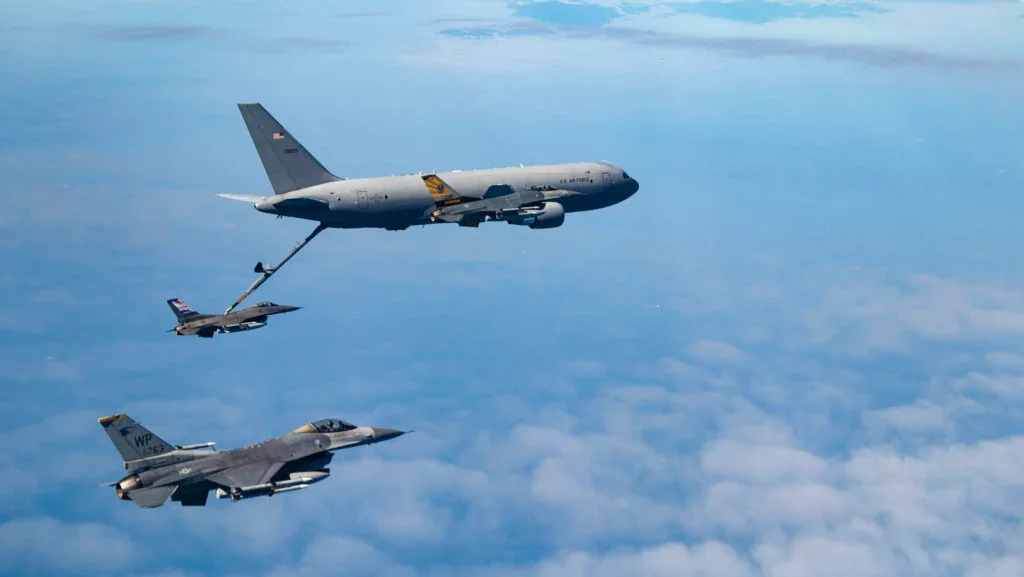
Behind the headlines about strikes and diplomacy, a critical challenge is emerging that could shape the duration and intensity of the entire campaign: the U.S. military's tanker and airlift capacity is under severe strain. A detailed analysis by Breaking Defense reveals that aerial refueling — the kind of operation depicted in the hero image above, where KC-46 Pegasus tankers refuel F-16 fighters mid-flight — may be the campaign's most critical bottleneck.
The Tanker Gap
Maj. Claire Randolph, Air Forces Central Chief of Weapons and Tactics, described the situation bluntly: "Tankers and airlift are a big gap... probably the first 100 things on [the requirements list] would be tankers."
Stacie Pettyjohn of the Center for a New American Security (CNAS) elaborated: "Tankers stand out as the most likely limiting factor. If Iran continues launching missiles and drones at bases in the Gulf, USAF fighters may be forced to fly extended sorties from Jordan, Israel, or even southern Europe — missions that consume substantially more fuel."
Tim Walton, a senior fellow at the Hudson Institute, added: "Aerial refueling capacity has historically been a major constraint on the tempo of operations, and it's likely the case today." Walton's 2021 study found that even with full wartime mobilization, the U.S. could field only 368 tankers with 865 total crews available — and approximately 56% of tanker units belong to the reserves or Air National Guard, meaning sustained operations require pulling personnel from civilian jobs.
Fleet Readiness Data
Current mission-capable rates paint a concerning picture for sustained high-tempo operations:
- C-17 Globemaster: ~75% mission-capable
- KC-135/KC-46 Tankers: 60-70% mission-capable
- C-5 Galaxy: Under 50% mission-capable
The U.S. has deployed over 100 aerial refueling aircraft to support operations, primarily KC-135 Stratotankers (an Eisenhower-era platform) and the newer KC-46A Pegasus. Lt. Gen. Rebecca Sonkiss, Air Mobility Command's interim commander, acknowledged the C-5 Galaxy — the largest U.S. airlifter — is a "critical tool" but "doesn't perform to the level we'd like it to."
Walton warned that combined U.S.-Israeli air refueling demands could be "the straw that breaks the tanker fleet's back," while Pettyjohn added: "The longer and more demanding the operation, the more likely tanker availability and airlift throughput become binding constraints on the overall campaign."
Airlift vs. Sealift
Heather Penney, director at the Mitchell Institute, explained why air transport is irreplaceable despite its limitations: "While sealift can move bulk equipment, it takes weeks at 25 knots — aircraft deliver cargo within a day. Urgent, time-critical supplies rely on airlift — not sealift." This means that any sustained campaign depends heavily on airlift capacity that is already stretched thin. (Breaking Defense)
Strait of Hormuz Closure and Oil Price Surge
In what may be Iran's most consequential retaliatory move, the Islamic Revolutionary Guard Corps (IRGC) announced the closure of the Strait of Hormuz on March 3, warning that any vessels attempting passage would face attack. The Strait is the world's most important chokepoint for oil shipments — roughly one-fifth of global oil consumption and about a third of the world's seaborne oil exports pass through the narrow waterway. (Al Jazeera)
Oil Price Movements
The closure triggered an immediate surge in energy prices:
- Brent crude hit a new 52-week high, rising 7.6% to $78.41 per barrel
- U.S. West Texas Intermediate (WTI) rose more than 7.4% to $72.01
- U.S. gasoline prices rose 12 cents per gallon in a single day — the largest daily spike in four years
- Analysts warned that a prolonged closure could push oil prices above $100 per barrel
Tanker traffic through the Strait has come to a standstill as ship owners take precautionary measures. Qatar's state petroleum company has suspended all LNG production after one of its facilities was struck, further disrupting global energy supply chains. (CNBC)
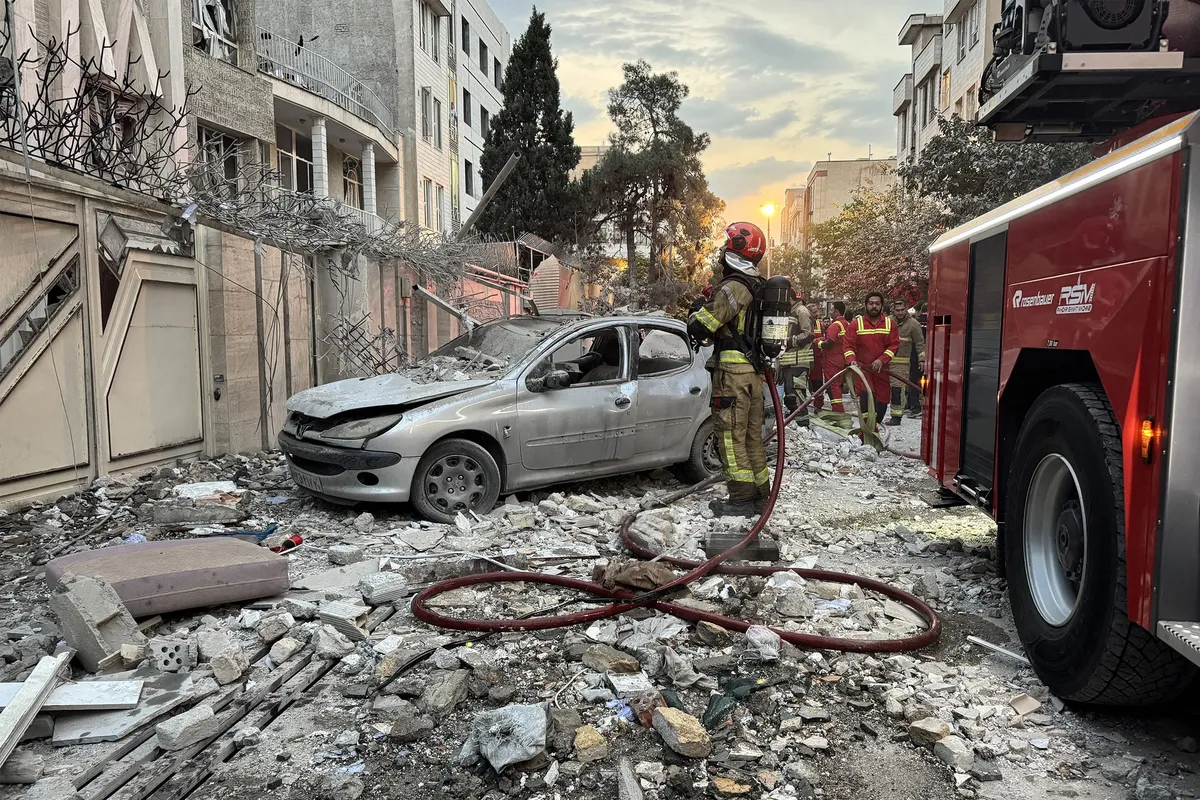
Iran also struck Gulf energy infrastructure beyond the Strait. A Saudi oil refinery was targeted, and strikes hit civilian infrastructure including a hotel in Dubai — though it remains unclear whether the Dubai strike was intentional or the result of an intercept failure. The cumulative effect has been to inject deep uncertainty into global energy markets at a time when the world economy was already navigating post-pandemic inflation pressures. (CNBC)
US Embassy Attacks and Regional Escalation
The war expanded further on March 3 when two drones struck the U.S. Embassy in Riyadh, Saudi Arabia, causing a limited fire and minor damage. The attack prompted the U.S. to close its embassies in both Saudi Arabia and Kuwait, citing imminent missile and drone threats across the region. The State Department had earlier warned American citizens in Saudi Arabia about potential attacks over the eastern city of Dhahran. (CNBC)
Iran's retaliatory strikes have now targeted facilities across eight countries:
- Israel — Ballistic missiles struck Tel Aviv, West Jerusalem, and Eilat
- Jordan — U.S. military bases targeted
- Saudi Arabia — U.S. Embassy hit by drones; oil refinery struck
- Kuwait — U.S. military facilities targeted; embassy closed
- Bahrain — U.S. Naval Forces Central Command base targeted
- Qatar — Al-Udeid Air Base struck; LNG production facility hit
- Iraq — U.S. positions in the Kurdish region and Baghdad targeted
- United Arab Emirates — Civilian infrastructure struck, including a Dubai hotel
The breadth of Iran's retaliation underscores a key risk that analysts had warned about before the campaign began: once military operations start, the conflict can rapidly metastasize across the entire region, drawing in countries that sought to remain neutral. (NBC News)
Casualties and Humanitarian Impact
The human toll of the conflict is mounting rapidly. As of March 3, multiple sources report the following casualty figures:
Iranian Casualties
- 787 deaths reported by the Iranian Red Crescent Society — this figure includes both military and civilian casualties
- 742 civilian deaths estimated by HRANA (Human Rights Activists News Agency), an Iranian human rights monitoring organization
- ~1,300 Iranian military personnel killed according to Hengaw, a Kurdish human rights organization
- Supreme Leader Ayatollah Ali Khamenei, age 86, confirmed killed on Day 1 when his compound was destroyed
- Ali Shamkhani, former head of Iran's Supreme National Security Council, killed in the initial strikes
American Casualties
- 6 U.S. service members killed since the start of Operation Epic Fury
- 18 service members seriously wounded
- Trump warned that more American deaths "are likely" as operations continue (NewsNation)
Humanitarian Concerns
With strikes hitting at least nine cities across a country of 88 million people, humanitarian organizations have expressed alarm about the potential for civilian harm. Iran's healthcare infrastructure is already under strain from decades of sanctions, and the destruction of government buildings and military installations in urban areas raises serious questions about collateral damage.
In Lebanon, more than 30,000 people have fled their homes amid the Israeli ground incursion and air strikes on Beirut. The UN has called for humanitarian corridors to allow civilians to escape conflict zones in both countries. (Al Jazeera)
Economic and Market Fallout
The economic consequences of the Iran war are rippling through global markets. As Trump says it's 'too late' for talks with Iran, investors are pricing in the possibility of a prolonged conflict that could disrupt energy supplies for weeks or months.
Stock Markets
- European stocks traded sharply lower, with the pan-European Stoxx 600 down 2.7% on Tuesday, extending Monday's steep 1.6% losses
- U.S. stocks showed partial recovery after initial selloffs but remain volatile
- Defense stocks have rallied as markets price in increased military spending
Bond Markets and Inflation
The 10-year Treasury yield topped 4.09% as surging oil prices from the Iran conflict raised inflation concerns. Traders worry that rising energy prices may ripple through the economy, raising consumer costs at a time when investors were hoping for inflation to ease enough to spur the Federal Reserve to cut interest rates later this year. (CNBC)
Gas Prices and Consumer Impact
The national average price of gasoline in the U.S. rose 12 cents per gallon on Monday alone — the largest single-day spike in four years. Experts warn that if the Strait of Hormuz remains closed, gas prices could increase significantly further. As CNBC reported, the conflict comes at an ironic moment for the Trump administration: Trump had declared inflation "tamed," but the Iran war now threatens to create entirely new inflationary pressures. (CNBC)
The economic cost of the war itself is substantial. An Al Jazeera analysis explored the potential costs of a sustained military campaign, noting parallels to previous U.S. military operations in the Middle East that exceeded initial cost projections by orders of magnitude.
Narrative and Market Signals
Trump's "too late" declaration created three immediate signal clusters that matter even without relying on forum commentary as evidence. First, it reinforced the perception that diplomatic off-ramps were narrowing faster than public messaging had suggested. Second, it amplified market sensitivity to Strait of Hormuz disruption and wider energy risk. Third, it sharpened the domestic U.S. argument over whether the executive branch was moving faster than Congress was prepared to tolerate.
Those narrative signals matter because they shape expectations around escalation, public tolerance for losses, and the willingness of outside actors to push for a ceasefire. But they are best treated as context for interpreting the crisis, not as primary evidence of battlefield or policy fact.
- Diplomatic whiplash: the gap between March 1 talk signals and March 3 "too late" messaging.
- Escalation fears: concern that simultaneous strikes and regional retaliation make a wider war more likely.
- Economic anxiety: focus on oil, gas, and inflation-sensitive sectors.
- War powers and legality: persistent concern about executive authority and congressional limits. (Arab Center DC)
- Humanitarian risk: rising concern over civilian harm in major urban areas.
What Happens Next
With Trump saying it's 'too late' for talks with Iran and Israel continuing to strike Tehran, the conflict appears set to continue for the foreseeable future. Several critical variables will determine what happens in the coming days and weeks.
Trump's Timeline
Trump has indicated the military campaign "could last about four to five weeks," though he also warned it "could go far longer." The president stated operations were "substantially ahead of time projections," but logistics experts caution that tanker and airlift constraints could force a reduction in operational tempo if the campaign extends beyond the initial surge phase. (Yahoo News)
Iranian Resilience and Retaliation
Iran has demonstrated a willingness to strike across the entire region, targeting eight countries and closing the Strait of Hormuz. The question is whether Iran can sustain this level of retaliation as its military infrastructure is degraded, or whether the loss of leadership and air defenses will force a de-escalation. Iran's cyber capabilities — which remain intact — could also become a more prominent tool as conventional options narrow. (CSIS)
Nuclear Consequences
Perhaps the most consequential long-term question: will the destruction of nuclear facilities prevent Iran's breakout, or will it accelerate a covert weapons program? The CSIS analysis of Operation Epic Fury noted that while significant damage was inflicted on known nuclear sites, Iran's dispersed and deeply buried infrastructure means some capability likely survives. Iran's parliament had previously drafted legislation to withdraw from the Non-Proliferation Treaty — a move that would remove the last international oversight mechanisms. (CSIS)
Congressional Response
The Arab Center DC reported that Trump launched the war on Iran without Congressional approval, setting up a potential constitutional confrontation. Both the House and Senate have announced votes on resolutions to restrict strike authority. Whether these votes carry enough political will to actually constrain the executive branch remains to be seen. (Arab Center DC)
Key Variables to Watch
- Strait of Hormuz: Duration of the closure and impact on global oil supply — this is the single biggest economic variable
- Tanker fleet sustainability: Whether the U.S. can maintain air operations tempo with aging and capacity-constrained refueling aircraft
- Iranian leadership transition: Whether a new supreme leader emerges and what posture they adopt
- Russian and Chinese posture: Currently uninvolved, but any shift in Moscow or Beijing's stance could change the calculus dramatically
- U.S. casualty trajectory: Public tolerance for American losses will shape domestic political dynamics
- Oil prices: Sustained prices above $100/barrel would signal markets expect prolonged disruption
Related Coverage
- Trump Promises More Strikes on Iran as U.S. Adds to Forces in Mideast
- US, Israel Attack Iran Live: Trump Vows to Continue Attacks, Avenge Troops
- Operation Epic Fury Explained: Full Breakdown
- Strait of Hormuz Shipping Risk Scenarios
- Iran War: Oil and Stock Market Impact
Research Hubs
- Iran-Israel-Dubai War Guide
- Iran Nuclear and Military Briefing
- Israel Security and Escalation Briefing
- Source Center: Primary References
Sources
- RTE News. "Trump says 'too late' for Iran talks as strikes continue." rte.ie
- Al Jazeera. "Iran live news: Israel bombs Tehran, Beirut; Trump says war to last 4 weeks." aljazeera.com
- CNBC. "Iran war live updates: U.S. closes embassies in Saudi Arabia, Kuwait." cnbc.com
- Breaking Defense. "How tanking, airlift could be strained by Iran ops." breakingdefense.com
- CNN. "Live updates: Israel hits Beirut and Tehran as Trump warns Iran of escalated strikes." cnn.com
- Times of Israel. "Trump: Iranians want to talk, I said it's too late!" timesofisrael.com
- WION News. "Too late for Iran: Trump says Tehran's military and leadership eliminated." wionews.com
- India TV News. "Trump declares 'too late' for talks with Iran as US-Israel strikes escalate." indiatvnews.com
- CSIS. "Operation Epic Fury and the Remnants of Iran's Nuclear Program." csis.org
- NBC News. "Live updates: U.S. shuts embassies in Saudi Arabia, Kuwait." nbcnews.com
- Military Times. "Six dead, 18 service members injured in Iran operation." militarytimes.com
- Fox News. "3 U.S. service members killed in Operation Epic Fury." foxnews.com
- CNBC. "How high can oil and gas prices go because of the Iran war?" cnbc.com
- CNBC. "10-year Treasury yield tops 4.09% as Iran conflict raises inflation angst." cnbc.com
- CNBC. "As Trump declares inflation tamed, Iran conflict threatens new price pressures." cnbc.com
- Al Jazeera. "Shutdown of Hormuz Strait raises fears of soaring oil prices." aljazeera.com
- Al Jazeera. "How much could the Iran war cost the US?" aljazeera.com
- NewsNation. "3 US servicemembers killed during Operation Epic Fury." newsnationnow.com
- Arab Center DC. "Trump Launches War on Iran Without Congressional Approval." arabcenterdc.org
- NPR. "What Operation Epic Fury means for the US, Iran, and beyond." npr.org