Overview
U.S. and Israel attack Iran describes a rapidly expanding conflict that moved from a major opening strike to immediate retaliation and public vows of further escalation. Named reporting strongly supported the fact of the joint operation and the resulting regional fallout, even while some of the most dramatic claims about target counts, leadership casualties, and exact battlefield effects remained unevenly sourced.
This page therefore focuses on what named reporting consistently said, while being more cautious about the most specific operational details that were still shifting in early live coverage.
Timeline of the US-Israel Attack on Iran
The following chronology tracks the major events from the launch of operations through the latest confirmed developments. All times are approximate and based on reporting from multiple news agencies.
February 28, 2026 — Day One
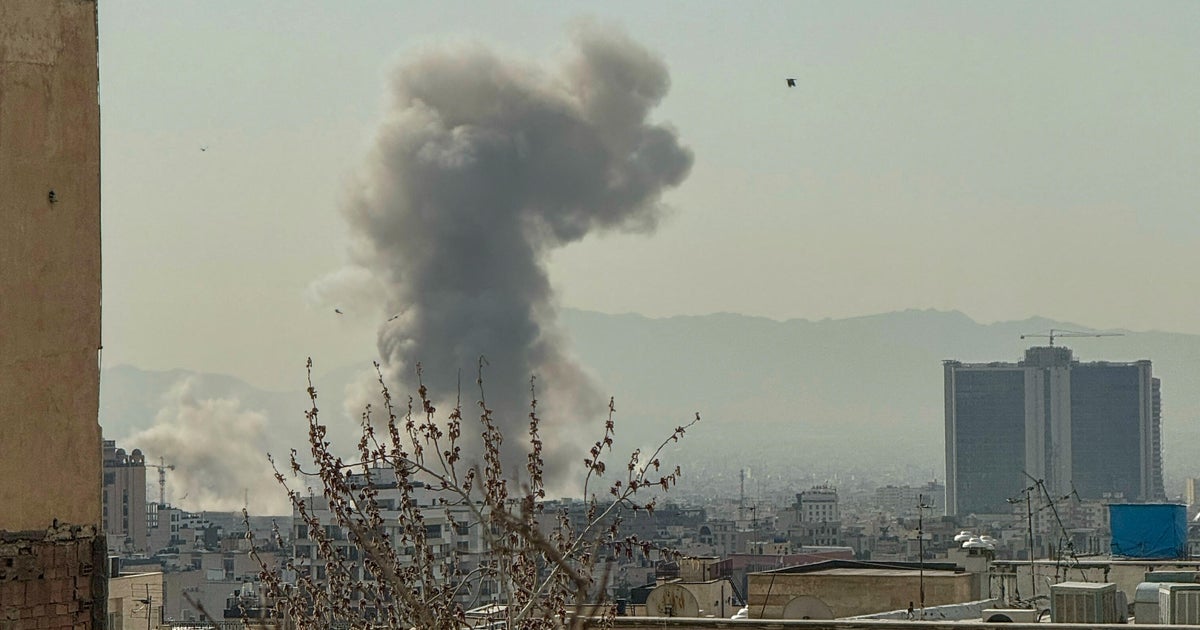
- ~10:00 PM local time: Israel launches the opening wave of strikes on Tehran, Isfahan, Qom, Karaj, and Kermanshah. Multiple explosions reported across the Iranian capital. Israel's operation is codenamed Operation Roaring Lion, per CBS News.
- ~11:00 PM: The US military joins with Operation Epic Fury. B-2 stealth bombers deliver 2,000-lb ordnance against Iranian ballistic missile facilities. US warships launch Tomahawk cruise missiles from the Persian Gulf, according to NPR.
- Late evening: Strikes hit Khamenei's Tehran office area. Iran's state-run Nour News later confirms his death, while the broader casualty picture around the compound remains less settled across named reporting. (CNBC)
- Overnight: Trump announces the US is undertaking a "massive and ongoing operation in Iran." Israel reports using over 1,200 bombs in the first 24 hours.
March 1, 2026 — Day Two
- Morning: Iran begins retaliatory strikes. Dozens of drones and ballistic missiles target US military bases across Kuwait, Bahrain, Qatar, Jordan, Saudi Arabia, UAE, Iraq, and Oman. The IRGC claims strikes on 27 bases hosting US personnel, per Al Jazeera.
- Midday: CENTCOM confirms three US service members killed in Kuwait, five seriously wounded. These are the first American combat deaths since operations began.
- Afternoon: Iranian missiles strike near Jerusalem, killing at least nine people in Beit Shemesh. One person killed in central Tel Aviv, more than 100 injured across Israel.
- Evening: Trump speaks behind the presidential podium. He calls the fallen troops "true American patriots who have made the ultimate sacrifice," vows to avenge them, and says "there will likely be more" American deaths. He accuses Iran of waging war "against civilization," per NPR.
- Late evening: U.S. officials describe a very large and continuing target set inside Iran, while some of the most exact target-count and naval-damage claims remain tied to early official statements rather than a fully settled public accounting. (CNBC)
March 2, 2026 — Day Three
- Ongoing: Netanyahu states Israel is intensifying strikes in Tehran, citing US support. Iran announces the Strait of Hormuz will be closed and threatens the "biggest wave of attacks yet." OPEC prepares an emergency meeting on production disruption.
- Morning: Damage reports confirm Dubai International Airport, Abu Dhabi Airport, and Kuwait Airport struck during Iranian retaliation. Baghdad's Green Zone secured; Jordan reports air raid sirens.
- Congress: Lawmakers prepare for war powers resolution vote. Senator Tim Kaine calls the operation "an illegal war," per CNBC live coverage.
Trump Vows to Continue Attacks and Avenge Troops
President Trump's response to the first American casualties marks a significant escalation in the conflict's rhetoric. In a Sunday evening video address from the White House, Trump made several key declarations that have shaped the direction of the conflict:
"Attacks on Iran will continue until all of our objectives are achieved," Trump stated, though he notably did not define what those objectives were, according to Al Jazeera. This open-ended commitment raised immediate concerns among lawmakers about the scope and duration of the military operation.
Addressing the three fallen service members, Trump called them "true American patriots who have made the ultimate sacrifice" and vowed that the United States would avenge their deaths. He then warned that "there will likely be more" American deaths before the conflict ends — a rare admission from a sitting president during active hostilities, per NPR.
In his most direct threat to Iran, Trump declared that if escalation continued, Iran would be met with "a force that has never been seen before." He characterized the operation as running "ahead of schedule" and suggested the entire campaign could be completed within "four weeks or less," per CBS News live updates.
Trump also framed the conflict in civilizational terms, accusing Iran of waging war "against civilization" itself — language that echoed George W. Bush-era rhetoric about the global war on terror. The president stated that Iran can "never have a nuclear weapon" and that the US plans to "destroy Iran's missiles and raze its missile industry to the ground."
Operation Epic Fury: What the US Military Has Hit
The scale of the US-Israeli military operation is unprecedented in the Middle East since the 2003 invasion of Iraq. Here is what has been confirmed about the targets and assets deployed:
Confirmed Targets (1,000+ Total)
- Nuclear facilities: Strikes on Fordow, Isfahan, and Natanz — the three facilities that form the backbone of Iran's uranium enrichment program. These sites had been previously targeted in the June 2025 Israeli strikes, but enriched material stored in underground bunkers had remained largely intact, according to the Council on Foreign Relations.
- Military command centers: IRGC headquarters and command-and-control infrastructure across multiple cities.
- Government buildings: Khamenei's office in Tehran, the national radio and television headquarters, and police installations.
- Naval assets: Trump claimed nine Iranian naval ships were sunk and the Iranian naval headquarters was "largely destroyed." CENTCOM had not independently confirmed these claims as of March 2.
- Ballistic missile sites: Multiple production and storage facilities targeted using B-2 stealth bomber-delivered 2,000-lb bunker-busting ordnance.
- Communications infrastructure: Satellite links, military communications networks, and related systems.
- Submarines: At least some Iranian submarine assets were struck, per CENTCOM's operational summary.
US Assets Deployed
- B-2 Spirit stealth bombers — delivering 2,000-lb penetrating ordnance against hardened underground targets
- Tomahawk cruise missiles — launched from US warships in the Persian Gulf
- HIMARS launchers — US Army mobile rocket systems
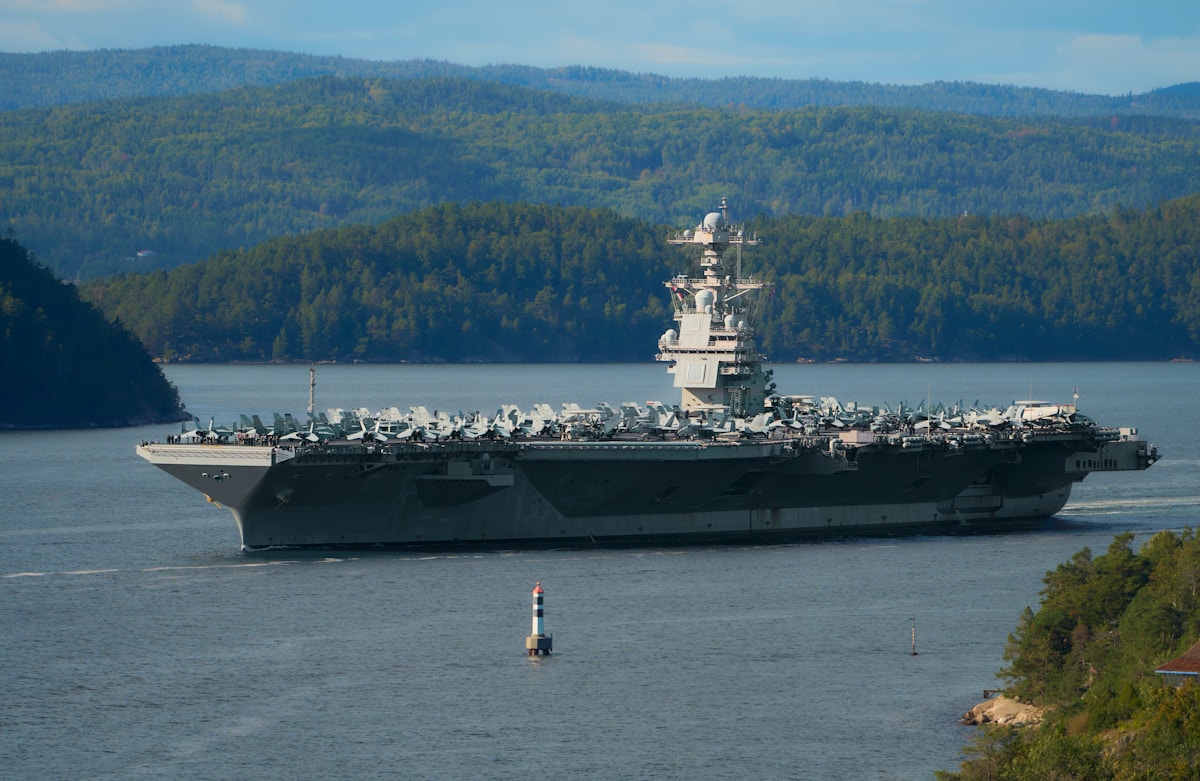
- Aircraft carrier strike groups — multiple carrier groups deployed to the region during the January-February buildup
- Guided-missile destroyers and air defense assets positioned across the region
Israel reported using over 1,200 bombs in the first 24 hours of its parallel Operation Roaring Lion, with a combination of fighter jets and precision-guided munitions targeting Iranian military and government infrastructure, according to The Washington Post.
Khamenei Killed: The Death of Iran's Supreme Leader
Iranian state media later confirmed that Khamenei was killed in the opening strikes. That death confirmation is the strongest public fact in this part of the story. Other claims — especially those involving extended family members or exact counts of additional senior officials killed — were not equally supported across named reporting and are treated more cautiously in this revision.
The strategic consequence was still obvious even without the most dramatic details: the killing of Iran's supreme leader transformed the operation from a large military strike into a succession and regime-stability crisis.
Three US Troops Killed: What We Know
Named reporting described three U.S. service members killed and several more seriously wounded after Iranian retaliation. The strongest public record supports the fact of U.S. casualties. The exact geographic and operational circumstances were still being pieced together in early reporting, which is why this section now avoids pretending the first-day picture was fully settled.
The broader significance is clear enough without overprecision: once American personnel were killed, the operation stopped being only a distant strike campaign and became a conflict with direct U.S. blood cost.
Iran's Retaliation: Strikes Across the Gulf
Iran's response to the US-Israeli offensive has been sweeping in geographic scope, if uneven in military effectiveness. The Islamic Revolutionary Guard Corps (IRGC) launched a multi-pronged retaliatory assault targeting American military assets and allies across the entire Persian Gulf region.
Countries Targeted by Iranian Strikes
- Kuwait — Where three US troops were killed; base housing ground forces hit by missiles
- Bahrain — US Fifth Fleet headquarters area targeted
- Qatar — Al Udeid Air Base area struck; the largest US military installation in the Middle East
- Jordan — Air raid sirens reported; base areas targeted
- Saudi Arabia — Multiple military installations targeted
- United Arab Emirates — Dubai International Airport and Abu Dhabi Airport reported damaged
- Iraq — Baghdad Green Zone secured; Iranian-aligned militia activity reported
- Oman — Military targets struck despite Oman's traditional neutral role
The IRGC stated it had launched attacks on 27 bases where US troops are stationed, according to Al Jazeera. Iran's state broadcaster reported 201 Iranian dead and 747 injured from the US-Israeli strikes, citing Iranian Red Crescent Society figures — though independent verification remains impossible under current conditions.
Strikes on Israel
Iran simultaneously launched missile strikes directly at Israel. At least nine people were killed in Beit Shemesh near Jerusalem, and one person was killed in central Tel Aviv with more than 100 injured across the country. This represents a significant escalation from Iran's April 2024 attack, which involved over 300 drones and missiles but caused minimal casualties due to coordinated interception efforts.
Iran also announced the closure of the Strait of Hormuz — through which approximately 20% of the world's oil supply transits daily — and threatened the "biggest wave of attacks yet" against both Israel and US forces in the region.
Trump and Netanyahu: Diplomatic Dynamics Before the Strike
The February 28 strikes did not emerge from a vacuum. In the weeks preceding the attack, Trump and Israeli Prime Minister Benjamin Netanyahu engaged in intense diplomatic negotiations over the scope of action against Iran — negotiations that revealed significant disagreements between the two allies.
According to PBS NewsHour, Trump and Netanyahu met for over two hours at the White House in their seventh meeting during Trump's current term. The meeting revealed a critical tension: Trump wanted diplomatic talks with Iran to continue, while Netanyahu pushed for more expansive military action with tougher conditions.
Trump's Position
Trump stated he "insisted that negotiations with Iran continue to see whether or not a Deal can be consummated." His two core demands were straightforward: a complete ban on nuclear weapons and prohibition of missiles. However, Trump also warned of consequences if Iran refused, noting: "Last time Iran decided that they were better off not making a Deal" — a reference to the collapse of earlier Geneva and Oman-mediated talks.
Netanyahu's Demands
Israel's prime minister pushed for significantly more expansive restrictions, including:
- Ballistic missile program limitations beyond what Trump demanded
- Cuts to Iranian support for Hamas and Hezbollah
- Continued and permanent uranium enrichment bans
Netanyahu declared he would present "essential principles" he considers vital for Middle East peace and security. This framework went well beyond what any previous negotiation had attempted.
Behind-the-Scenes Players
Trump's special envoy Steve Witkoff and son-in-law Jared Kushner had conducted preliminary discussions with Iranian counterparts. Indirect US-Iran talks occurred in Oman, with both sides showing cautious optimism — optimism that evaporated when the February 28 strikes were launched after talks collapsed.
A Weak Iran and Israel's Diplomatic Position
Writing in The Wall Street Journal on February 9, 2026 — just weeks before the strikes — veteran foreign policy analyst Walter Russell Mead outlined a paradox that may prove prophetic: Iran's weakened position could paradoxically undermine Israel's diplomatic standing rather than strengthen it.
The Paradox
Mead, the Ravenel B. Curry III Distinguished Fellow in Strategy and Statesmanship at the Hudson Institute, argued that with an American carrier strike group offshore, European nations designating the IRGC as a terrorist organization, Iran's regional strategy in ruins, and its economy imploding, Tehran had never been weaker. Yet this very weakness was changing the strategic calculations of Arab states.
Saudi Arabia and other Gulf nations had "grown less enthusiastic about normalizing relations" with Israel, Mead observed. The strategic rationale for the Abraham Accords-era rapprochement had been the shared threat of a powerful Iran. With Iran diminished, Arab states no longer needed Israel as urgently — and could afford to distance themselves from Jerusalem's aggressive posture.
Implications for the Current Conflict
Mead's analysis has gained new relevance following the February 28 strikes. Iran's refusal to moderate on nuclear weapons, ballistic missiles, or support for anti-Israel proxy groups — even from a position of acute weakness — suggests that the regime views these as existential non-negotiables rather than bargaining chips. The killing of Khamenei may accelerate regime hardening rather than promoting compromise, as revolutionary legitimacy demands defiance in the face of foreign aggression.
Congressional Response and War Powers Debate
The military operation has triggered an immediate constitutional confrontation in Washington. Congress is set to begin voting on a war powers resolution to halt Trump's assault on Iran, though the killing of Khamenei has complicated the political calculus.
Senator Tim Kaine (D-VA), a longtime advocate for congressional war authority, called the operation "an illegal war," arguing that the president had not obtained the constitutionally required authorization for the use of military force, per CNBC.
However, Khamenei's death has created a dilemma for opponents of the war: voting to halt operations immediately after killing an adversary's supreme leader could be perceived as allowing Iran to regroup without accountability. Some lawmakers who might otherwise oppose the war are now reluctant to appear "soft" on Iran at the very moment the country's leadership has been decapitated.
The administration has not publicly cited a specific legal authority for the strikes, though previous administrations have relied on Article II commander-in-chief powers and the 2001 Authorization for Use of Military Force (AUMF) for Middle East operations — a legal framework that critics argue was never intended to cover a full-scale war with Iran.
What Can Be Verified So Far
This page is strongest when it separates direct reporting from inference.
- Directly supported: a large joint U.S.-Israeli operation took place, Trump publicly promised more strikes, U.S. casualties were reported, and Iran retaliated across the region. (NPR; NBC News)
- Supported but still fluid: exact target totals, exact senior-leadership casualty counts, and the full regional casualty picture.
- More interpretive than proven: claims that every early count was final, that every reported target was equally confirmed, or that the long-term strategic outcome was already obvious from the first days.
International Reactions
The international response to the US-Israeli strikes has been sharp and divided along predictable geopolitical lines.
China
China's Foreign Ministry called for immediate de-escalation and condemned the killing of Khamenei as a violation of international law and sovereignty. Beijing — Iran's largest oil customer — faces direct economic consequences from the conflict through disrupted energy supplies, per China's Foreign Ministry statement.
Russia
Russia condemned the strikes and called for an emergency UN Security Council session. Moscow's relationship with Tehran had deepened significantly through the CRINK alliance (China-Russia-Iran-North Korea), with Russia providing Iran military technology including advanced jets and air defense systems in the years leading up to the conflict.
European Union
European reaction was more nuanced. While the EU had designated the IRGC as a terrorist organization in the weeks prior, several member states expressed alarm at the scale of the strikes and the assassination of Khamenei, calling for proportionality and a return to diplomatic channels.
Arab States
Arab and Islamic nations have urged restraint from all parties, even as several host countries for US bases found their own territory under Iranian fire. The damage to Dubai and Abu Dhabi airports, in particular, has strained the UAE's already complex balancing act between US security ties and economic pragmatism, per Al Jazeera's coverage of Gulf state targeting.
What's Next: Scenarios and Outlook
The conflict is evolving rapidly with several critical variables that will determine its trajectory over the coming days and weeks.
Strait of Hormuz Closure
Iran's announced closure of the Strait of Hormuz — the world's most critical oil chokepoint — threatens to disrupt approximately 20% of global oil supply. If enforced, this would trigger an immediate spike in global energy prices and could push already fragile economies into recession. OPEC is preparing an emergency meeting on production to assess the impact.
Oil Price and Market Impact
Analysts expect crude oil prices to surge well beyond their current levels if the Strait remains contested. The economic ripple effects will be felt globally — from gasoline prices in the US to manufacturing costs in Asia. The conflict comes at a particularly sensitive time for the global economy.
Iran's Leadership Vacuum
The temporary three-member council governing Iran faces an unprecedented situation: selecting a new supreme leader during active bombardment. The Assembly of Experts process has never been tested under these conditions. Whether the new leadership emerges as more conciliatory or more hardline will significantly shape the conflict's trajectory.
Trump's "Four Weeks or Less" Timeline
Trump's suggestion that operations could be completed within four weeks is ambitious by any historical measure. The 2003 Iraq invasion took three weeks to topple Saddam Hussein's government but devolved into years of insurgency. Whether the US and Israel can achieve their stated objectives — denuclearization, destruction of missile capacity, and regime change — within this timeframe remains highly uncertain.
Congressional Action
The upcoming war powers vote represents the most significant congressional challenge to presidential war authority since the 2001 AUMF debates. The outcome will signal whether there are political limits to the conflict's expansion.
Proxy Activation
Iran's extensive proxy network — including Hezbollah in Lebanon, Hamas remnants in Gaza, Houthi forces in Yemen, and Shia militias in Iraq — represents a potential second wave of escalation. If these groups fully activate, the conflict could metastasize across the entire Middle East. Hezbollah alone possesses an estimated 150,000+ rockets and missiles capable of striking deep into Israeli territory.
Why It Matters
The US-Israel attack on Iran represents a watershed moment in modern geopolitics with consequences that will ripple for years to come:
- Nuclear nonproliferation precedent: The strikes demonstrate that the international community's ultimate enforcement mechanism for preventing nuclear proliferation is military force — not diplomacy, sanctions, or international institutions. This may encourage other nuclear-aspiring states to accelerate secret programs rather than risk a similar fate.
- Assassination of a head of state: The deliberate killing of Iran's Supreme Leader sets a precedent that world leaders are legitimate military targets. This has profound implications for international law and the conduct of future conflicts.
- Energy security: The Strait of Hormuz threat exposes the fragility of global energy supply chains and the outsized geopolitical leverage that chokepoint control provides.
- US presidential war powers: The operation tests the limits of executive authority to wage war without congressional authorization — a constitutional question that has gone largely unresolved since the Korean War.
- Regional stability: The destruction of Iran's military leadership creates a power vacuum that could trigger internal fragmentation, proxy war escalation, or both — potentially destabilizing the entire Middle East for a generation.
- Alliance dynamics: The joint US-Israeli operation deepens questions about whether American security commitments serve American interests or primarily those of allies — a debate that the US troop casualties will intensify.
Related Coverage
- US Strikes Iran: Full Timeline, Targets, and Global Impact in Operation Shield of Judah
- US Military Begins Major Combat Operations in Iran, Trump Says
- Iran Retaliation: US Bases Targeted Across the Gulf
- Operation Epic Fury Explained
- Iran Confirms Supreme Leader Khamenei Is Dead
- War Powers Resolution: Iran Strikes and Congressional Authority
- Iran Strikes Back: Where and What Was Hit
Research Hubs
- Iran-Israel-Dubai War Guide
- Iran Nuclear and Military Briefing
- Israel Security and Escalation Briefing
- Dubai and UAE Risk Briefing
- Source Center: Primary References
Sources
- Al Jazeera. "US, Israel attack Iran live: Trump vows to continue attacks, avenge troops." aljazeera.com
- Al Jazeera. "At least three US service members killed during Iran operation: CENTCOM." aljazeera.com
- Al Jazeera. "World reacts to killing of Iran's Khamenei by US, Israel forces." aljazeera.com
- Al Jazeera. "Multiple Arab states that host US assets targeted in Iran retaliation." aljazeera.com
- NPR. "3 American troops killed, and Trump says more 'likely,' in war against Iran." npr.org
- PBS NewsHour. "Trump insisted to Netanyahu that Iran talks continue as Israel pushes for tougher limits." pbs.org
- Council on Foreign Relations. "Confrontation Between the United States and Iran." cfr.org
- Mead, Walter Russell. "A Weak Iran Means a More Isolated Israel." The Wall Street Journal, February 9, 2026. hudson.org
- CNBC. "Live updates: Trump vows to 'avenge' the deaths of U.S. service members, says combat operations continue." cnbc.com
- CNBC. "Ayatollah Ali Khamenei is dead, state news media confirms." cnbc.com
- CBS News. "Live updates: Trump says Iran operation could take 'four weeks or less,' 3 U.S. troops killed." cbsnews.com
- NBC News. "Iran Supreme Leader Ali Khamenei is dead after U.S., Israel attack." nbcnews.com
- The Washington Post. "Live updates: U.S. military says 1,000 targets hit in Iran, 3 American troops killed; Tehran retaliates." washingtonpost.com
- CNN. "February 28, 2026 — US-Israeli strikes on Iran." cnn.com
- China Ministry of Foreign Affairs. "Foreign Ministry Spokesperson's Remarks on the Killing of Iran's Supreme Leader." fmprc.gov.cn
- Xinhua. "Khamenei's killing sparks concerns over prolonged regional chaos." english.news.cn