Overview
Named reporting said Trump promised more strikes on Iran while the U.S. expanded its regional force posture. The clearest part of the public record is the broad trend: more ships, more aircraft, more air-defense assets, and more visible preparation for a wider campaign.
What was less clear in real time was the exact count of troops, the exact number of targets hit, and how long that buildup would remain at peak intensity. This page now treats the buildup as real, but the most exact numbers as still somewhat fluid across public reporting.
Trump's Vow: "More Strikes Until All Objectives Are Achieved"
President Trump has framed the escalation as a "righteous mission" that will continue until the United States achieves total military dominance over Iran's government and nuclear infrastructure. In a series of statements over the weekend, Trump outlined an aggressive posture that leaves little room for diplomatic off-ramps in the near term.
"An Iranian regime armed with long-range missiles and nuclear weapons would be a dire threat to every American," Trump said in a video address posted to Truth Social, per Al Jazeera. "America will avenge their deaths, and deliver the most punishing blow to the terrorists."
The president acknowledged the human cost bluntly. Referring to the four US service members killed so far, Trump told The New York Times that his administration expects "quite a bit higher" casualties before the operation concludes, per NPR. "There will likely be more before it ends," he said.
Trump's rhetoric has shifted between confrontation and conditional diplomacy. He told The Atlantic that Iran's new interim leadership had expressed willingness to negotiate, and that he "agreed to talk." But his public video address made no mention of diplomacy. Instead, he called for regime change and offered amnesty only to IRGC members who surrender — a position that analysts say effectively closes the door on near-term negotiations, per Al Jazeera.
The White House framed the operation under the banner "Peace Through Strength," with an official statement declaring the goal was to "crush the Iranian regime" and "end the nuclear threat," according to whitehouse.gov. Trump also claimed the US destroyed nine Iranian naval ships and "largely destroyed" the Iranian Naval Headquarters — though CENTCOM did not independently confirm all of these claims.
In a separate statement that drew criticism, Trump touted the completion of White House ballroom renovations during the same remarks in which he discussed Iranian casualties and US troop deaths, per NBC News.
U.S. Adds to Forces in the Mideast: Full Military Buildup
The scale of the American military buildup was one of the most important features of the story. Named reporting repeatedly described carrier groups, strategic bombers, fighter aircraft, air-defense systems, and a substantial troop footprint across the region. The strongest public conclusion is that Washington was preparing for a campaign larger than a one-night strike, even if the exact force total varied between reports.
That distinction matters. Saying the buildup was large and strategically significant is well supported. Treating every quoted total as fixed and final is less defensible in a fast-moving operation where force rotations, forward positioning, and public disclosures changed quickly.
Operation Epic Fury: Day 3 and Beyond
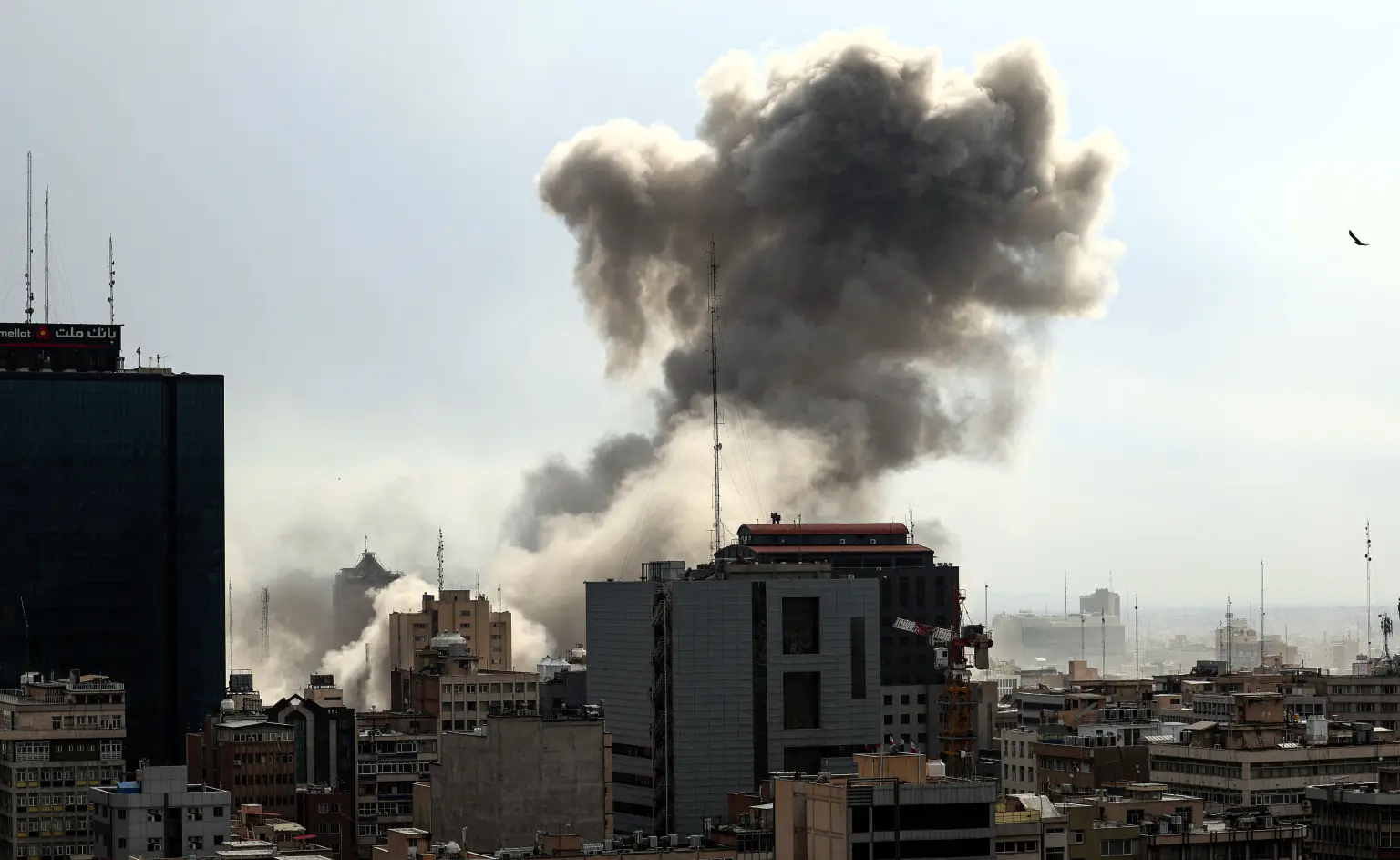
Operation Epic Fury — the US codename — and Operation Roaring Lion — Israel's designation — represent the largest joint military operation ever conducted between the two allies. The campaign is explicitly aimed at regime change, denuclearization, and the destruction of Iran's long-range missile capacity.
Within the first 24 hours alone, over 1,000 targets were struck in what Gen. Caine described as a "single synchronized wave," per NBC News. Key targets included:
- Supreme Leader's compound: Khamenei's Tehran office was destroyed, killing him along with family members and staff. Iran's Nour News confirmed he "attained martyrdom while carrying out his duties."
- IRGC Headquarters: CENTCOM reported the Islamic Revolutionary Guard Corps "no longer has a headquarters" following the strikes.
- Nuclear facilities: Iran claims its enrichment site at Natanz was targeted, though neither the US nor Israel has officially acknowledged strikes on nuclear sites.
- Ballistic missile infrastructure: B-1 bombers and B-2 stealth aircraft struck deep inside Iran to degrade long-range missile capabilities, per US Central Command.
- Naval assets: Trump claimed nine Iranian naval ships were destroyed, including the sinking of a Jamaran-class corvette in the Gulf of Oman. Iran's naval headquarters was described as "largely destroyed."
- Government ministries and military command centers stretching from Tehran to the southern coast.
Approximately 40 senior Iranian officials and military commanders were killed in the opening wave, per CBS News, including National Security Council secretary Ali Shamkhani. Iran has established a temporary three-member leadership council to govern until the Assembly of Experts can select a new supreme leader — a process that has never been attempted during active bombardment.
Israel's IDF simultaneously struck over 70 Hezbollah weapons storage facilities in Lebanon, targeting launch sites and missile launchers as part of the coordinated campaign, per NBC News.
Casualty Toll Rising on All Sides
Casualty reporting remained one of the most sensitive and least settled parts of the story. Named reporting described U.S. fatalities, serious injuries, and a much larger Iranian civilian toll, but exact totals and exact attribution for some incidents were still moving as the campaign expanded.
This page therefore keeps the existence of casualties in the foreground while avoiding stronger certainty than the public record can support at every point. The larger point is strategic: the human cost was already high enough by March 2 to harden political positions on all sides and raise the stakes of every additional strike decision.
Iran's Retaliation: Missiles Across 8 Countries
Iran's response has been sweeping and unprecedented in scale. The Islamic Revolutionary Guard Corps launched retaliatory strikes targeting US military bases and allied infrastructure across eight countries: Kuwait, Bahrain, Qatar, the UAE, Jordan, Saudi Arabia, Iraq, and Oman — in addition to direct strikes on Israel, per Al Jazeera.
Scale of the Retaliation
The UAE's Ministry of Defence reported intercepting 165 ballistic missiles, 2 cruise missiles, and 541 Iranian drones since the start of Iran's counterattack. A total of 174 ballistic missiles were detected in the UAE's airspace alone, with 13 falling into the sea, per NBC News.
Qatar shot down 2 Iranian SU-24 aircraft and intercepted 7 ballistic missiles and 5 drones. Among the UAE targets were Dubai's iconic Burj Al Arab hotel, the Fairmont Hotel on the Palm, Jebel Ali Port, Abu Dhabi's Etihad Towers, and the international airports in both Dubai and Abu Dhabi.
Strait of Hormuz
Iran announced the closure of the Strait of Hormuz — the world's most critical oil chokepoint, through which roughly 20% of global oil supply passes daily. If enforced, this threatens an immediate and severe spike in global energy prices, per NPR.
Impact on Civilian Infrastructure
Airlines canceled 1,560 flights on Day 3 alone — 41.28% of all flights scheduled for arrival in Middle Eastern countries. Hundreds of thousands of travelers remain stranded. Iran has also reportedly struck civilian aviation facilities, including international airports in Kuwait and the UAE. The IRGC claims it has attacked 27 bases hosting US troops across the region, per Al Jazeera.
Hezbollah Activation
Hezbollah entered the conflict directly, launching missiles at Israel "in revenge" for the killing of Khamenei. Israel's IDF responded with strikes on over 70 Hezbollah weapons storage facilities in Lebanon. Beirut residents are evacuating, with some expressing war fatigue despite continued support for Hezbollah, per NBC News.
The "Four to Five Weeks" Question: Can It Be That Short?
Trump's projection that operations could be completed within "four to five weeks" has drawn skepticism from military analysts and historians who recall similar promises at the outset of the Iraq War.
In 2003, the US toppled Saddam Hussein's government in three weeks — but spent the next eight years fighting an insurgency that claimed over 4,400 American lives. The parallels are not lost on observers: Iran is a country of 88 million people with a military far more capable than Iraq's in 2003, a sophisticated proxy network spanning the entire Middle East, and mountainous terrain that has historically defied foreign invaders.
The stated objectives of Operation Epic Fury — denuclearization, destruction of missile capacity, and regime change — represent an extraordinarily ambitious set of goals. No military operation in modern history has achieved all three simultaneously in the timeframe Trump has outlined.
Ali Larijani, Iran's top national security official, signaled that Iran is preparing for a protracted conflict. "The country has prepared itself for a long war," Larijani said, per NBC News.
The tension between Trump's compressed timeline and the operation's sweeping objectives is further complicated by his refusal to rule out ground troops. Military planners know that air campaigns alone rarely achieve regime change — a lesson learned in Libya in 2011, where NATO airstrikes toppled Gaddafi but left a power vacuum that persists to this day.
As Axios reports, Trump's campaign peace promises now "loom large" over the reality of a multi-front war — creating tension within his own political base between those who supported his anti-interventionist rhetoric and the reality of the largest US military operation in two decades.
Congressional War Powers and Domestic Debate
Operation Epic Fury was launched without congressional authorization, reigniting a decades-old constitutional debate about whether a president can take the country to war without the consent of Congress.
The administration has not publicly cited a specific legal authority for the strikes. Previous administrations have relied on Article II commander-in-chief powers and the 2001 Authorization for Use of Military Force (AUMF) — but critics argue that the AUMF, passed in response to the September 11 attacks, was never intended to cover a full-scale war with a sovereign nation that had no connection to 9/11, per Poynter's legal analysis.
Congressional reaction has split along complex lines. Some lawmakers who would normally oppose unilateral military action have found themselves politically constrained: voting to halt operations immediately after killing an adversary's supreme leader could be portrayed as allowing Iran to regroup. Others have pushed back forcefully, with bipartisan voices calling for an immediate war powers vote.
The killing of Khamenei has created an additional constitutional wrinkle. The targeted assassination of a foreign head of state raises questions under both US law — which has historically prohibited assassinations via executive order — and international law regarding sovereignty and proportionality.
What Can Be Verified So Far
This page is strongest when it separates direct reporting from inference.
- Directly supported: Trump promised additional strikes, the U.S. visibly added forces to the region, and public reporting described casualties and expanding retaliation risk. (NBC News; NPR)
- Supported but still fluid: exact force totals, exact target counts, and the full casualty picture across all sides.
- More interpretive than proven: claims that the campaign length was knowable early, that every deployment signaled imminent ground war, or that the full political fallout had already crystallized.
International Reactions
The global response to the expanding US-Israeli operation has been swift and sharply divided.
China
China's Foreign Ministry condemned the killing of Khamenei as a violation of international law and sovereignty, calling for immediate de-escalation. Beijing — Iran's largest oil customer — faces direct economic consequences through disrupted energy supplies. China's statement described the operation as "a grave breach of the principles of the UN Charter," per Al Jazeera.
Russia
Russia condemned the strikes and called for an emergency UN Security Council session. Moscow's relationship with Tehran had deepened through the CRINK alliance (China-Russia-Iran-North Korea), with Russia providing Iran military technology including advanced jets and air defense systems in the years preceding the conflict.
European Union
European reaction has been more nuanced. While the EU had designated the IRGC as a terrorist organization in the weeks prior to the strikes, several member states expressed alarm at the scale of the operation and the assassination of Khamenei. EU foreign policy chief called for "proportionality and a return to diplomatic channels."
Arab and Gulf States
Arab nations hosting US bases find themselves in an impossible position: their territory is under Iranian fire precisely because of the American military presence they have long accepted as a security guarantee. The damage to Dubai and Abu Dhabi airports, luxury hotels, and civilian infrastructure has strained the UAE's complex balancing act between US security ties and economic pragmatism. Protests have erupted in multiple countries, per The Oaklandside.
World Leaders
Reactions from world leaders span the full spectrum — from outright support to condemnation — reflecting the deep divisions this conflict has exposed in the international order, as documented in NPR's compilation of world leader reactions.
What's Next: Scenarios and Outlook
The conflict is evolving rapidly across multiple fronts, with several critical variables that will shape its trajectory.
Strait of Hormuz Enforcement
Whether Iran can sustain the closure of the Strait of Hormuz against the combined naval power of the US Fifth Fleet will be a defining question. If enforced even partially, the disruption to global oil supply — roughly 20 million barrels per day pass through the strait — would trigger price shocks far beyond what markets have already priced in. OPEC is preparing an emergency meeting on production.
Ground Invasion Possibility
Trump's refusal to rule out ground troops raises the question of whether the 50,000-strong force represents a staging posture for territorial operations. Military analysts note that achieving regime change through airpower alone has never been accomplished against a country of Iran's size and military capability. The deployment of HIMARS and ground-based systems suggests the Pentagon is at minimum preparing for that contingency.
Iran's Leadership Vacuum
The three-member council governing Iran faces the unprecedented challenge of selecting a new supreme leader during active bombardment. Whether the new leadership emerges as more conciliatory or more hardline — and whether Iran's fragmented power centers can maintain cohesion under sustained attack — will significantly shape what comes next.
Proxy Network Activation
Hezbollah's entry into the conflict is only the beginning. Iran's proxy network — spanning Hamas remnants in Gaza, Houthi forces in Yemen, and Shia militias in Iraq — represents a potential second wave of escalation. Full activation would transform a bilateral conflict into a region-wide war spanning from the Mediterranean to the Red Sea.
Oil Prices and Global Economy
Crude oil prices have already surged over 15% in overnight trading since the operation began. Analysts expect continued volatility, with worst-case scenarios modeling $150+ per barrel if the Strait of Hormuz remains contested for more than a week. The economic ripple effects — from gasoline prices to manufacturing costs to inflation — will be felt globally.
Why It Matters
The accelerating US force buildup and Trump's promise of continued strikes mark a turning point in the post-9/11 era of American military engagement in the Middle East:
- Scale of commitment: With 50,000 troops, two carrier strike groups, and 120+ aircraft in theater, this is the largest US military operation since the 2003 Iraq invasion — dwarfing every intervention of the past two decades and signaling a return to major-power conflict posture.
- Precedent on head-of-state targeting: The deliberate killing of Iran's Supreme Leader redefines what is considered permissible in modern warfare. No sovereign nation's head of state has been deliberately assassinated by another sovereign nation's military in the post-WWII era.
- Energy security fragility: Iran's ability to threaten global energy supply through the Strait of Hormuz exposes the continued vulnerability of the world's oil-dependent economies to chokepoint disruption — despite years of rhetoric about energy independence.
- Constitutional war powers: The operation represents the most significant test of executive war-making authority since the Korean War, with implications for the balance of power between Congress and the presidency.
- Nuclear nonproliferation: The strikes demonstrate that the ultimate enforcement mechanism for preventing nuclear proliferation may be military force — a message that will be received by every nation considering a nuclear weapons program.
- Campaign promises and accountability: The gap between Trump's campaign-era anti-interventionist rhetoric and the reality of launching the largest US military operation in 23 years will define the domestic political debate for years to come.
Related Coverage
- US, Israel Attack Iran Live: Trump Vows to Continue Attacks, Avenge Troops
- Operation Epic Fury Explained
- US Military Buildup Iran Forces Map
- Iran Strikes Back: Where and What Was Hit
- Iran Retaliation: US Bases Targeted Across the Gulf
- War Powers Resolution: Iran Strikes and Congressional Authority
- Iran vs US Military Comparison
Research Hubs
- Iran-Israel-Dubai War Guide
- Iran Nuclear and Military Briefing
- Israel Security and Escalation Briefing
- Dubai and UAE Risk Briefing
- Source Center: Primary References
Sources
- NBC News. "Iran war live updates: Trump on 'Operation Epic Fury'; won't rule out sending U.S. troops into Iran if 'necessary'." nbcnews.com
- CNN. "Iran, Israel, US attack — March 2, 2026 live updates." cnn.com
- Al Jazeera. "Trump vows to continue attacks on Iran, says more US troops 'likely' to die." aljazeera.com
- Al Jazeera. "Iran live news: Trump says war to last 4-5 weeks; Israel under fire." aljazeera.com
- Al Jazeera. "Tracking the rapid US military build-up near Iran." aljazeera.com
- NPR. "3 American troops killed, and Trump says more 'likely,' in war against Iran." npr.org
- NPR. "Here's how world leaders are reacting to Operation Epic Fury." npr.org
- CNBC. "Iran live updates: More U.S. forces being deployed, expect casualties, Gen. Caine says." cnbc.com
- CNBC. "Trump vows to 'avenge' the deaths of U.S. service members, says combat operations continue." cnbc.com
- Gulf News. "Operation Epic Fury: US unleashes full military might on Iran with B-2 bombers and HIMARS." gulfnews.com
- The Washington Post. "U.S.-Iran live updates: In Day 3 of strikes, war tensions expand across Middle East." washingtonpost.com
- The Washington Post. "U.S. troops killed amid Iranian counterattack, fueling air-defense worries." washingtonpost.com
- The White House. "Peace Through Strength: President Trump Launches Operation Epic Fury." whitehouse.gov
- Axios. "Trump campaign peace promises loom large over Iran war." axios.com
- Poynter. "Trump's Iran strikes revived a long-running fight over who can take the US to war." poynter.org
- CBS News. "Live updates: Trump says Iran operation could take 'four weeks or less,' U.S. troops killed." cbsnews.com
- Stimson Center. "Experts React: What the Epic Fury Iran Strikes Signal to the World." stimson.org
- Al Jazeera. "World reacts to killing of Iran's Khamenei by US, Israel forces." aljazeera.com