Overview: confirmation and context
This page is strongest when it distinguishes between two separate facts: Guard units from Wisconsin and Minnesota were publicly documented in the CENTCOM region, and the February 28, 2026 escalation changed the risk environment around those deployments.
What it should not do is imply that every Guard member cited in local coverage was newly deployed into the same immediate combat zone at the same moment. The public record is firmer on unit presence and mission framework than on exact real-time exposure for every soldier or airman.
That distinction matters for families, employers, and readers trying to understand what is officially documented versus what is inferred from a fast-moving war narrative.
Wisconsin National Guard in the documented record
The clearest deployment picture in the public record is Wisconsin's. State and local reporting described more than 400 Wisconsin Army National Guard members from the 1st Battalion, 121st Field Artillery Regiment and the 108th Forward Support Company deploying in late 2025 to Kuwait and Iraq.
Those units were not presented as a sudden war-only mobilization created by the February 28 strikes. They were already in theater or on a pre-existing mission timeline, which is why the better reader question is how their risk changed after the escalation, not whether they had just been sent there because of it.
Public reporting also consistently tied the Wisconsin deployment to artillery and sustainment functions. That gives readers a defensible sense of mission profile without overstating exact weapons employment or day-to-day combat role from limited public reporting.
Minnesota Guard deployments and the CENTCOM distinction
The Minnesota picture requires more careful wording. Named reporting described more than 200 or 250 Minnesota Guard personnel connected to units serving in the broader U.S. Central Command area of responsibility, including the 148th Fighter Wing, 1-151 Artillery, and the 34th Military Police Company.
The most important qualifier is geographic and operational. The CENTCOM area of responsibility is much larger than a single front in a single war, so public reporting about Minnesota personnel in that region does not automatically mean every referenced member was in the same direct strike corridor or immediate Iran-facing combat posture.
That does not minimize the risk. It makes the page more accurate. The public record supports real Minnesota Guard presence in a now more dangerous region, but it is less exact than the page previously implied about where every unit sat on the war map at every moment.
Community and family support context
Local reporting from Wisconsin and Minnesota made clear that the Guard story is also a community story. These are not abstract force numbers; they are local residents whose deployments affect families, workplaces, congregations, and hometown support networks.
That context is worth preserving, but the page now treats it as support context rather than as a substitute for deployment verification. Reaction quotes can illustrate stakes, but they should not carry the main evidentiary burden of the article.
Support for families back home
Family readiness programs, volunteer organizations, and military-family support groups remain one of the most concrete takeaways for readers in Wisconsin and Minnesota. In a page like this, that support information often has more practical value than speculative battlefield commentary.
The escalation does not just raise military risk; it raises uncertainty for families about communications, schedules, extensions, and day-to-day stress. Keeping this section focused on support structures is more useful than framing it around generalized fear.
What Can Be Verified So Far
This page is strongest when it separates direct reporting from inference.
- Directly supported: Wisconsin Guard units were publicly documented in a 400-plus deployment to Kuwait and Iraq, and Minnesota Guard personnel were publicly described across units operating in the wider CENTCOM area of responsibility.
- Supported but still broad: the exact real-time location and immediate war exposure of every Minnesota-linked unit or member mentioned in local coverage.
- More interpretive than proven: claims that all cited Guard personnel were newly sent because of the February 28 strikes, that every deployment was already an active combat mission, or that unit presence alone proves identical risk levels across both states' deployments.
What the escalation changes
The key change after February 28 was not necessarily deployment existence but deployment meaning. Units that were part of regional presence, deterrence, logistics, artillery, or air-support missions now had to be understood inside a higher-risk escalation environment.
- Risk environment: retaliation against U.S. positions in the region makes pre-existing missions more dangerous even when public reporting does not show immediate unit-specific casualties.
- Operational uncertainty: mission expansion, repositioning, or longer timelines are plausible in wartime conditions, but they should be described as possibilities rather than assumed outcomes.
- Communication strain: families often experience more uncertainty as operational security and tempo tighten, even without any confirmed new incident involving their specific unit.
Why It Matters
This page matters because National Guard deployments are understood locally, not abstractly. When Guard units from Wisconsin and Minnesota are in a region that suddenly becomes more dangerous, the impact spreads through families, employers, and communities immediately.
It also matters because public discussion often slides too quickly from "deployed in CENTCOM" to "all are in the same active war role." Keeping that distinction intact improves both accuracy and usefulness for readers trying to understand what is documented and what is still uncertain.
Frequently Asked Questions
How many Wisconsin Guard members were publicly documented?
Public reporting described more than 400 Wisconsin Army National Guard members from the 1st Battalion, 121st Field Artillery Regiment and the 108th Forward Support Company in Kuwait and Iraq on a deployment that began in late 2025.
How should readers interpret the Minnesota numbers?
Named reporting described more than 200 or 250 Minnesota Guard personnel tied to units serving in the broader CENTCOM area of responsibility. That supports a meaningful regional presence, but not necessarily a single-location or single-mission interpretation for every member referenced.
Have Wisconsin or Minnesota Guard injuries been publicly reported?
No Wisconsin or Minnesota Guard injuries had been publicly reported in the coverage reviewed at the time this page was updated. That does not eliminate risk; it only describes the public reporting baseline.
Were these deployments created by the Iran escalation?
No. The strongest public record indicates that these were already existing deployments or mission structures that became more dangerous after the February 28 escalation.
What is Operation Spartan Shield in this context?
Operation Spartan Shield is a long-running U.S. regional mission framework in Kuwait and nearby areas. It helps explain why some Guard personnel were already in the broader region before the conflict intensified.
When are Guard members expected to come home?
Publicly reported timelines suggest late-2025-to-late-2026 deployment windows for at least some of the Wisconsin personnel, but wartime conditions can change schedules. Families should treat published timelines as planning baselines, not guarantees.
Related Coverage
- Trump Promises More Strikes on Iran as U.S. Adds to Forces in Mideast
- U.S. Military Buildup: Iran Forces Map and Deployment Overview
- Operation Epic Fury Explained: What Happened on February 28, 2026
- Iran Retaliation: Which U.S. Bases Were Targeted and What Was Hit
- Will There Be a Draft? Iran War and the Selective Service Debate
- U.S. Military Begins Major Combat Operations in Iran, Trump Says
Research Hubs
- Iran-Israel-Dubai War Guide
- Iran Nuclear and Military Briefing
- Israel Security and Escalation Briefing
- Dubai and UAE Risk Briefing
- Source Center: Primary References
Sources
- Lauritsen, John. "Hundreds of Wisconsin, Minnesota National Guardsmen in Middle East amid Iran war: 'You've got to support them.'" CBS Minnesota, March 2, 2026. cbsnews.com
- Ornat, Marisa. "Minnesota, Wisconsin National Guard confirms members serving Middle East." Northern News Now (KBJR), March 2, 2026. northernnewsnow.com
- KARE11 Staff. "MN National Guard in region as Iran attacks continue." KARE11, March 2, 2026. kare11.com
- Miller, Kristi / St. Paul Pioneer Press. "More than 200 Minnesota service members currently deployed to area that includes Mideast." Grand Forks Herald, March 1, 2026. grandforksherald.com
- MPR News Staff. "More than 250 Minnesota National Guard members in Middle East region as war continues." MPR News, March 2, 2026. mprnews.org
- Bruner, Alyson. "Wisconsin soldiers are being deployed to the Middle East." Spectrum News 1 Wisconsin, March 2, 2026. spectrumnews1.com
- Wisconsin Public Radio Staff. "Wisconsin National Guard members supporting military operations in the Middle East." WPR, March 2, 2026. wpr.org
- Minnesota National Guard Annual Report 2025, deployment and force summary context. minnesotanationalguard.ng.mil
- Minnesota National Guard 34th Military Police Company unit page. minnesotanationalguard.ng.mil/34mp
- National Guard Bureau, 121st Field Artillery HIMARS training background. nationalguard.mil
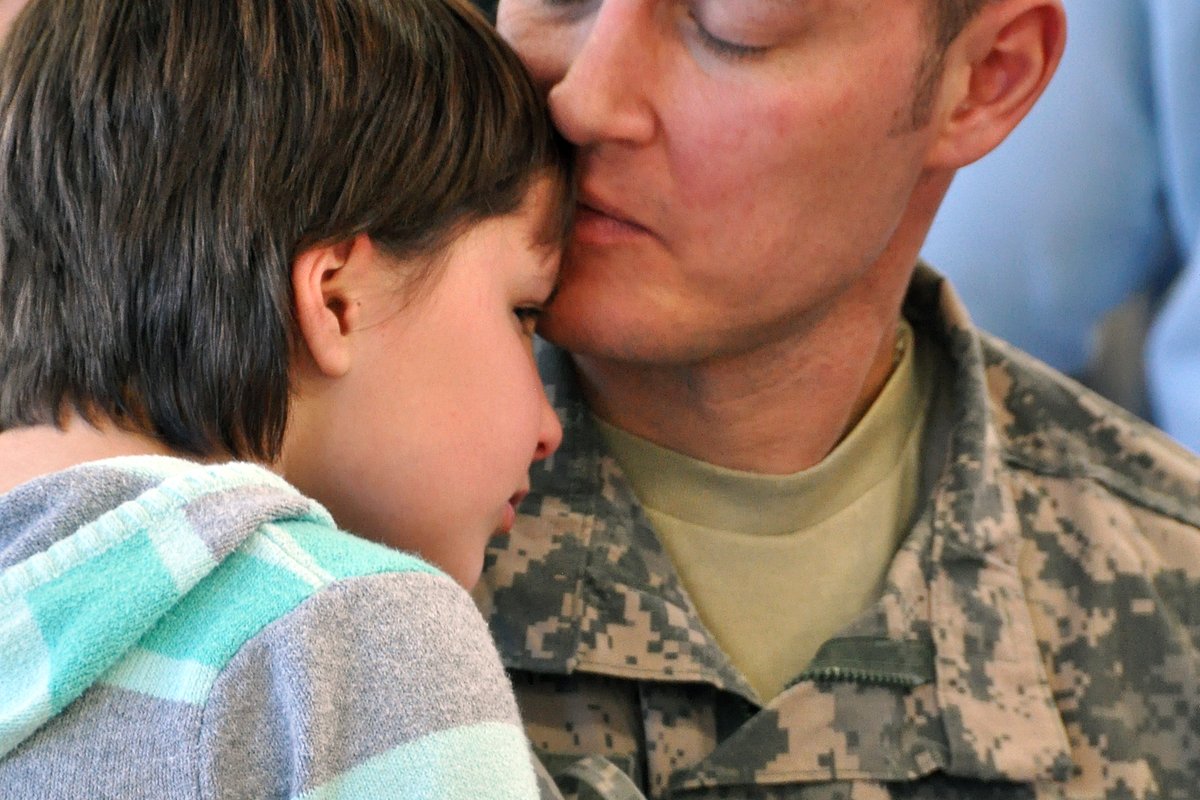
- Photo credit: "Wisconsin National Guard sendoff ceremony, Camp Williams." The National Guard / Flickr, Public Domain. flickr.com/thenationalguard